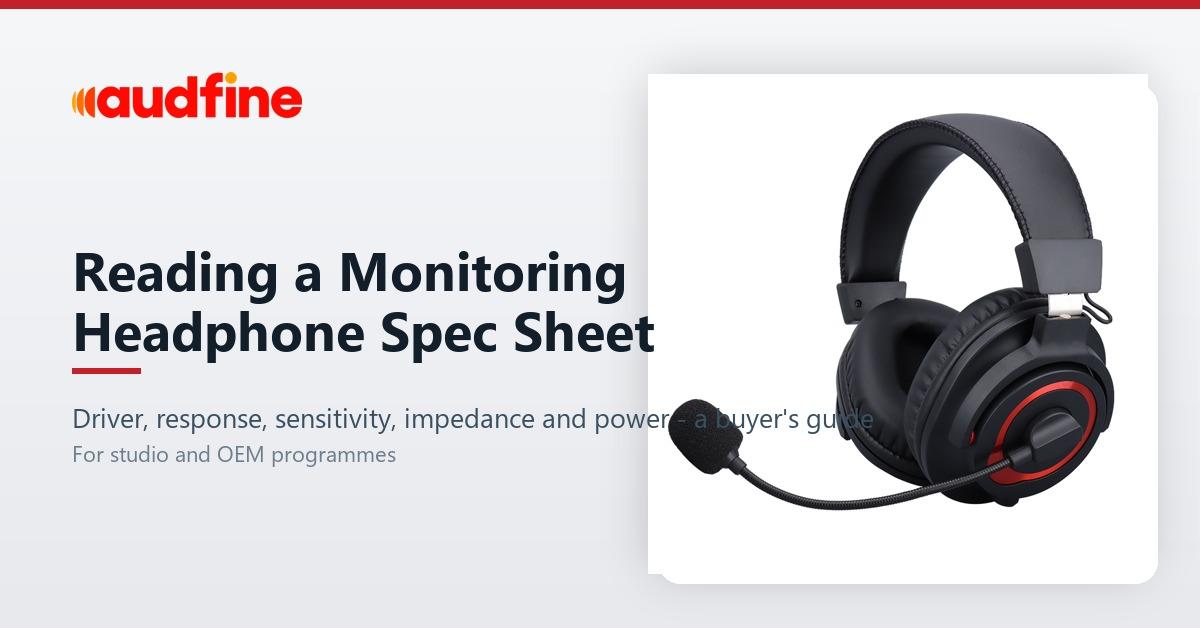
A monitoring headphone spec sheet is usually the first document a buyer sees when shortlisting a monitoring headphones manufacturer. Before a sample ships, before a factory visit, before any tooling discussion, the published specification line is what decides whether a model stays on the long list. The difficulty is that headphone spec sheets are not standardised across the industry: two factory catalogues can print the same fields in a different order, with different reference conditions, and with tolerances on one line but not the next.
This guide walks through each line of a typical monitoring headphone specification — driver, frequency response, sensitivity, impedance and power handling — using the published figures from our 2026 Audfine headphone catalogue as worked examples. It is written for brand owners, distributors and studio installers who evaluate studio headphone suppliers on paper, and it ends with an eight-point RFQ checklist for procurement teams sourcing from a China manufacturer.
What a published spec line contains
A typical line in a professional headphone catalogue covers six items:
- Driver — the diaphragm diameter (for example Ø50 mm) and, in better catalogues, the magnet material
- Frequency response — the stated low and high limits, such as 10Hz to 35kHz
- Sensitivity — a figure such as 99 ±3dB, sometimes with a reference unit, often without
- Impedance — a single load such as 32 Ω, or a set of options such as 32 Ω, 80 Ω and 250 Ω
- Power handling — a rated figure and a maximum figure, in milliwatts
- Cable and accessories — cable type and length, plug adapter, carrying case, spare pads
Each line answers a different procurement question, and each has a common trap. The sections below take them one at a time.
The driver line: diameter and magnet
The driver line tells you two things: the diaphragm diameter and, when stated, the magnet type. Across our monitoring range the published diameters run from Ø40 mm to Ø53 mm, and the driver line on every model in the table below specifies a neodymium magnet.
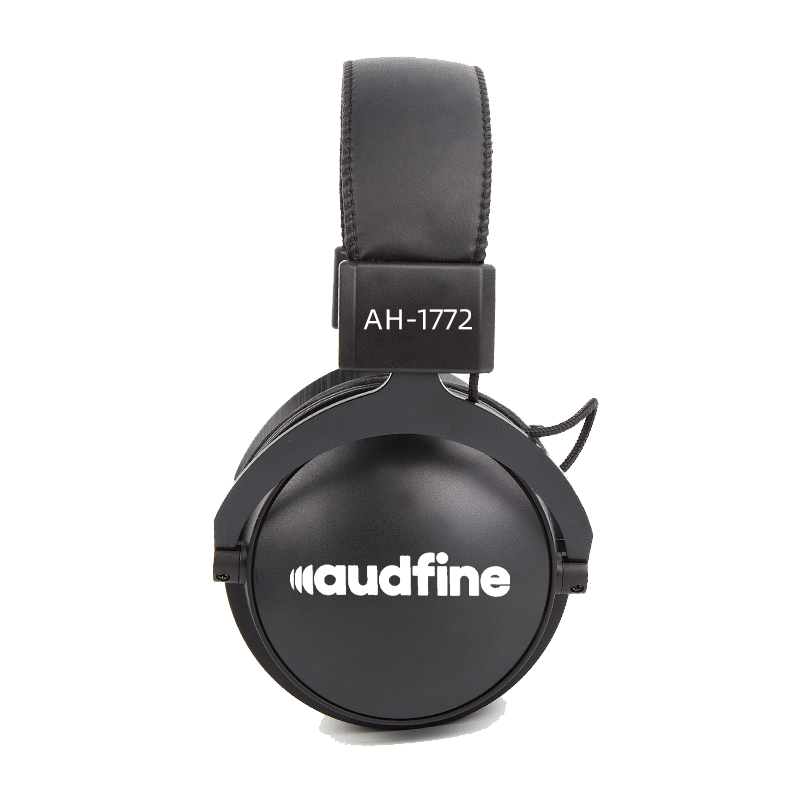
What should a buyer do with the diameter figure? Three practical readings:
- It indicates the physical platform. A Ø40 mm driver sits in a smaller, lighter cup; a Ø53 mm driver needs a full-size circumaural cup. If your programme has a weight or carton-volume target, the driver diameter is the first constraint to check.
- It groups models into families. Within one factory catalogue, models sharing a diameter often share an acoustic platform, so a change of ear pad or headband is more likely to be a variant than a redesign.
- It is not a performance figure. Diameter alone does not tell you how the driver is tuned. Two Ø50 mm models in the same catalogue can be voiced differently — compare the frequency response and sensitivity lines instead.
The magnet material matters for a different reason: it is a component-grade statement. A catalogue that prints “neodymium” is specifying the magnet grade used in the motor, which is the detail to carry into a sample evaluation and, later, into a component control agreement with the factory.
Frequency response: what the endpoints do and do not tell you
The frequency response line is the most quoted and the most over-read figure on the sheet. A monitoring model published at 10Hz–35kHz and a compact model published at 18Hz–25kHz are telling you about their design targets, not giving you a measurement curve.
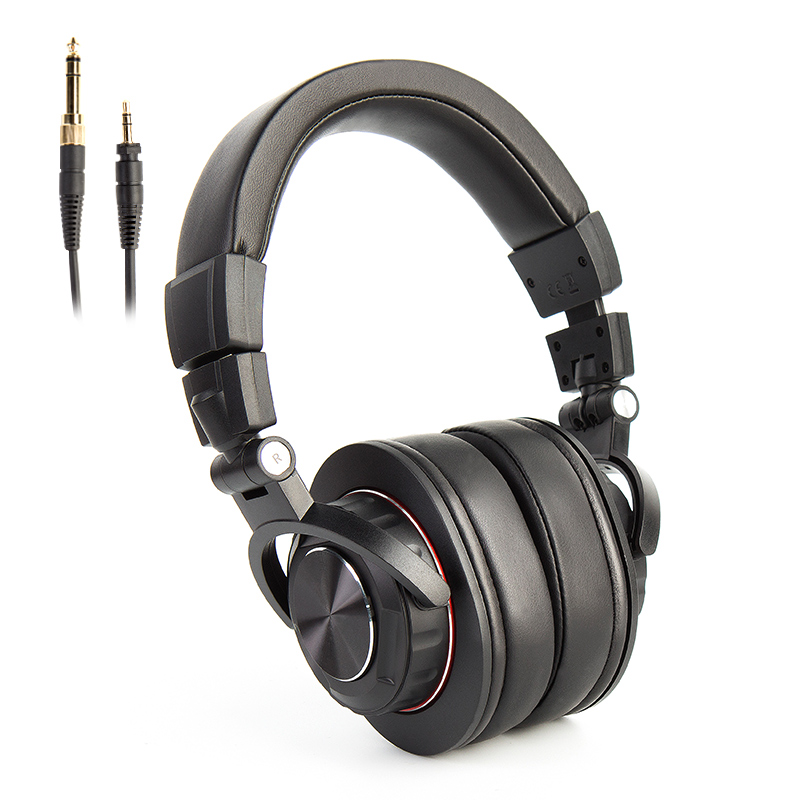
Three readings that hold up in procurement:
- The low endpoint signals the bass platform. Models specified down to 5Hz, 10Hz or 12Hz are built around different low-frequency targets. For a monitoring line, the low endpoint is worth matching to the music genres your customers track.
- The high endpoint signals the tweeter-side extension. Figures of 35kHz or 40kHz indicate extension well past the audible band; 24kHz or 25kHz indicates a compact platform with a narrower published window.
- No tolerance is printed. This is the important part. A figure of “10Hz to 35kHz” without a dB tolerance does not say how flat the response is between those points, or at which attenuation the endpoints were measured. That is not a reason to distrust the figure — it is a reason to put measurement conditions on your RFQ list.
When two catalogues quote 20Hz–20kHz and 10Hz–40kHz, the difference may be real or may be a difference in how each factory measured. Ask both suppliers the same question: at what tolerance and against what reference is the response stated?
Sensitivity: the number and its missing reference
Sensitivity is printed across our monitoring range from 90 ±3dB to 100 ±3dB. It describes how loud the headphone plays for a given input, so it drives how much amplifier voltage a user needs — which is why it matters as much for the devices your customers own as for the headphone itself.
Two details deserve a buyer's attention:
- The ±3dB tolerance is a production spread. A 99 ±3dB figure spans 96dB to 102dB across units. If your programme promises consistency between units, the tolerance line is what to negotiate, not the centre figure.
- The reference condition may not be printed. Sensitivity can be quoted per milliwatt or per volt, and the two conventions produce different numbers for the same headphone. When a catalogue prints a bare figure like “99 ±3dB”, the reference unit is a question for the RFQ, not an assumption for the buyer to make.
A worked comparison inside our own catalogue shows why the centre figure alone is not enough: one model is published at 90 ±3dB with an 80 Ω load, while another is published at 100 ±3dB at 32 Ω. A ten-decibel spread between models is easy to read; what the figures cannot tell you is how either model behaves on a specific interface, because that depends on the reference condition and the source's output stage. Both belong in the sample evaluation.
Impedance: single load versus multi-impedance platforms
Impedance is the load the headphone presents to the source. On a spec sheet it appears either as a single figure or as a set of options, and the difference between those two formats is itself procurement-relevant.
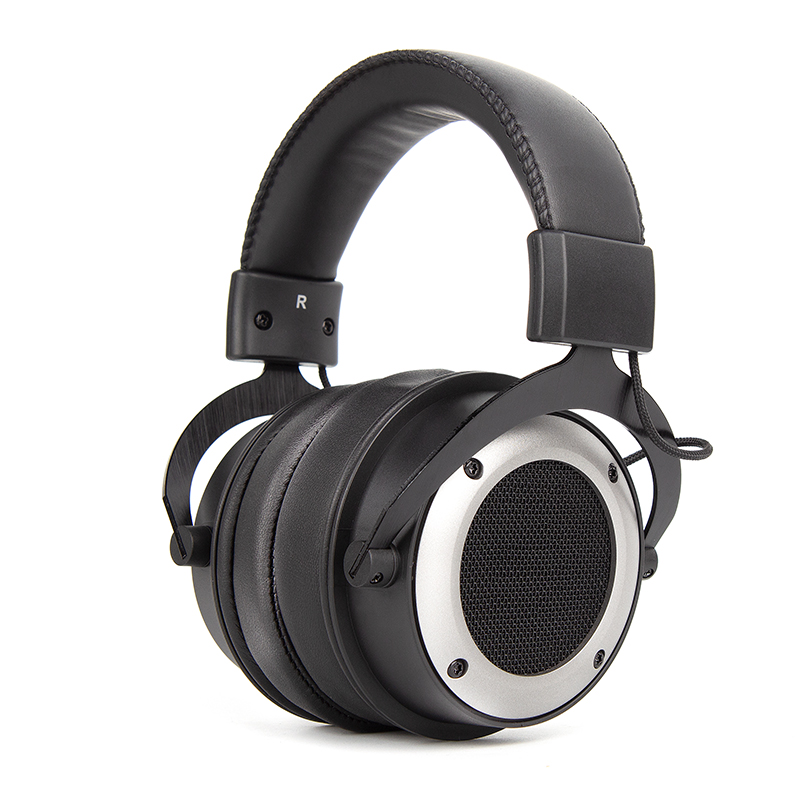
Our catalogue carries both formats. Single-load models are published at 32 Ω, with two larger-driver models at 60 Ω. The multi-impedance platforms — the DH-1772 and DH-1771K — publish 32 Ω, 80 Ω and 250 Ω on the same acoustic design, with the catalogue positioning the 32 Ω option for normal monitoring and the 80 Ω and 250 Ω options for professional audio devices.
For a buyer, the multi-impedance format changes the structure of the programme: one acoustic platform, one set of tooling, and several load versions to allocate across market segments. The single-load format simplifies stock keeping. Which structure fits depends on how your brand segments its own catalogue — and it interacts with the sensitivity line, because a higher load and a lower sensitivity both demand more from the source. We keep this section deliberately short: the full load-matching discussion, including 32 Ω versus higher-impedance pairing with studio devices, is covered in our impedance selection article.
Power handling: rated and maximum milliwatts
The power line is printed as a pair: a rated figure for continuous input and a maximum figure for short peaks. Across the wider catalogue, rated figures run from 250mW to 450mW and maximum figures reach 2,000mW.
What does a buyer need from this line?
- The rated figure is the thermal limit. It describes continuous input the driver is specified to accept. Programmes that target high-output monitoring — drum tracking, live cueing — should compare this line across candidate models.
- The maximum figure is a peak rating. It is higher than the rated figure on every model in the catalogue, and the two numbers should always be quoted together. A spec sheet that prints only a maximum figure is asking for a clarifying question.
- It pairs with sensitivity. Power handling and sensitivity together describe the acoustic headroom of the platform: how loud it plays per unit of input, and how much input it is specified to take. Read them as a pair rather than in isolation.
Cable, plug and accessory lines
The lower half of a spec sheet lists the cable and accessories, and buyers who skip it discover the gaps after the sample arrives. The lines to read are:
- Cable system — fixed or detachable. A detachable braided OFC cable, as specified on the DH-1772 at 3 m, changes the serviceability story of a programme and its spare-part catalogue.
- Plug and adapter — the catalogue lists a 6.35 mm (1/4”) to 3.5 mm (1/8”) gold-plated adapter, which decides whether the headphone plugs into studio hardware out of the box.
- Case and pads — solid carrying case, soft carrying bag, customised box, extra ear-pads. For a brand programme these are bill-of-materials lines with their own unit economics, not free extras.
Because pads and cables are the two components that wear first in professional use, the accessory lines also decide what your after-sales inventory looks like. Our serviceability guide covers how to plan pads and cables as spare parts from the start of a programme.
The range at a glance: ten published spec lines
The table below collects the published specification lines for ten models across the Audfine monitoring range, chosen to show the spread a buyer can work with from one platform family. Every figure is quoted from the 2026 catalogue.
| Model | Driver | Frequency response | Impedance | Sensitivity | Power (rated / max) |
|---|---|---|---|---|---|
| DH-1772 | Ø50 mm | 10Hz–35kHz | 32 / 80 / 250 Ω | 99 ±3 dB | 400 / 1,800 mW |
| DH-1771K | Ø50 mm | 10Hz–35kHz | 32 / 80 / 250 Ω | 98 ±3 dB | 350 / 1,500 mW |
| DH-990 | Ø50 mm | 10Hz–36kHz | 80 / 32 Ω | 90 ±3 dB | 350 / 1,500 mW |
| DH-7500 | Ø50 mm | 12Hz–40kHz | 32 Ω | 100 ±3 dB | 350 / 1,800 mW |
| DH-7300 | Ø50 mm | 10Hz–40kHz | 32 Ω | 97 ±3 dB | 350 / 1,800 mW |
| DH-7600 | Ø50 mm | 12Hz–40kHz | 32 Ω | 98 ±3 dB | 400 / 2,000 mW |
| DH-3000 | Ø40 mm | 18Hz–25kHz | 32 Ω | 97 ±3 dB | 350 / 1,000 mW |
| MR-830X | Ø45 mm | 12Hz–28kHz | 32 Ω | 99 ±3 dB | 450 / 1,500 mW |
| DH-274 | Ø53 mm | 10Hz–32kHz | 60 Ω | 95 ±3 dB | 350 / 1,500 mW |
| DH-X10 | Ø53 mm | 5Hz–35kHz | 60 Ω | 98 ±3 dB | 400 / 1,800 mW |
Read as a set, the table shows the levers a buyer can pull without leaving one supplier: driver diameters from Ø40 mm to Ø53 mm, published top-end figures from 25kHz to 40kHz, sensitivity centres from 90dB to 100dB, three load structures (single 32 Ω, 60 Ω, and a 32/80/250 Ω platform), and rated power from 350mW to 450mW within this selection. The application-level grouping of these models — which are closed studio cups, which are open frames, which fold for DJ work — is set out in our monitoring headphone model map.
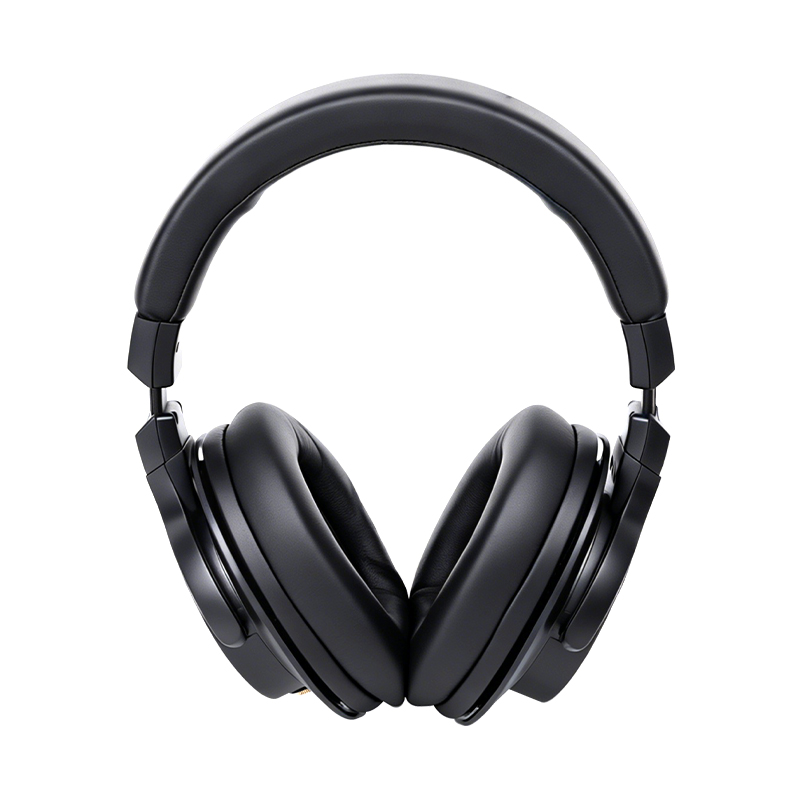
Specifying monitoring headphones when you source from a China manufacturer
Everything above turns into a procurement document. When we receive an RFQ from a brand or distributor, the enquiries that move fastest are the ones that specify the acoustic platform in the same language as the spec sheet. The checklist below is what we recommend including when you request a quotation for monitoring headphones from a China manufacturer:
- Driver diameter and magnet grade — state the platform (Ø40–53 mm) and ask the supplier to confirm the magnet material in writing.
- Frequency response with tolerance — give your target endpoints and ask at what dB tolerance and reference level the supplier's figures are stated.
- Sensitivity with reference condition — ask whether the figure is per milliwatt or per volt, and what production tolerance the factory commits to.
- Load structure — single impedance or multi-impedance platform, and which load versions share one acoustic design.
- Power handling — rated and maximum figures quoted together, in milliwatts.
- Cable system — fixed or detachable, braided or PVC, length, and the plug or adapter included.
- Accessory bill of materials — case, bag, spare pads, customised box, and which items are standard versus optional.
- Sample scope — which load version and pad type the sample pair should represent, and whether a second unit is included for cross-unit comparison.
A spec sheet answered line by line like this also makes supplier comparison fair: two factories responding to the same eight points can be compared field by field, instead of by brochure design. When your programme also covers loudspeakers, the same discipline applies to speaker specification sheets, and our speaker specifications reference explains the equivalent fields on the loudspeaker side.
Frequently asked questions
What does Ø50mm mean on a headphone spec sheet?
It is the driver diaphragm diameter — 50 millimetres. It indicates the physical size class of the acoustic platform: full-size circumaural cups in our range use Ø50–53 mm drivers, while lighter on-ear frames use Ø40–45 mm. Diameter is a platform indicator, not by itself a performance figure.
Is a wider frequency response always the better monitoring headphone?
Not on its own. The endpoints describe the published measurement window, but without a dB tolerance the figure does not say how flat the response is between them. Two headphones with identical 10Hz–35kHz figures can sound different. Treat the endpoints as a design target and request the measurement conditions before comparing models across suppliers.
Why do some models list three impedance options?
Because the same acoustic platform is built with three load versions. A 32 Ω version is positioned for normal monitoring, as the catalogue states for the DH-1772; the 80 Ω and 250 Ω versions are positioned for professional audio devices. For a brand programme this means one platform serving several market segments without new tooling.
What is the difference between rated and maximum power?
The rated figure (for example 350mW) is the continuous input the driver is specified for; the maximum figure (for example 1,500mW) is a short-peak rating. Both are quoted in the catalogue's power line, and a buyer should ask for both whenever a spec sheet prints only one.
How do I compare spec sheets from two different headphone factories?
Send both suppliers the same RFQ checklist: driver and magnet, frequency response with tolerance, sensitivity with reference unit, load structure, rated and maximum power, cable system and accessories. Comparing field-by-field answers removes most of the ambiguity that makes spec sheets hard to line up, and a sample pair evaluated against the same fields completes the picture.
Ready to put a specification in front of a factory? Send us your target driver size, load structure and accessory list through the inquiry form, and our team will respond with a model recommendation and a sample plan. You can also contact us directly for a catalogue discussion.