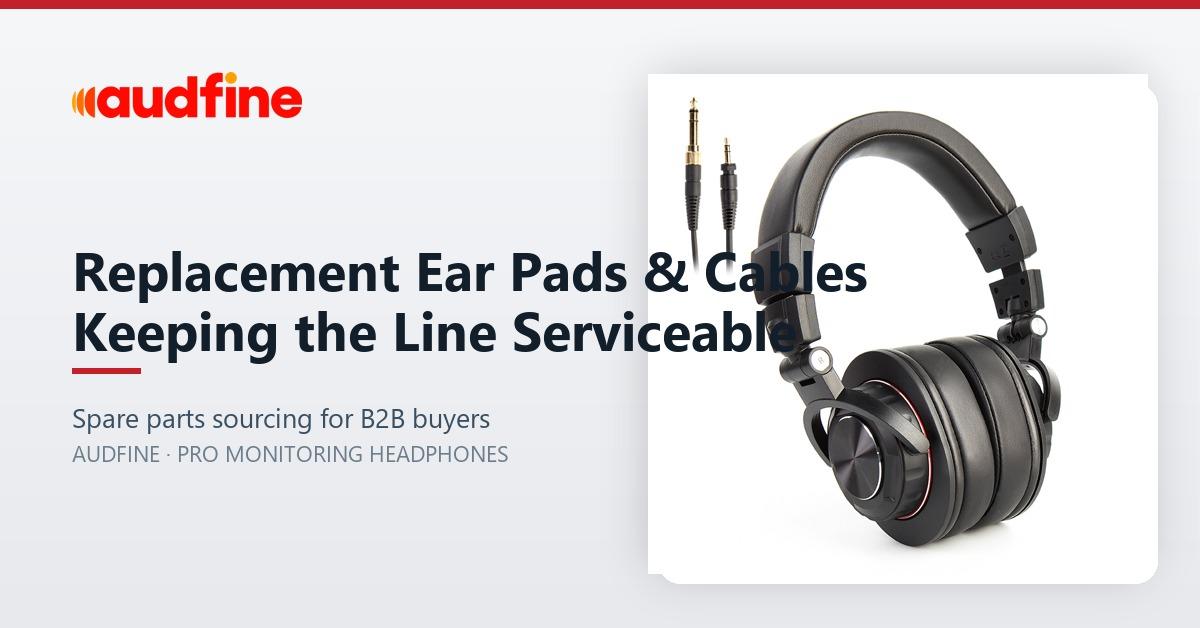
A monitoring headphone is not a sealed product; it is a small system with two parts that wear out on a predictable schedule — the ear pads and the cable. For a distributor, a rental house, a school of recording arts or a broadcast facility, those two parts decide whether a headphone line stays profitable after the first invoice. Buyers who treat spare parts as a procurement line from day one keep fleets in service for years; buyers who discover the gap after delivery end up replacing complete headphones over a pad or a plug. This guide sets out what a serviceable headphone programme looks like, what the Audfine 2026 catalogue lists in terms of replacement ear pads, cables and accessories, and how to brief a headphone manufacturer in China so the parts question is answered before the first volume order, not after the first failure report.
The context matters: Audfine publishes more than twenty monitoring headphone models, from the DH-1772 reference series to the MR-830X and the compact DH-190, and the range deliberately mixes fixed and detachable cable architectures. That mix is not an inconsistency — it is a product planning decision, and understanding it is the first step in specifying a line that can be maintained in the field. If you need a refresher on the models themselves, the companion monitoring headphone model map lays out the full range by driver size and impedance.
Why Serviceability Belongs in the Purchase Order
Professional headphone fleets fail from the outside in. Ear pads compress, flake and lose their seal long before a driver degrades; cables fail at the plug and at the strain relief long before a voice coil opens. A studio, a school or an event rental company can replace both consumables in minutes — provided the parts exist in its own stock. When they do not, the economics invert: a reusable chassis is scrapped over a consumable, and the total expense of owning an inexpensive headphone quietly overtakes that of a well-supported one.
For B2B buyers the implication is direct. Spare pads and cables turn a one-time sale into a repeat-purchase accessory line for a retailer, and they turn a headphone fleet into a maintainable asset for a rental or education operator. That is why the accessories section of a catalogue is not marketing filler; it is a signal about how the manufacturer expects its products to live in the field. The Audfine 2026 headphone book carries a dedicated accessories chapter — replacement cables, adapters, ear pads, carrying cases, storage bags and a plug-in microphone cable — which is the basis for everything that follows.
Detachable vs Fixed Cables Across the Range
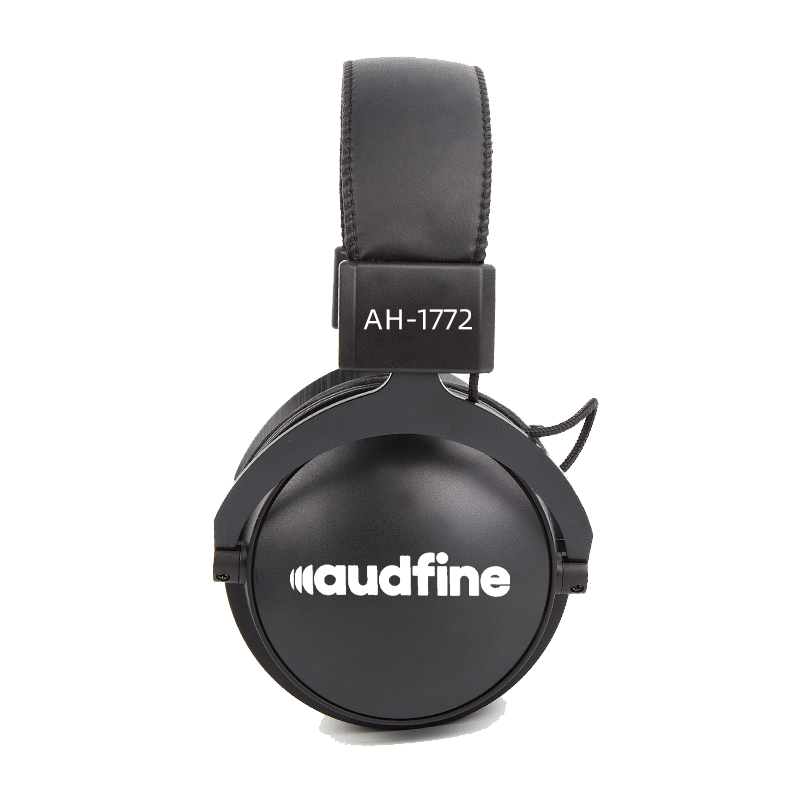
The single most consequential serviceability decision is made at the earcup: does the cable detach? Across the 2026 catalogue both architectures are published, and the distinction is explicit on the spec pages. Models such as the DH-1772, DH-990, DH-7500 and DH-1775 list a detachable cable with an anti-loss design, while models such as the DH-1773, DH-2300, DH-3000, MR-730S and MR-710 ship with a fixed OFC cable. The table below shows the cable systems exactly as published, so you can match architecture to fleet reality.
| Model | Cable as shipped | Attachment | Adapter in the box |
|---|---|---|---|
| DH-1772 | Braided OFC AUX cable, 3 m | Detachable, anti-loss design | 6.35 mm to 3.5 mm, gold plated |
| DH-990 | Braided OFC AUX cable, 3 m | Detachable, anti-loss design | 6.35 mm to 3.5 mm, gold plated |
| DH-7500 | Coiled OFC AUX cable, 4 m | Detachable, anti-loss design | 6.35 mm to 3.5 mm, gold plated |
| DH-1775 | OFC AUX cable, 3 m | Detachable, anti-loss design | 6.35 mm to 3.5 mm, gold plated |
| MR-830X | OFC AUX cable, 3 m | Detachable | 6.35 mm to 3.5 mm, gold plated |
| DH-3400M | OFC mic cable, 3 m | Detachable | 3.5 mm splitter cable |
Three practical notes for buyers reading this table. First, the anti-loss design on the detachable models matters as much as the detachability itself: the connector is engineered so the cable takes the abuse instead of the cup, which is what keeps a damaged cable a two-minute swap rather than a workshop repair. Second, the coiled 4 m cable on the DH-7500 serves a different working style than the straight 3 m braided cable on the DH-1772 — coiled cable absorbs slack at the desk and at the rack, which reduces snagging in control rooms. Third, a fixed-cable model is not a lesser product; it is a simpler bill of materials that suits volume-driven retail programmes — but for any fleet that gets handled daily, the detachable variants deserve first consideration.
Ear Pads: The Consumable Part of a Monitoring Headphone
Ear pads are a hygiene and acoustics item, not a cosmetic one. Worn pads change the coupling between driver and ear, which shifts low-frequency response and leakage — an audible problem in a monitoring context, where the whole point of the headphone is a trustworthy reference. Pads also absorb sweat and skin oils in daily studio use, which is why education studios, rental fleets and shared production rooms replace them on schedule rather than on failure.
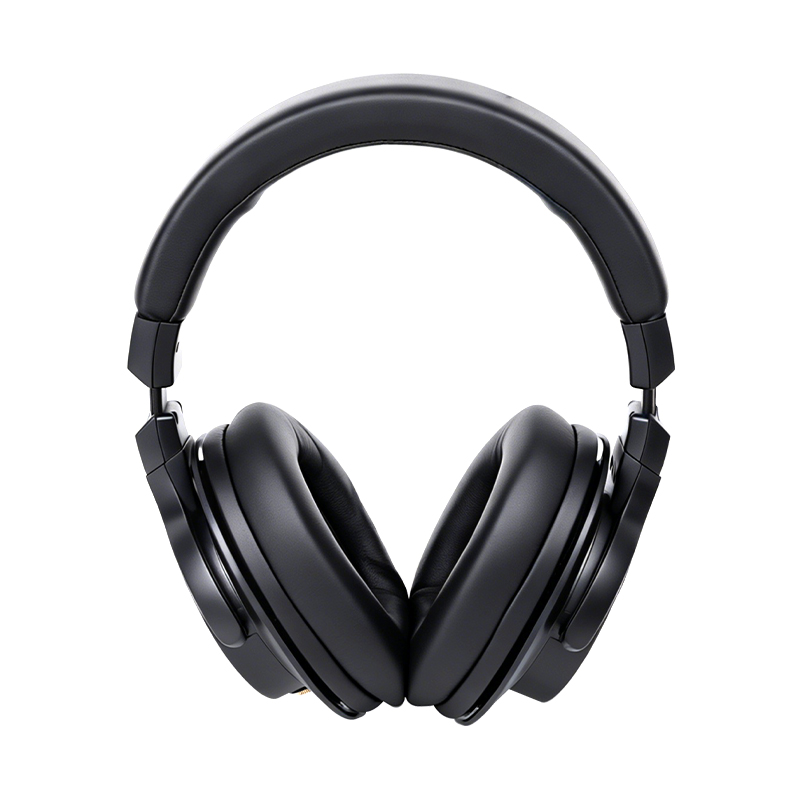
The catalogue reflects this reality. Across the range the published pad materials vary by model — soft skin-friendly pads on the DH-1772, flannel earpads on the open-back DH-990, air-mesh earpads on the DH-7100 — and the options column of nearly every spec page lists extra ear-pads or cable as an orderable item. The accessories chapter goes further and lists dedicated replacement pads in round leather, round lint and square leather formats, so a parts programme can be assembled per model rather than improvised. For B2B buyers the actionable point is to match pad type to use case at specification stage: leather-family pads wipe clean and suit shared facilities; flannel pads suit open-back acoustic designs; and the air-mesh style on the DH-7100 targets long-session comfort.
One caution worth stating plainly: pad geometry is model-specific. A replacement pad that fits one earcup will not necessarily seat correctly on another, and an ill-fitting pad both leaks sound and stresses the mounting. When you assemble a spare parts kit, organise it by model, not by "universal" assumptions — and confirm the fit list with the factory in writing.
Adapters, Cases and the Rest of the Accessory Chapter
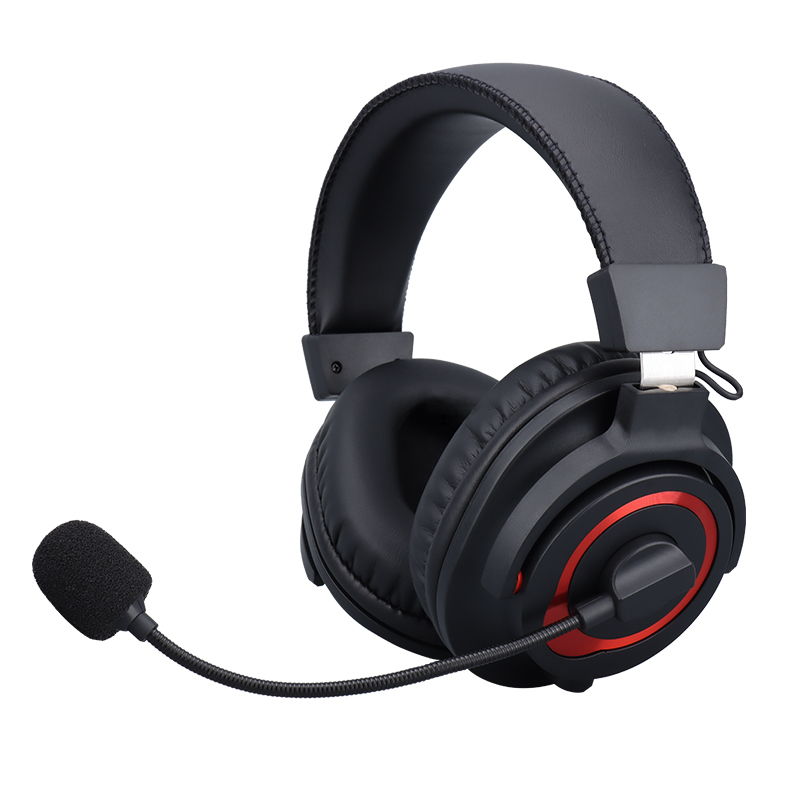
Beyond cables and pads, the 2026 accessories chapter covers the items that complete a working kit. The adapter list includes the 6.35 mm to 3.5 mm conversion (gold plated on most models, so one headphone covers studio interfaces and mobile devices alike) and a 3.5 mm to Type-C adapter for current-generation mobile equipment. For communication-oriented models such as the DH-3400M, the published cable is a detachable OFC microphone cable with a 3.5 mm splitter, and the range offers a dedicated DHM-001 gooseneck microphone cable with line control, a metal 3.5 mm four-pin connector and a braided jacket — a parts programme for headset-style models, not just for music monitoring.
Storage is part of serviceability too, because most field damage happens in transit, not at the desk. The catalogue lists four EVA hard cases (HC-01 to HC-04) in sizes from 21×16×11 cm to 28×21×12 cm, each semi-waterproof and shock-resistant, most with an inner pocket for accessories, plus PU and cloth storage bags for lighter duty. Packaging is equally configurable: universal white and brown boxes, or a customised colour box for brand programmes. These items look minor on a quote sheet and behave majorly in a fleet audit — a headphone that lives in a fitted case between sessions simply survives longer.
Briefing a Replacement Ear Pads and Cables Manufacturer in China
Serviceability is only real if the factory behind the programme commits to it in the same breath as the headphones. When you brief a replacement ear pads and cables manufacturer in China — or ask your existing headphone supplier to quote the parts line — the questions below turn "spares available" from a brochure claim into a documented scope. Audfine lists the full product centre on site, and every question below can be answered against catalogue evidence.
- Model fit list. Which current models accept detachable cables, and are spare cables and pads available for each — itemised by model number, not as a generic "spares" line?
- Cable construction per item. Conductor (OFC), jacket (braided or coiled), length, plug type and finish, and the anti-loss connector specification for detachable models.
- Pad materials and mounting. Which pad types (leather, lint, flannel, air-mesh) are available per model, how each pad attaches, and whether field replacement needs tools.
- Adapter set. Which adapters ship in the box versus orderable — 6.35 mm to 3.5 mm, 3.5 mm splitter, 3.5 mm to Type-C — and their plating.
- Assortment structure. For a fleet of a given size, what pad-to-cable-to-case mix does the factory recommend, expressed as a quotable bill of materials.
- Packaging. Universal white box, universal brown box or customised colour box — and whether parts can ship consolidated with headphone orders.
- Sample sets. A pad and cable sample set per model family before any volume commitment, so fit and finish are verified on the actual earcup.
- Documentation. Part numbering that maps to model numbers, so reordering a specific pad or cable years later is a reference lookup rather than an archaeology exercise.
That checklist is deliberately procurement-shaped. A supplier who answers all eight items in writing has already demonstrated the programme discipline that serviceability requires; a supplier who answers vaguely has told you something useful as well. The same logic applies to the wider sourcing decision covered in the impedance-variants piece on choosing impedance options for studio monitoring — specification-stage questions are cheap, and field-stage answers are expensive.
Planning a Spare Parts Programme With Your Supplier
Once the scope is documented, the remaining work is arithmetic on your side — and honesty about your own fleet. Retailers plan parts around repeat purchase: pads move faster than cables, and both move faster than cases. Rental and education operators plan around wear cycles: a fleet that rotates daily consumes pads on a schedule that the operator can measure from its own maintenance log, and the factory does not need to guess it for them. The correct sequence is to collect your own consumption data, then ask the supplier to quote a replenishment programme against it — not to ask the factory to invent demand numbers for a market it does not operate in.
Two structural options are worth raising in the same conversation. The first is batch consolidation: pads, cables, adapters and cases are all light, low-volume items that travel well alongside headphone orders, so folding them into existing shipments is a logistics question rather than a production one. The second is programme branding: for OEM buyers, the parts line can follow the same customised colour box route as the headphones, which keeps the after-market shelf visually consistent with the product shelf. Both options involve nothing extra to raise at RFQ stage and both are much harder to retrofit after the programme has started.
Frequently Asked Questions
Are spare ear pads available for every Audfine model?
Almost every spec page in the 2026 catalogue lists "extra ear-pads or cable" among the orderable options, and the accessories chapter adds dedicated replacement pads in round leather, round lint and square leather formats. The correct move is to confirm the fit list per model number when you request the quotation, because pad geometry is model-specific.
Can a fixed-cable model be converted to a detachable one later?
No. The 2026 range publishes fixed and detachable architectures as separate models — for example the fixed-cable DH-1773 versus the detachable DH-1775 — and conversion is not a listed option. Choose the architecture at specification stage based on how the fleet will be used.
Which parts wear out first on a monitoring headphone?
Ear pads and cables. Pads compress and lose their seal with daily use, and cables fail at the plug and strain relief from handling. That is exactly why both are listed as orderable options across the range, and why the detachable models carry an anti-loss connector design.
Do the accessory items work for OEM branding programmes?
Yes, within the published options. The catalogue lists a customised colour box alongside universal white and brown packaging, and the EVA cases include an inner pocket designed for accessories. Brand-level part numbering is a documentation question to settle at RFQ.
How should a parts quantity plan be built?
From your own fleet data. Collect pad and cable consumption from maintenance logs or retail sell-through, then ask the factory to quote a replenishment bill of materials against those numbers. Audfine's team can scale production for volume programmes, but the demand estimate belongs to the operator who runs the fleet.
Conclusion: Buy the Fleet, Not Just the First Shipment
A headphone line that cannot be maintained is a consumable; a headphone line with documented spare pads, cables, adapters and cases is an asset with a lifecycle. The 2026 Audfine catalogue publishes both architectures and a dedicated accessories chapter precisely because professional buyers operate fleets, not display shelves. Whether you are assembling a retail accessory line or equipping a rental inventory, put the parts scope on the table with the headphones — and to start that conversation, send your model list and fleet profile through the contact page or the inquiry form at the Audfine headphone factory in Ningbo.