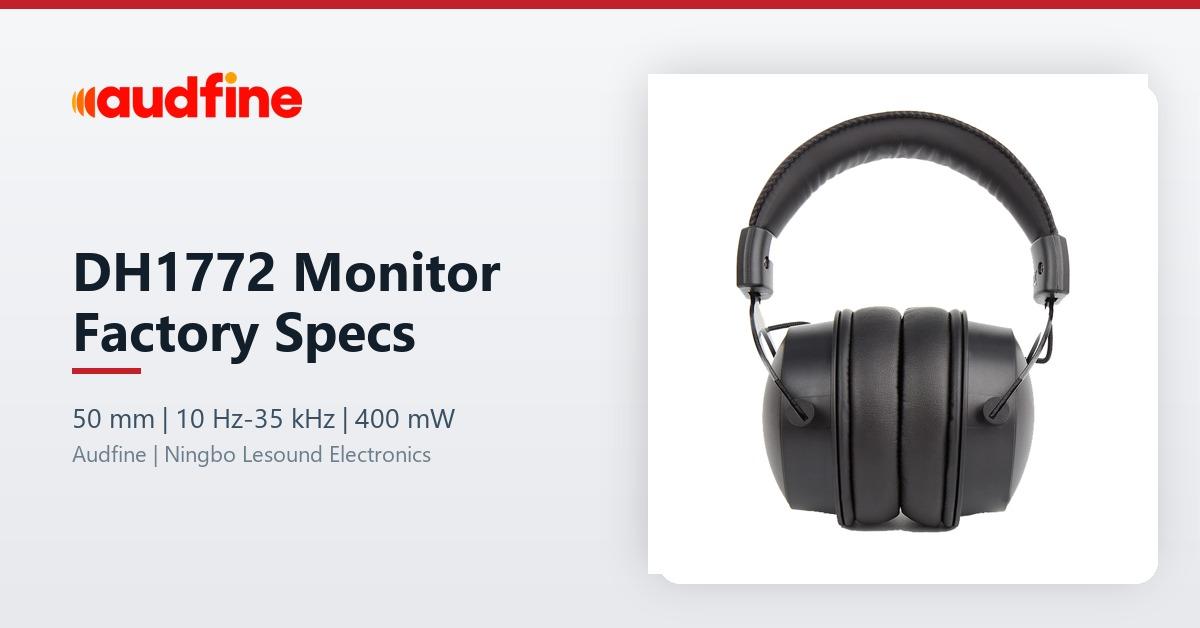
A DH1772 headphones factory can put four numbers on paper before a sample moves: a Ø50 mm dynamic driver, 10 Hz to 35 kHz response, 99 ±3 dB sensitivity, and 400 mW rated power with a 1,800 mW maximum. Audfine, the headphone brand of Ningbo Lesound Electronics, lists the DH1772 as a closed-back over-ear monitor with a detachable braided 3 m lead and a 3.5 to 6.35 mm adapter. Those figures describe the 32 Ω base version; impedance variants carry their own rows in the same sheet. Where two columns disagree, the conflict is printed rather than smoothed over. This page is written from the manufacturer and brand owner side, using only the fields we publish.
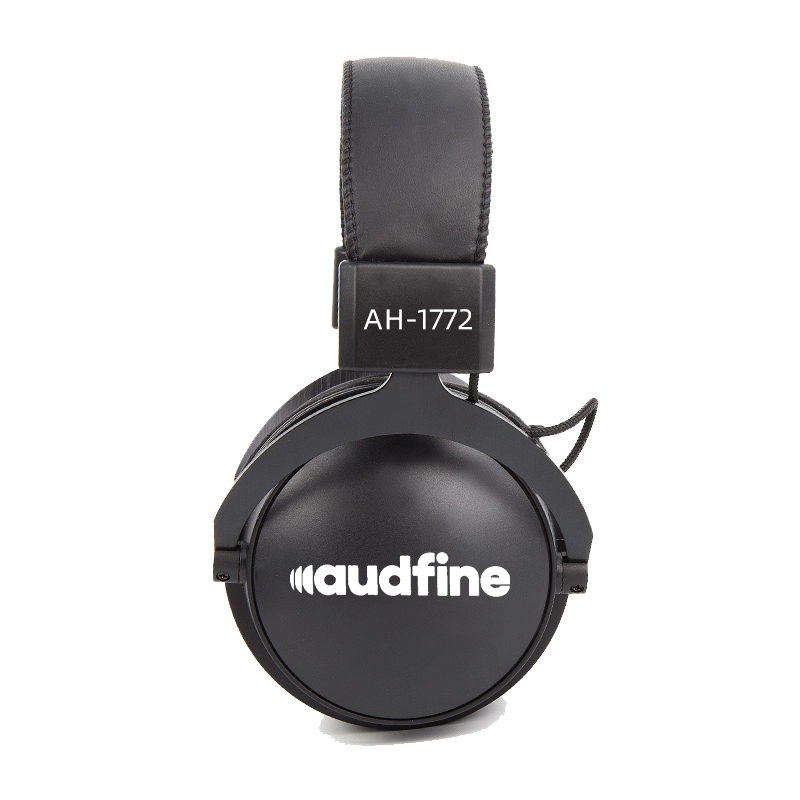
Data checked: November 2026. Source: Audfine headphone product sheet, DH1772 platform rows. Frequency response, driver diameter, sensitivity, load, power and cable entries were read from the parameter column; housing and application wording came from the positioning and scenario columns.
What the DH1772 product sheet actually lists
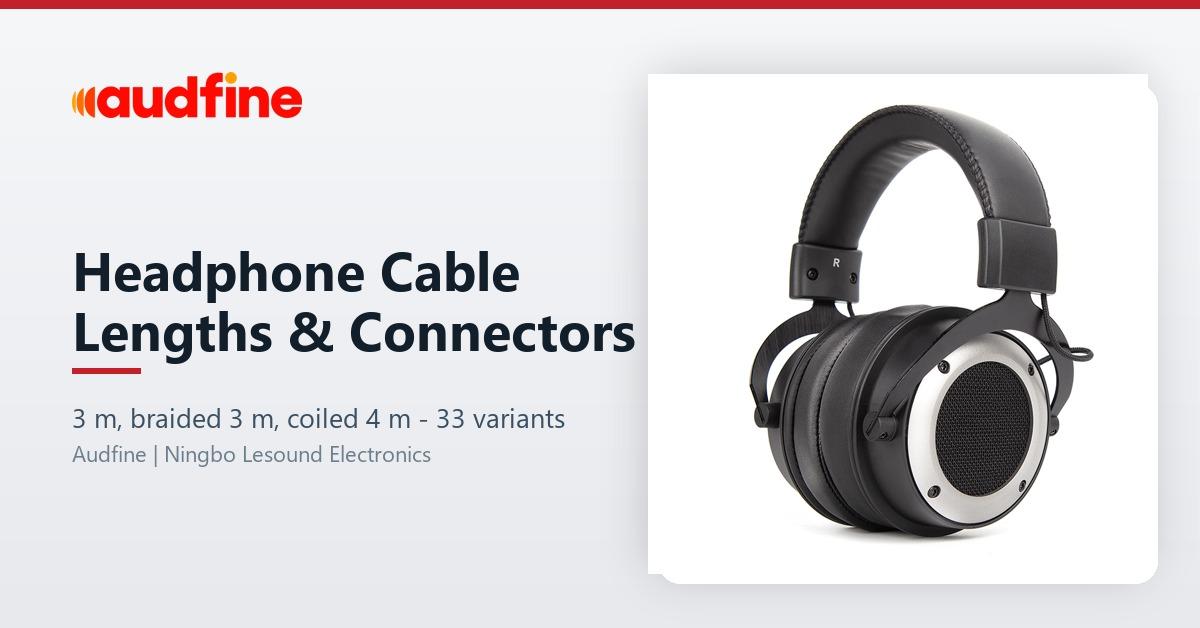
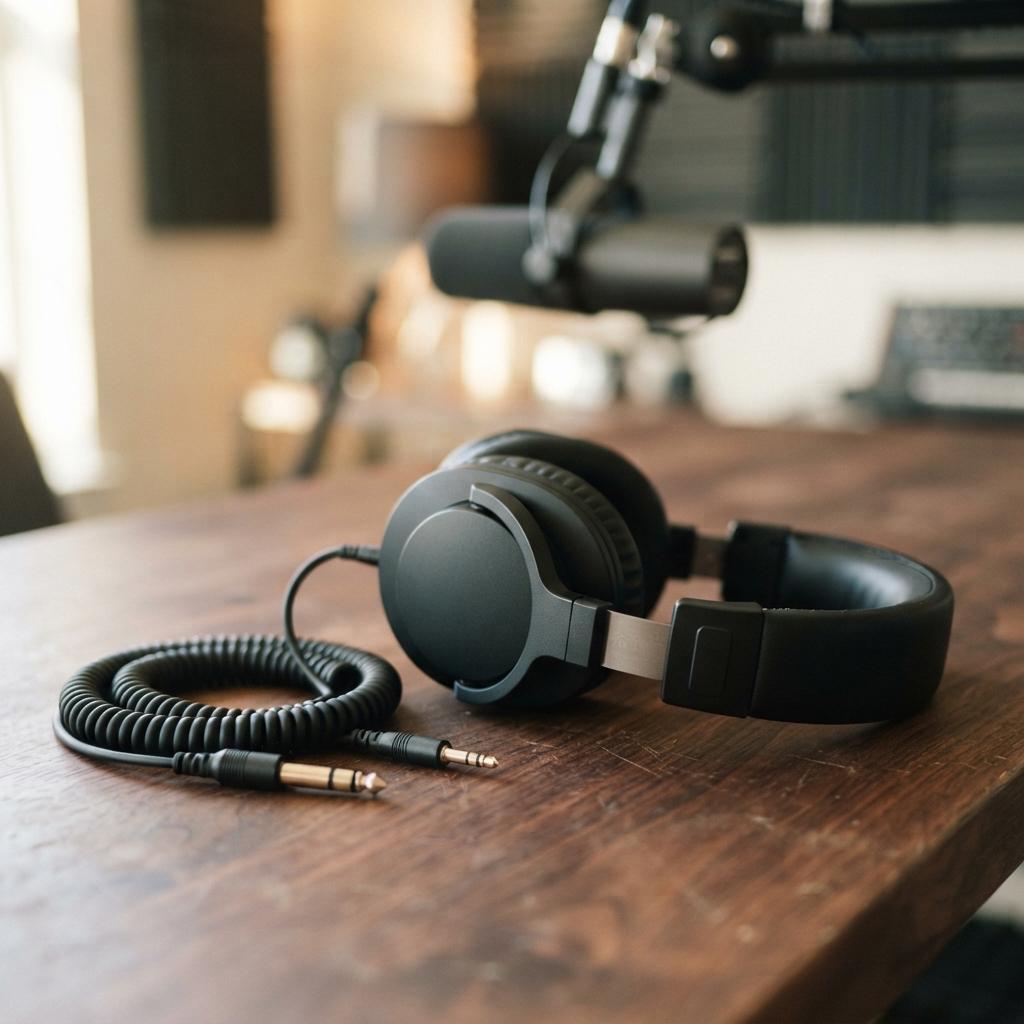
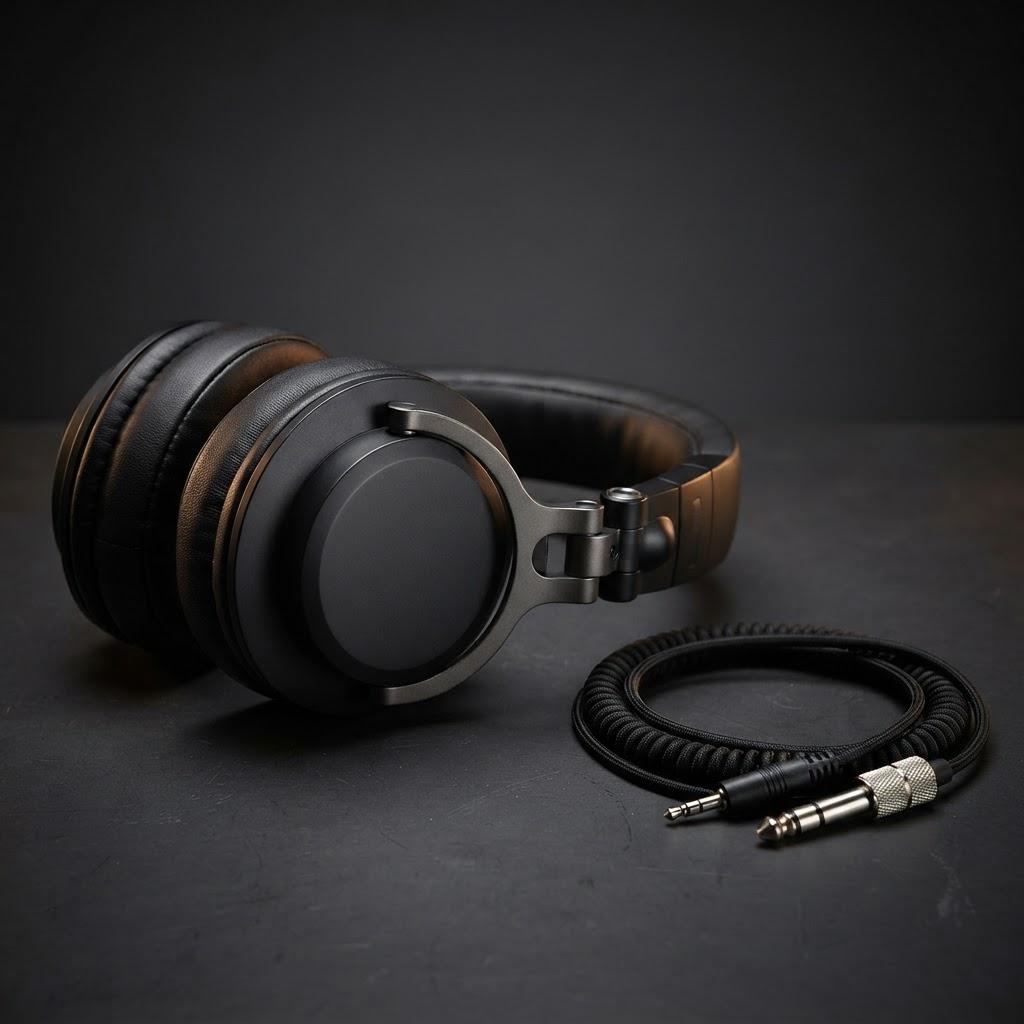
The DH1772 is a wired, over-ear, closed-back monitor built on a 50 mm dynamic driver with a neodymium magnet. The published response is 10 Hz to 35 kHz, sensitivity is 99 ±3 dB, and the base load is 32 Ω. Rated power is 400 mW and maximum power is 1,800 mW. The cable entry reads detachable, braided, 3 m, with a 3.5 to 6.35 mm adapter. Those six lines are the whole published acoustic description; anything beyond them belongs in a written enquiry, not in a product claim.
Values below are published spec lines; unlisted fields require RFQ confirmation. The 250-named variant is the one exception worth reading twice: the model name says 250, while both the parameter column and the English keyword column print 300 Ω. We do not pick one.
| Version | Driver / response | Sensitivity / load | Power | Cable entry |
|---|---|---|---|---|
| DH1772 | Ø50 mm / 10 Hz to 35 kHz | 99 ±3 dB / 32 Ω | 400 mW rated, 1,800 mW max | Detachable braided 3 m, 3.5 to 6.35 mm adapter |
| DH1772B | Ø50 mm / 10 Hz to 35 kHz | 99 ±3 dB / 32 Ω | 400 mW rated, 1,800 mW max | Detachable braided 3 m, velour earpads |
| DH1772-80ohms | Ø50 mm / 10 Hz to 35 kHz | 99 ±3 dB / 80 Ω | 400 mW rated, 1,800 mW max | Detachable braided 3 m, 3.5 to 6.35 mm adapter |
| DH1772-250ohms | Ø50 mm / 10 Hz to 35 kHz | 99 ±3 dB / 300 Ω printed; model name says 250 — confirm in RFQ | 400 mW rated, 1,800 mW max | Detachable braided 3 m, 3.5 to 6.35 mm adapter |
| DH1771 (same 50 mm platform, closed back) | Ø50 mm / 10 Hz to 35 kHz | 98 ±3 dB / 32 Ω | 350 mW rated, 1,500 mW max | Detachable braided 3 m, 3.5 to 6.35 mm adapter |
The DH1772B row is the only one that changes the pad material rather than the load. It is listed with velour earpads and the same 50 mm driver, 32 Ω, 99 ±3 dB and 400 mW rating. The 80 Ω row keeps the acoustic platform and changes the load. A brand owner comparing these two is not choosing between two different sound signatures on paper; the sheet gives one set of response and sensitivity figures for the family and separates the load values.
Housing behaviour is stated as a limitation in the Chinese positioning notes: this model does not swivel and is not intended for single-ear monitoring or hanging around the neck. That detail matters when a buyer expects a DJ-style frame. The DH1772 is a studio monitoring platform, not a folding stage headphone. Its 50 mm driver and closed-back cups put it in the professional monitoring tier in our range; the 45 mm MR830X at 450 mW is a different platform, and the 53 mm DH274 at 60 Ω is another again. We keep those distinctions in the model map rather than merging them into a single recommendation.
Which DH1772 variant should a brand owner shortlist first?
Start with the load your source equipment can drive. The 32 Ω base version is the reference row in the sheet, the 80 Ω version is a separate listed variant, and the 250-named version needs written confirmation of its actual impedance before it enters a specification. If the same headphone line has to cover several source types, name every variant you want quoted in one list rather than asking for "the DH1772" and leaving the load open.
Sensitivity is printed as 99 ±3 dB across the four DH1772 rows. A tolerance band is more useful in an RFQ than a single number, because it gives both sides a range to check a sample against. Power is printed as 400 mW rated and 1,800 mW maximum on the same rows. Those are published figures for the platform; they are not a listening-result claim. As defined in IEC terminology, these are electrical and electroacoustic quantities, and the Audio Engineering Society standards catalogue is the reference point for measurement vocabulary — see the International Electrotechnical Commission and the Audio Engineering Society. We do not translate a figure on a sheet into a claim about how a model sounds in a room.
How do I compare a DH1772 headphones factory quote with another supplier's spec line?
Compare like-for-like fields in the same order: driver diameter, response endpoints, sensitivity with its tolerance, load, rated and maximum power, cable form, lead length and adapter. A DH1772 headphones factory answer that changes one of those fields without naming the version is not comparable. Ask which row the figure came from, and ask for the 250-versus-300 Ω question in writing if that variant is included. Our monitoring headphone specification guide sets out the same fields for ten published models, so the comparison can stay inside one vocabulary.
The second check is continuity. The DH1772, DH1772B and the impedance variants share one acoustic description in our sheet; the DH1771 shares the 50 mm platform at 350 mW but is a separate model with its own rows. A supplier should be able to say which parts are shared and which are re-specified per version. The Audfine monitoring headphones model map groups the range by platform and makes that boundary explicit. For the carton side of the same question, the cable configuration note lists which models leave with a detachable lead and which arrive with a fixed one.
What changes between the 32 Ω, 80 Ω and 250-named versions
Only the load column changes in the printed data. Driver diameter stays at 50 mm, response stays at 10 Hz to 35 kHz, sensitivity stays at 99 ±3 dB, and power stays at 400 mW rated and 1,800 mW maximum. The cable entry stays braided and detachable at 3 m with a 3.5 to 6.35 mm adapter. That is a useful boundary: it tells a buyer which questions are already answered and which one still needs a factory confirmation. The 300 Ω figure appears in both columns for the 250-named variant, so the disagreement is a documentation point, not something to resolve by guesswork.
The 3 m braided lead and the 6.35 mm adapter are listed as separate items in the sheet. A buyer who needs a different termination should write it as a project requirement against a named version. The ear pad and cable serviceability note covers the in-use side — what wears first and how a line stays serviceable. This page only describes what is published for the version leaving the factory. Where the frame and cups are concerned, the Audfine studio monitoring range is the product reference; the vocal and stage monitoring page covers the nearby applications.
Writing a DH1772 requirement that can be answered line by line
A short enquiry is not always a clear one. The following fields are the ones that can be filled directly from the published rows, and each one keeps the answer tied to a version rather than to a family nickname.
- Version first. Write DH1772, DH1772B, DH1772-80ohms or DH1772-250ohms. One set of numbers does not cover all four.
- Load and tolerance. State 32 Ω or 80 Ω where relevant, and ask for written confirmation on the 250-named row.
- Acoustic figures. Quote 10 Hz to 35 kHz and 99 ±3 dB as printed. Ask for the reference condition if your own measurement setup differs.
- Power figures. Separate the 400 mW rating from the 1,800 mW maximum; they are two different lines in the sheet.
- Cable and carton. Specify the braided 3 m lead and whether the 3.5 to 6.35 mm adapter must be in the box.
- Pad material. Name the velour earpads if the DH1772B configuration is the one being evaluated.
- Brand form. State that the discussion is about Audfine stock models or a private-label programme; the custom headphones overview separates those two paths.
None of those fields requires a commercial number to be guessed. Anything not printed — carton contents beyond the listed adapter, a change to the 3 m lead, or the final wording on the 250-named version — stays a question for the factory to answer in writing. That is the discipline behind a wired monitor headphones manufacturer China enquiry that can move from a sheet to a sample without changing meaning halfway.
Frequently asked questions
Is the DH1772 a closed-back or open-back monitor?
Closed back. The product sheet lists the DH1772 family as over-ear, closed-back models on a 50 mm dynamic driver. The DH1771K and DH990 are separate open-back models; they are not part of this platform.
Does the DH1772 use a detachable cable?
Yes. All four DH1772 rows list a detachable braided 3 m lead with a 3.5 to 6.35 mm adapter. The DH1772B row lists the same cable and velour earpads instead of the standard pad description.
What impedance does the DH1772-250ohms version actually have?
The model name says 250, while the parameter column and the English keyword column both print 300 Ω. We publish the discrepancy and ask for written confirmation against that version. No figure is selected on this page.
Does the DH1772 include a 6.35 mm adapter?
The cable rows for the DH1772 family state a 3.5 to 6.35 mm adapter. That is a carton item in the published configuration; a different accessory set has to be requested as a project change against the named version.
Can the DH1772 be supplied under a private label?
Audfine is our own headphone brand, and Ningbo Lesound Electronics is the manufacturer and brand owner behind it. Private-label questions are handled as a separate programme against a named version, with branding and packaging confirmed in writing. No programme terms are published on this page.
Is the DH1772 a wireless headphone?
No. The DH1772 is a wired monitor with a detachable 3 m lead. Every one of the 35 headphone variants in our product sheet is a wired model; Bluetooth, TWS and active noise cancelling are not listed features of this range.
When you shortlist a DH1772 headphones factory, send the version name, the load row and the cable entry you want matched, and ask for the 250-versus-300 Ω point in writing if that variant is in scope. Ningbo Lesound Electronics builds the range under the Audfine brand, and the answer comes from the same product sheet used for the table above. A closed back headphones supplier China comparison only becomes useful when both sides are quoting the same row of that sheet.