Sample rounds decide pro audio programmes quietly. Long before a container is booked, a buyer unpacks one cabinet, one driver or one headphone, measures it against the published figures, and either builds a range on the result or moves on to the next factory. Run well, that round is short, cheap and conclusive. Run badly, it produces opinions instead of decisions — and opinions have a way of resurfacing as disputes after production. This guide sets out the working method: how to structure an audio sample order process that ends in a documented acceptance, how to convert an accepted sample into a trial order, and what a pre-shipment inspection must cover so the goods in the container match the sample on your bench.
It is written from the manufacturer's side of the table. Audfine builds active line arrays, PA speakers, powered subwoofers, raw speaker drivers and studio monitoring headphones under its own brands and under customer programmes, and exports to more than sixty countries. Samples and trial orders for quality testing are a normal part of how that business starts — the checks below are the ones a serious factory expects a serious buyer to make.
If you are still deciding how the factory should be engaged in the first place, read the complete OEM and ODM audio buyer guide first; this article picks up where that one leaves off — at the moment a factory has been shortlisted and a sample needs to be ordered.
What a pro audio factory offers before you commit
B2B manufacturers that serve brand buyers publish their sample terms openly, and the wording is worth reading closely because it tells you how the factory treats the start of a programme. On this site, every product page carries the same line in its specification block: sample and high-quality graphics are available. The company profile goes further — trial orders and samples are accepted for quality testing, and sample support includes videos, photographs, graphics and box design, with product design work available for customers who need it.
For a buyer, three practical points follow. First, you can evaluate before committing: a sample round is a standard stage, not a favour to be negotiated awkwardly. Second, the collateral a factory supplies with a sample — photographs, graphics, packaging artwork — is the same material your own product pages will need, so asking for it early tells you how the factory handles documentation. Third, a factory that invites trial orders for quality testing is signalling confidence in batch consistency; one that pushes you straight to volume without an intermediate step is asking you to discover its consistency at your expense.
Ordering samples from a China loudspeaker manufacturer: the RFQ checklist
A sample order is a technical document, not a shopping cart. The factories that answer fastest are the ones that receive a complete request the first time, because nothing has to be sent back for clarification. Before writing to a China loudspeaker factory, put the following eight items in the RFQ:
- Model and application — the exact model or platform, plus the use case: touring, fixed installation, rental fleet or retail range. An active line array element for touring implies different construction questions than the same footprint installed in a hall.
- The figures the sample must prove — three or four measured values from the published specification, agreed in advance as the acceptance criteria.
- Measurement conditions — which measurements the factory will share and how they were taken; sensitivity, in particular, should be confirmed with its reference condition rather than assumed.
- Configuration details — connector panel, impedance or power options, cabinet material and colour, and any destination-market requirements such as mains voltage and plug type for powered units.
- Packaging intent — how the finished goods will ship (carton, crate, or bulk), so the sample's packaging can be assessed against the same condition.
- What happens after acceptance — whether the accepted sample becomes the reference retained by both sides, and how deviations are recorded.
- Trade terms for the eventual order — state the intended incoterm so the sample shipment itself rehearses the export paperwork.
- Programme context — volume range and whether the range will extend to further models, so the factory plans lines honestly instead of quoting optimistically.
Send those eight items and the reply you get back is itself a vetting result: a manufacturer that answers each point in writing is showing you how it will behave for the life of the programme.
What to measure on a speaker cabinet sample
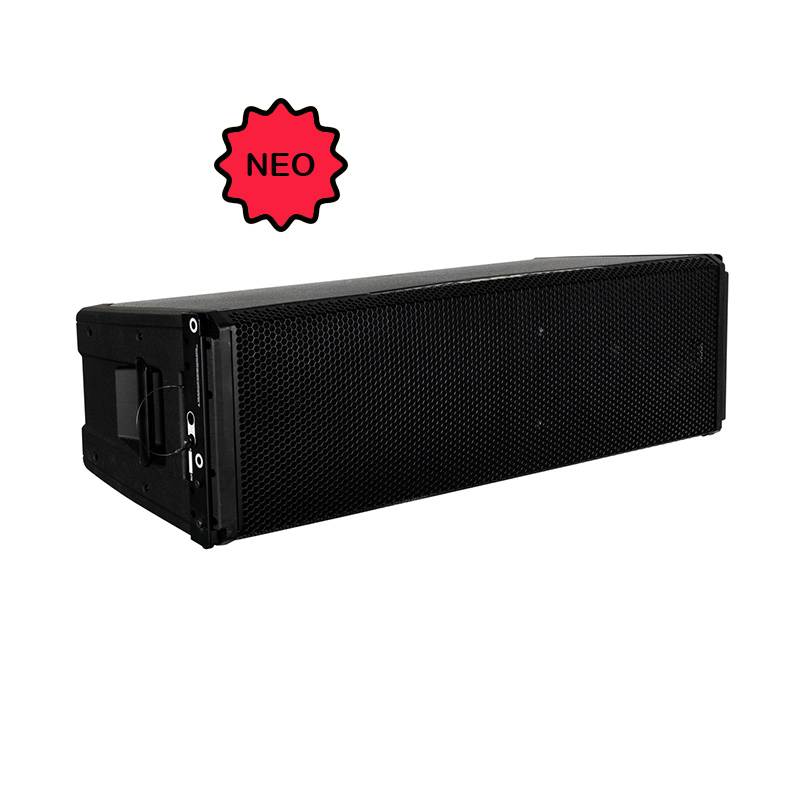
A cabinet sample is evaluated against the published specification, and the published specification is the contract. Take the published figures for a large-format active line array element: 104 dB sensitivity, 140 dB maximum SPL at one metre, 2200 W RMS and 4400 W peak power, 45 Hz to 18 kHz response, with crossovers at 200 Hz and 800 Hz. Those are the numbers your sample round should be capable of confirming or questioning — and the arithmetic offers a first sanity check, since a published 104 dB sensitivity plus ten times the logarithm of 4400 W lands on the printed 140 dB. Where the figures fit together, the datasheet is coherent; where they do not, ask before ordering rather than after.
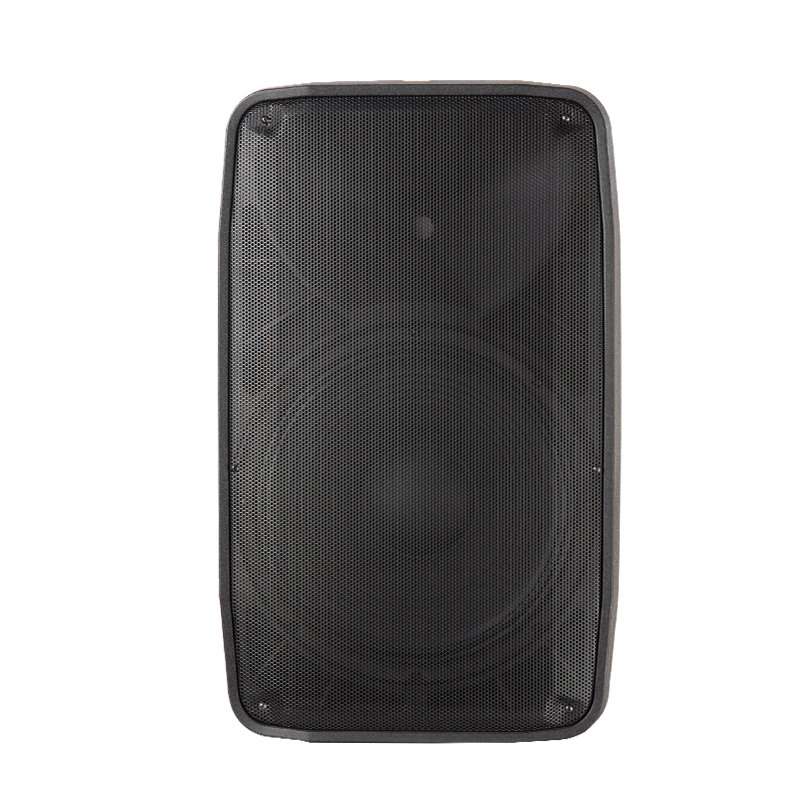
For a smaller powered cabinet the same discipline applies at a different scale. A 15-inch active PA speaker published at 97 dB sensitivity, 123 dB maximum SPL, 400 W RMS and 800 W peak, with a 1.8 kHz crossover in a birch plywood enclosure, gives a compact list of checkable claims: sensitivity and max SPL on your meter or with gated measurement software, power handling over a longer listen at realistic programme levels, and the crossover behaviour audible on material you know well. One caveat belongs in every sample plan: published sensitivity figures may not state their reference condition, so confirm it with the factory as part of the RFQ rather than assuming 1 W/1m or 2.83 V/1m.
For low-frequency extension, a powered 18-inch subwoofer published at 1000 W RMS and 2000 W peak, 131 dB maximum SPL, 35 Hz to 180 Hz and 98 dB sensitivity is a good worked example: the sensitivity and power figures again reconcile with the printed maximum SPL, and the 35 Hz bottom limit is a claim your room and your measurement gate, not your ears alone, should confirm.
What to measure on a driver sample
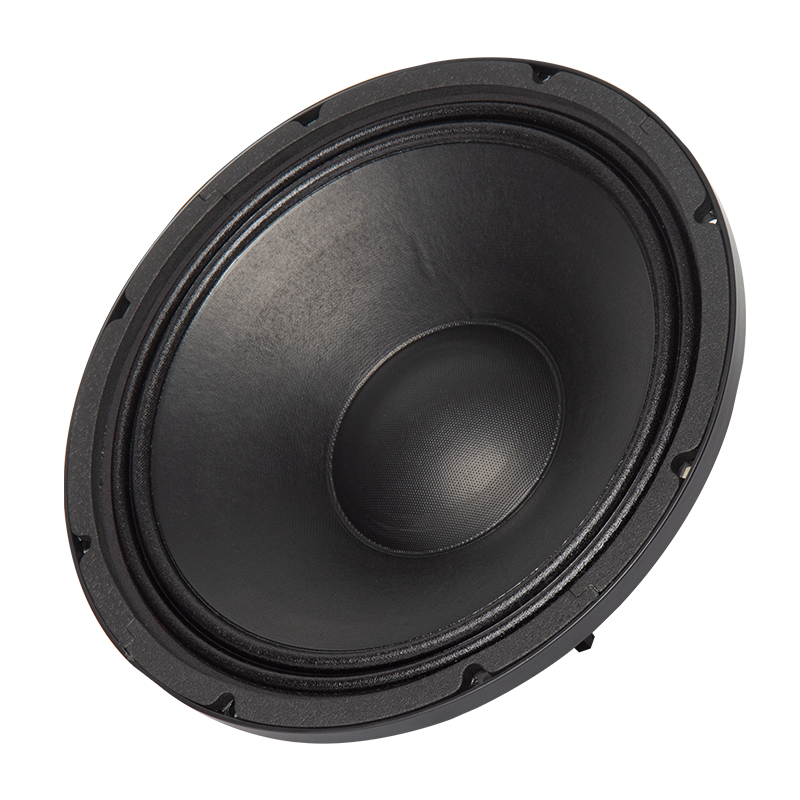
Raw transducers are easier to measure than cabinets and less forgiving of sloppy method, because every figure is checkable with a test box and a signal analyser. A 15-inch neodymium woofer driver published at 800 W RMS and 1600 W peak, 98 dB sensitivity, 45 Hz to 3000 Hz, 8 ohm, with a die-cast aluminium basket, double spider and paper cone — the 15NDL100 — can be verified parameter by parameter in an afternoon: impedance curve and resonance against the 8 ohm rating, small-signal response against the 45 Hz lower limit, power handling against a programmed test signal, and distortion against levels you would actually deploy.
Two habits make driver sampling conclusive. First, measure more than one sample of the same model: unit-to-unit spread in resonance and sensitivity tells you more about the factory's process than any single golden sample. Second, record the test conditions in the acceptance document — the same measurement taken in a different fixture can differ by amounts that look like defects but are not, and a written condition list prevents that argument entirely.
What to evaluate on a headphone sample
Headphone samples are evaluated differently: the lab work is simpler, but the fit-and-finish and the accessory programme matter more, because headphones live in users' hands. A closed-back studio monitoring model published with 50 mm neodymium drivers, 10 Hz to 35 kHz response, 32, 80 and 250 ohm impedance variants and a detachable braided OFC cable — the studio monitoring headphones built on this platform — gives a buyer four concrete checks: frequency balance on known reference material, isolation behaviour in a real room, the impedance variant that matches the intended use, and the detachable cable's seating and strain relief after repeated connect cycles.
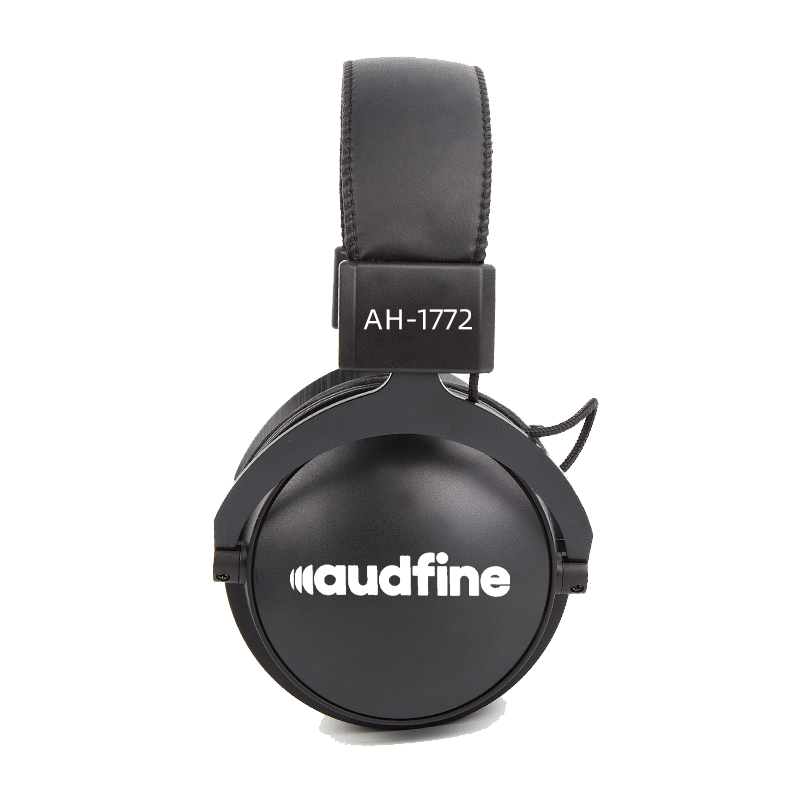
Because headphones are worn, add two non-electrical items to the sample checklist: clamping force and headband adjustment across a range of head sizes, and the condition of ear pads after a long session. Both are among the most common field complaints in the category, and both are visible in a ten-minute evaluation that too few sample rounds include.
From accepted sample to trial order
An accepted sample proves the factory's sample bench; a trial order proves its production line. The purpose of the trial is narrower than buyers sometimes expect — it exists to demonstrate that unit number fifty matches unit number one, not that a single hand-finished sample can be made to measure well.
Structure the trial around consistency checks: measured figures across several units from the run, finish stability, packaging surviving the agreed transport condition, and paperwork matching physical goods. This is also the stage where capacity becomes concrete. Ask for it by category, because a monitoring headphone, a PA cabinet and a raw woofer differ enormously in line time and unit value. The honest format looks like this: roughly ten thousand monitoring headphones a month, roughly three thousand speakers a month and roughly seven thousand speaker drivers a month, with the note that lines can be scaled for volume programmes as orders grow. A factory that decomposes its output this way knows its floor; a single blended number usually means nobody has counted.
Keep the reference sample discipline through the trial: the accepted sample stays the physical embodiment of the specification, every deviation found during the trial goes into the written specification once accepted, and the document that leaves the trial stage is the one the pre-shipment inspection will be written against.
Pre-shipment inspection: what it must cover
Pre-shipment inspection is the last point at which a defect can be caught before freight, customs and distance make it expensive. For pro audio, an inspection that only counts cartons is not an inspection. The scope worth agreeing covers five layers:
- Quantity and packing list — carton counts against the commercial documents, palletisation and container loading plan as agreed.
- Cosmetic condition — cabinet finish, grille fit, printing and labelling against the reference sample, on an agreed sampling plan rather than a mood.
- Function and measurement spot checks — units powered and signal-tested, with a subset measured against the acceptance figures from the sample round.
- Accessories and documentation — cables, mounting hardware, manuals and any customer-supplied items present, correct and packed as specified.
- Export packaging — carton markings, drop and handling condition as agreed for the shipping mode, and container fit.
Decide before production who performs the inspection: the factory's own quality team, a third-party inspection agency acting for you, or your own staff visiting the line. All three work; what does not work is deciding after the goods are packed. State the choice, the sampling plan and the acceptance criteria in the order documents, so the inspection is a verification of an agreement rather than a negotiation.
Paperwork: incoterms and payment in the sample-to-order path
The commercial frame should be settled early enough that the sample shipment itself rehearses it. The factory ships under the standard export terms — FOB, CIF, DAP and DDP — and accepts T/T, L/C and credit card, so the payment and term combination you intend for volume is available from the first trial. Match the term to your own logistics setup: FOB suits buyers with a forwarder in China, CIF adds freight and insurance to the seller's scope, and DAP or DDP shift more of the journey — and more of the paperwork — onto the factory. Whichever you choose, confirm in writing what the quotation includes, because the difference between terms is exactly where first-container surprises live.
Destination details belong in the same conversation: the consignee and marking requirements, any labelling for the destination market, and the mains voltage and plug configuration for powered units. A factory exporting to more than sixty countries will have answered these questions before; the ones you fail to ask are the ones that resurface at the port.
Frequently asked questions
How does the audio sample order process work with a factory?
You send a structured RFQ stating the model, the application, the figures the sample must prove and the trade terms you intend to use; the factory confirms configuration and ships the sample with supporting graphics and documentation; you measure against the pre-agreed acceptance criteria; and the outcome is either a documented acceptance — the sample becomes the reference — or a written list of deviations to resolve.
Can I order samples before committing to production?
Yes. Samples and trial orders for quality testing are a published part of how this factory works with brand buyers, stated on the company profile and on the product pages themselves. Agreeing in advance what the sample must prove is what turns the round into a decision rather than an impression.
What should a pre-shipment inspection cover for pro audio?
Five layers: quantity against the packing list, cosmetic condition against the reference sample on an agreed sampling plan, function and measurement spot checks against the acceptance figures, accessories and documentation, and export packaging in the agreed transport condition. Who performs it should be decided before production, not after packing.
Why measure more than one sample unit?
Unit-to-unit spread in resonance, sensitivity and finish tells you about the production process, not just the product. A single golden sample proves a factory can make one good unit; several consistent samples prove it can make a batch.
Which capacity figure should I ask for?
Ask by category. Monitoring headphones, loudspeakers and raw drivers run on different lines at different rates, so a credible manufacturer states each separately — and explains when lines can be scaled for volume programmes rather than quoting one blended total.
How do I keep the sample and the shipment identical?
Two habits: a reference sample retained by both sides, and a written specification that absorbs every accepted deviation. The pre-shipment inspection then compares the goods against that pair, and drift is caught at the factory gate instead of at destination.
Start the round
A sample round run this way ends with three artefacts: a measured acceptance, a reference sample, and a specification document that matches both. Those three things are what turn a factory relationship into a product range — line arrays, PA speakers, subwoofers, drivers and headphones added category by category over years. Contact the Audfine team to plan a sample order for the models relevant to your programme, and bring the eight-point checklist above with you.