Sourcing professional audio from China is no longer a question of whether a factory exists — hundreds do. The question that decides whether a programme succeeds is which factory, on what terms, verified by what evidence. This guide walks through the complete buying cycle for importers, distributors, rental companies and audio brands that work with an OEM and ODM audio manufacturer in China: how to define the programme before the first enquiry, how to vet a factory using evidence instead of assurances, how to run sampling and trial production, and how to set trade terms so the first container arrives the way the sample promised.
It is written from the manufacturer's side of the table. Audfine builds active line arrays, PA speakers, powered subwoofers, speaker drivers and studio monitoring headphones under its own brands and under customer programmes, and exports to more than sixty countries. The checks described below are the ones a serious factory expects a serious buyer to make — and the ones a factory that cannot pass them would rather you skipped.
What a professional audio OEM and ODM manufacturer in China actually supplies
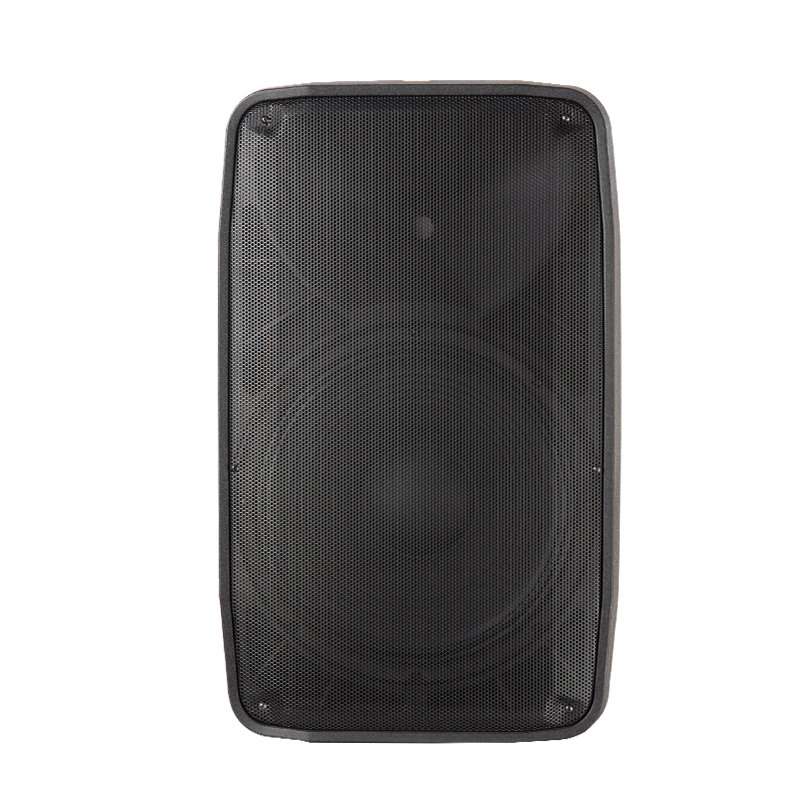
The scope of a pro audio factory is wider than most buyers assume at first contact. A full-range manufacturer covers loudspeakers and line arrays at system level, powered and passive cabinets, raw transducers — woofers and compression drivers sold as components — and monitoring headphones for studio and installation use, alongside studio equipment and professional audio accessories. OEM and ODM service runs across that entire scope: some customers bring a finished specification for an existing product family, others select and adapt a platform the factory already builds.
Two consequences follow for buyers. First, a factory that manufactures its own branded ranges in parallel with customer programmes has a live reference to show: the published specifications, the product pages, the documentation are all inspectable before you send a single message. Second, category-level capability is not uniform. A plant that winds voice coils and assembles cones for drivers operates different lines from one that cuts birch plywood and loads DSP amplifiers — and a credible manufacturer states its output separately for each category rather than quoting one blurred figure for everything. Professional electroacoustics is the operative frame here: the products, the buyers and the questions all differ from consumer audio, and a factory that lives in that frame will answer differently from one that assembles consumer electronics.
Stage 1 — Define the programme before the first enquiry
Most weak quotations trace back to a weak first enquiry, and most weak enquiries share one defect: the buyer has not yet decided what they are actually asking the factory to contribute. Before writing to any manufacturer, three definitions should be settled on your side.
- The application and the market. A touring line array, a fixed-installation PA pair, a subwoofer for rental fleets and a studio monitoring headphone line each imply different constructions, different connector panels and different destination-market details. Stating the application and the countries of sale up front lets the factory flag mains configuration, voltage, plug type and labelling as confirmation items rather than surprises.
- The division of labour. Decide — at least provisionally — whether you bring the specification or adapt one of the factory's platforms. The full comparison of the two modes is covered in the companion guide to OEM versus ODM for audio brands; for the purposes of this walkthrough it is enough to know which direction you are leaning, because it determines what the factory quotes: engineering effort and tooling in one case, platform adaptation in the other.
- What a successful sample proves. Decide in advance which three or four measured figures matter most for your market, and write them down. A sample evaluated against a pre-agreed list is a decision; a sample unpacked and played with is an opinion.
Stage 2 — Vetting an audio OEM and ODM manufacturer in China
Vetting is where B2B sourcing is won or lost, and the good news is that most of it can be done from your desk. The evidence to request divides into four groups.
Published, inspectable specifications. A manufacturer confident in its data publishes per-model specifications and keeps them consistent across datasheet, product page and quotation. Ask for the datasheet of any model in your target category and read how it is written: sensitivity with its stated conditions, power handling split into RMS and peak, frequency response without invented tolerances. Where a factory declines to state a measurement condition, treat that as a question to resolve in the RFQ — not a licence to fill the gap with assumptions. A useful stress test is to compare a system-level product with its component parts: an active line array whose woofers and compression drivers are also sold separately should quote figures that fit together, and the active line array technical guide shows what that fit looks like in practice.
Category-level capacity. Ask what the factory builds per month, and insist the answer comes by category. A single blended "total output" number is a red flag in pro audio, where a monitoring headphone, a PA cabinet and a raw woofer differ enormously in unit value and line time. A concrete example of the honest format: around ten thousand monitoring headphones per month, around three thousand loudspeakers per month and around seven thousand speaker drivers per month, with the note that lines can be scaled for volume programmes as orders grow. The specific numbers matter less than the shape of the answer — a factory that can decompose its output by category is a factory that actually knows its floor.
Export track record. Pro audio export is a logistics discipline as much as a manufacturing one. Ask which incoterms the factory routinely ships under, which regions it ships to, and what documentation it provides. A manufacturer shipping to more than sixty countries across North America, Europe, Asia and Latin America has handled the paperwork combinations you are about to create; one that has never cleared a consignment to your port will learn on your order.
Engineering responsiveness. This one is measured, not asked. Send a technical question during vetting — a crossover point, a driver substitution, a cabinet material trade-off — and observe what comes back. An answer that cites the product's own documentation and states clearly which parts would need confirmation is worth more than any brochure. Evasive or generic replies during vetting become evasive replies during sampling.
Stage 3 — Sampling: what a sample must prove
Factories that serve brand buyers accept samples and trial orders as a normal stage of a programme, and a well-run sample round is short because both sides prepared it in Stage 1. Three rules keep it disciplined.
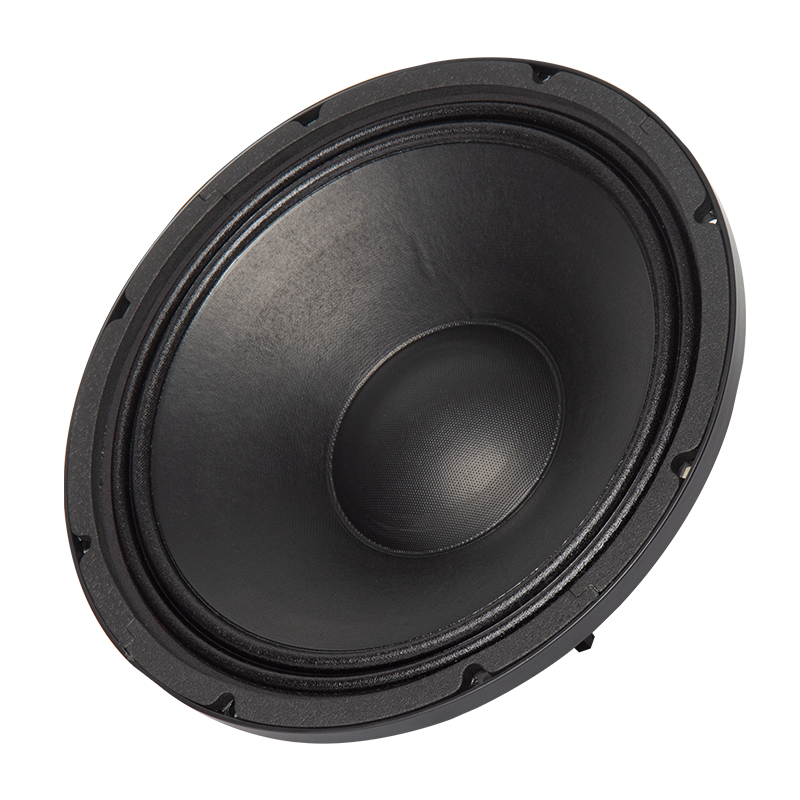
First, measure against the published figures. If the datasheet says 98 dB sensitivity for the woofer you are evaluating, your sample round should be capable of confirming or questioning that number, not just admiring the cabinet. For a component-level programme this is straightforward — the 15NDL100 fifteen-inch woofer, for instance, publishes 800 W RMS / 1600 W peak power handling, 98 dB sensitivity and a 45 Hz–3000 Hz response, all of which are checkable against the sample. For a finished cabinet, agree which anechoic or gated measurements will be shared by the factory and which you will verify on your side.
Second, keep the reference sample. Once a sample is accepted, it becomes the physical embodiment of the specification, and every later batch is compared against it. The factory should hold its copy; you hold yours. This single habit prevents more quality disputes than any contract clause.
Third, document every deviation. Real sampling produces changes: a connector swapped for availability, a grille texture adjusted, a measurement that lands slightly off the datasheet and is traced to a fixture difference. Each change, once accepted, goes into the written specification. A programme whose specification document matches its reference sample after sampling is ready for production; one where the truth lives in an email thread is not.
Stage 4 — From trial order to production consistency
Between the accepted sample and container-scale volume sits the trial order, and its purpose is narrower than buyers sometimes expect: it proves that the production line, not the sample bench, can reproduce the reference. The checks that matter during a trial are the unglamorous ones — unit-to-unit consistency of the measured figures, finish stability across the run, packaging surviving the intended transport condition, and the paperwork matching the physical goods.
This is also the stage where the capacity conversation from Stage 2 becomes concrete. If the programme grows, you want to know now — not at peak season — whether the factory adds lines for volume programmes and what it needs from you to plan that. The answer is category-specific and seasonal, which is exactly why it belongs in the RFQ as a question about your programme rather than a promise in a brochure.
Stage 5 — Trade terms, documentation and destination-market details
Trade terms are where manufacturing quality meets logistics reality, and a China-based programme has four common options: FOB, where the goods transfer to your forwarder at the Chinese port; CIF, which adds freight and insurance to your destination port; DAP, delivered to your address ready for import clearance; and DDP, delivered with duties paid. Established exporters quote any of the four; what matters is that you state your preference and destination early, because the quotation, the packing and the documentation all follow from it.
Destination-market details ride alongside the incoterms decision. Mains voltage and frequency, plug type, labelling language and packaging print all vary by market, and for export orders these are confirmation items agreed in writing — a factory should ask, not assume, and a buyer should state, not guess. The same discipline applies to any regulatory requirement your market imposes: raise it explicitly in the enquiry so the factory can confirm what applies to the specific product and destination, rather than discovering the topic at the port.
Category notes: line arrays, drivers and headphones
The walkthrough above applies across the catalogue, but each family has its own emphasis when briefed to a Chinese manufacturer.
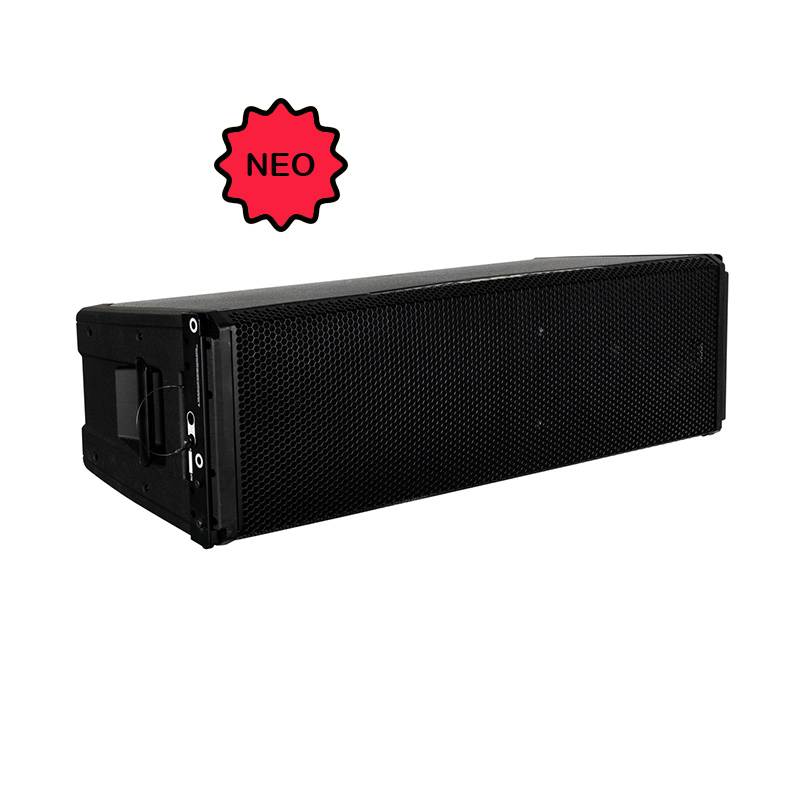
Active line arrays and PA systems. System products are specified at three levels at once — the enclosure and its coverage, the amplifier platform, and the transducer complement — so an OEM brief should carry all three. A documented reference helps both sides: the HDL50-A dual 12-inch powered line array publishes 2200 W RMS / 4400 W peak, 140 dB maximum SPL and 45 Hz–18 kHz response, the kind of system-level baseline from which an OEM variant or an ODM adaptation starts. Buyers assembling a family rather than a single model will find the range structure on the active line array catalogue page.
Speaker drivers. Component programmes live or die on measurement discipline, because the driver's published figures are the raw material of the buyer's own cabinet design. Impedance, sensitivity, power handling and frequency response must be stated with the same numbers on datasheet, sample report and production test. The dual value of a driver supplier that also builds finished systems is worth noting: the same measurement culture serves both, and a buyer can audit it through either door.
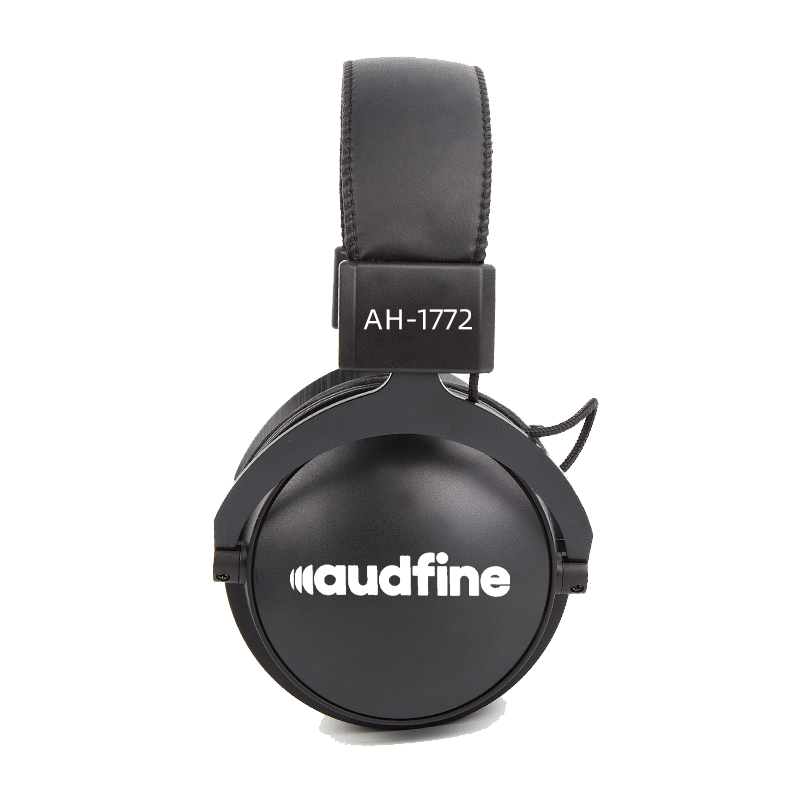
Monitoring headphones. The headphone programme is specified around the transducer and the wear: driver size and magnet type, frequency response, impedance options for different source devices, and the cable architecture. The studio monitoring headphone line illustrates the platform approach — the DH-1772 closed-back model, for example, publishes 50 mm neodymium drivers, a 10 Hz–35 kHz response, 32/80/250-ohm impedance options and a detachable braided cable, and an OEM programme can carry that platform into buyer-specific impedance variants, housings and branding.
What to put in an RFQ to a China loudspeaker factory
The enquiry is the interface between everything above and the factory's first quotation. Eight items, stated plainly, let a manufacturer quote in one pass:
- Product family and application — active line array, PA cabinet, subwoofer, raw driver or headphone; and the venue or use case it must serve.
- Mode — OEM against your specification, ODM from a platform model, or undecided with a request for advice.
- Reference model or specification — either the factory model you are adapting, or your own target figures for sensitivity, power handling, impedance and response.
- Destinations — the countries of sale, so mains configuration, voltage, plug type and labelling are confirmed rather than assumed.
- Trade terms preference — FOB, CIF, DAP or DDP, with the destination port or city.
- Sample plan — what the first sample must prove and how it will be evaluated.
- Programme context — volume ranges and whether the range will extend to further models, so tooling and lines are planned honestly.
- Open questions — measurement conditions, tolerances, anything the datasheets leave unstated. A factory that answers these in writing is showing you how it will behave for the next five years of the programme.
Frequently asked questions
How do I verify a Chinese audio factory before sending an enquiry?
Read the published specifications for consistency, ask for capacity decomposed by category, check the export footprint and the incoterms the factory quotes routinely, and send one technical question to test engineering responsiveness. All four checks happen before any money moves.
Can I get samples before committing to production?
Factories that serve brand buyers accept samples and trial orders as a normal stage. Agree in advance what the sample must prove and which figures will be measured on both sides, so the sample round ends in a documented acceptance rather than an impression.
Which incoterms should a first order use?
That depends on your own logistics setup. FOB suits buyers with a forwarder in China; CIF adds freight and insurance; DAP and DDP shift more of the journey onto the seller. State the preference in the enquiry and confirm what the quotation includes — the four terms are a menu, not a default.
How is capacity communicated honestly?
By category. A credible pro audio manufacturer separates monitoring headphones, loudspeakers and raw drivers into distinct monthly figures and explains when lines can be scaled for volume programmes — because unit values and line times differ enormously across those categories.
What single habit keeps an OEM programme consistent?
A written specification that absorbs every accepted change, paired with a reference sample held by both sides. Every later batch is measured against that pair; drift is caught at production, not at destination.
Working with the factory, not just buying from it
The complete buying cycle described here — define, vet, sample, trial, ship — is not a sequence of administrative steps. It is a filter that ends with the manufacturers who document what they build, quote what they can deliver, and answer technical questions in writing. Those are the factories an audio brand can grow a range with, category by category, over years. Contact the Audfine team to start an OEM or ODM audio programme, or begin by reviewing the published specifications of the line arrays, drivers and headphones linked above.