Ask three people how many subwoofers a small venue needs and you will usually get three different numbers. The honest answer is that the count is not a trivia answer — it is the output of a short chain of decisions: what the room does to low frequencies, what the programme material demands, which deployment pattern the installation can physically accommodate, and how the cabinet count interacts with amplifier channels, transport and floor space. For a buyer, each of those decisions belongs in the specification you send to the factory, because the quantity line on a purchase order is the one item that is hardest to change after production.
This guide is written for distributors, rental companies, installation contractors and brand owners who source from an active subwoofer manufacturer in China. It does not hand out a universal number — no manufacturer can do that responsibly without the room data. What it does is set out how the count is actually derived, which published figures drive it, and how to put the quantity question to a supplier so the answer you get back is an engineering response rather than a catalogue.
Why the cabinet count is a procurement decision, not an afterthought
Quantity touches almost every commercial dimension of a subwoofer programme. The number of cabinets determines how many amplifier channels and mains circuits the venue has to provision, how much truck space and storage a rental fleet carries, how much floor area the installation surrenders to the system, and how the order is phased. A count that is revised after production means re-made packaging, re-planned shipments and a specification that no longer matches the goods in the box.
There is also a system-design reason the count belongs in the enquiry. Subwoofers interact with each other: where two cabinets are placed changes what the pair produces at the listening positions, and the placement options available depend on how many cabinets the design has to work with. A buyer who specifies the intended pattern and the cabinet count together gets a system that has been thought through as a whole, rather than a stack of identical boxes that happens to be the right number.
The room variables that decide the count
No responsible sizing starts with a formula alone. It starts with the variables a buyer can measure and state, and these are worth collecting before the first enquiry is written:
- Floor area and ceiling height. The volume of the room and the height at which energy builds up both influence how many sources are needed to cover it evenly.
- Audience layout. Seated rows, standing areas and dance floors place listeners at different distances and heights from the cabinets, and each layout tolerates level variation differently.
- Programme material. A speech-led room and a venue with DJ sets or a full band place very different demands on the lowest octave, and the count follows.
- Position constraints. Where cabinets can physically stand — beside the stage, under the balcony, along the side walls — narrows the placement patterns before any acoustic argument is made.
- Boundary conditions. Cabinets placed against walls or in corners receive room reinforcement that free-standing positions do not; the effect is real and it is confirmed on site, not on paper.
Stating these five items in the enquiry does two things. It lets the supplier's engineers respond with a configuration instead of a guess, and it creates a record both sides can check the delivered system against.
The published figures that drive the sizing
Once the room variables are on the table, the sizing works with the published numbers of the candidate cabinets: sensitivity, maximum SPL, power and frequency response. The three powered subwoofers in the current Audfine active subwoofer range are a useful illustration, because their printed figures show how little the number of cabinets has to do with the frequency range a cabinet reaches.
| Model | Configuration | Power | Frequency response | Max SPL @ 1 m | Sensitivity | Crossover |
|---|---|---|---|---|---|---|
| PRX918 | 18" subwoofer speaker | 1000W RMS, 2000W Peak | 35Hz - 180Hz | 131 dB | 98dB | - |
| SUB-8003 | 18" subwoofer speaker | 1000W RMS, 2000W Peak | 35Hz - 180Hz | 131 dB | 98dB | - |
| DS218A | Dual 18 inches powered subwoofer | 2000W RMS, 4000W Peak | 35Hz - 180Hz | 131 dB | 98dB | 90 Hz |
Read across the rows: the printed sensitivity, maximum SPL and frequency response are identical for all three. What differs is the amplifier power and the driver count — the two single 18-inch models are rated at 1000 W RMS with 2000 W peak, and the dual 18-inch DS218A is rated at 2000 W RMS with 4000 W peak. For a buyer, that means the quantity decision is not made on frequency reach; it is made on how much low-frequency energy each position has to produce and how many positions the design uses.
The published maximum SPL can be sanity-checked against the other two figures. For the single 18-inch models, the printed 98 dB sensitivity and the 2000 W peak rating land at 131 dB through the 10 log relationship — the same figure the page carries. That kind of arithmetic is a reasonable consistency check on any specification sheet, with one caution: it assumes the reference conditions behind the printed numbers, and those conditions (measurement distance, loading, processing engaged) should be confirmed with the supplier rather than assumed. Where a printed figure cannot be reproduced from the other two, the published values govern, and the question goes to the factory.
Deployment patterns and what each implies for quantity
The count and the placement pattern are decided together. Four patterns cover most small-venue work, and each has a different relationship with quantity.
A stereo pair: the minimum baseline
One subwoofer per side is the starting point for most music programmes, because it keeps the low-frequency energy distributed like the stereo image of the tops. It is also the configuration with the simplest logistics: two cabinets, two positions, one signal feed split at the processor. Where the room is small and the programme is moderate, a pair of single 18-inch cabinets in the right positions is frequently where the count settles — but that conclusion belongs to the room, not to the catalogue.
A coupled centre or side block
Cabinets placed close together couple: where the spacing stays small relative to the wavelength, the group behaves more like a single larger source, and a row of coupled cabinets produces more output than the same cabinets spread apart. This is why a tight block of two or four units is a common answer when one position has to work harder. The planning convention is useful; the actual gain in a specific room is confirmed by measurement, because spacing, boundaries and processing all modify it.
Distributed positions and delayed fills
Long, narrow or irregular rooms often defeat a single stack at the front: listeners near the cabinets get too much, listeners at the back get too little. Several smaller groups — one pair at the front, another part-way down the room or along the sides, delayed to the main system — trade peak output for consistency. This pattern usually raises the cabinet count while lowering the rating each individual cabinet needs, which is a trade many installation buyers prefer once they see the floor plan.
Cardioid and reversed arrangements
Where open microphones or neighbours make stage-side low-frequency energy a problem, one cabinet in a stack can be reversed with inverted polarity and delay to cancel energy behind the array. The arrangement needs processing capability per cabinet and it changes the count by at least one unit; it is specified before the order because it cannot be improvised with hardware that does not support it.
Choosing between fewer large cabinets and more smaller ones
Once the total low-frequency requirement is understood, the same requirement can often be met by different combinations of cabinet count and cabinet size, and the choice is as much logistical as acoustic.
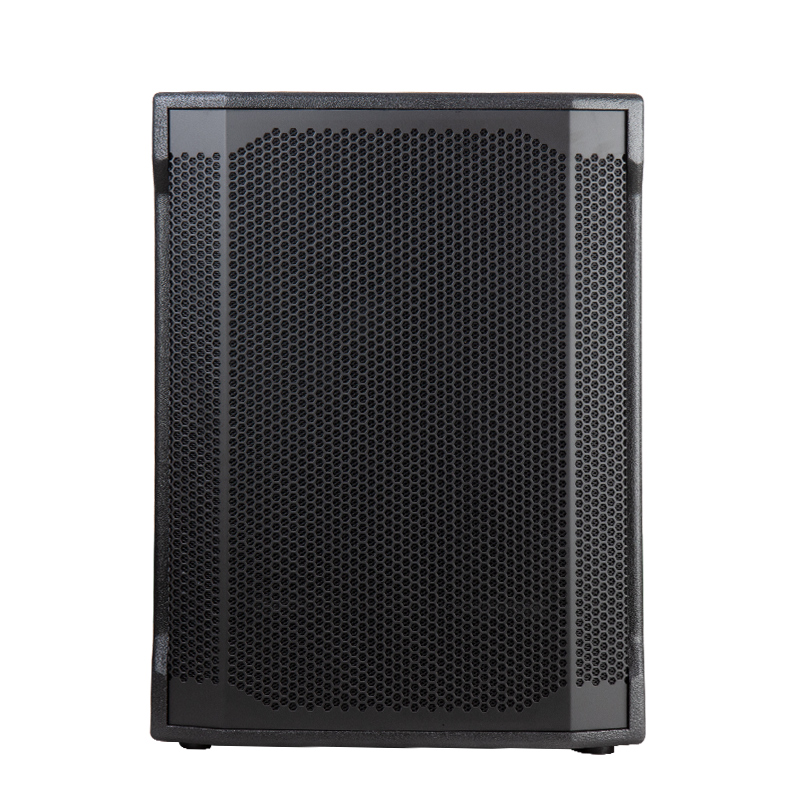
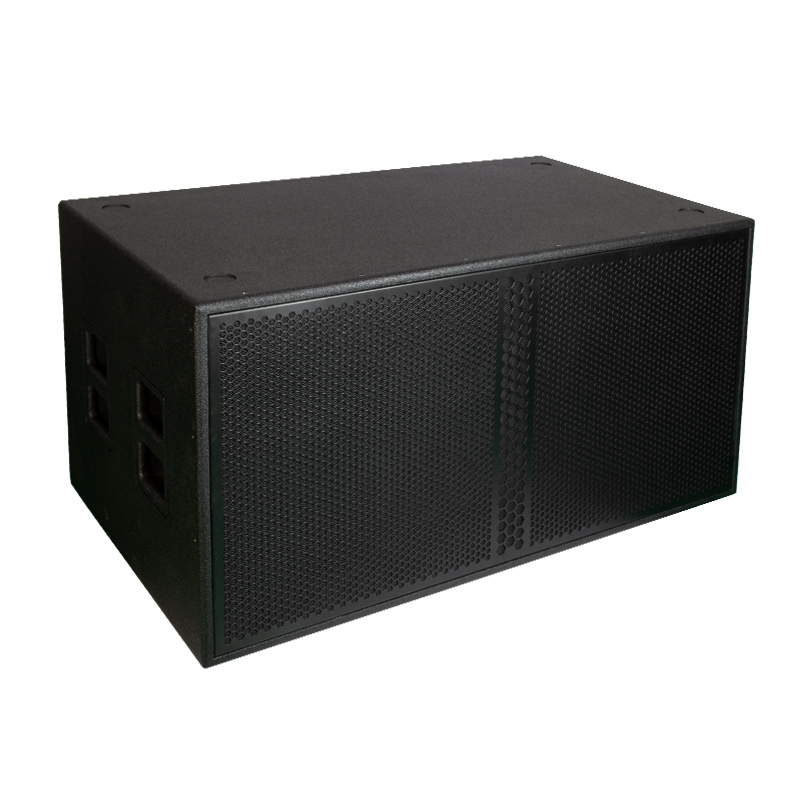
A dual 18-inch cabinet such as the DS218A dual 18-inch powered subwoofer puts two drivers and 2000 W RMS behind a single position. Fewer cabinets means fewer stands of hardware to cable, fewer positions to align, less truck packing per unit of output, and a smaller share of the floor occupied. The count for a given system drops, and with it the installer's work on site — at the expense of weight and handling per box, which matters to crews who load and strike every week.
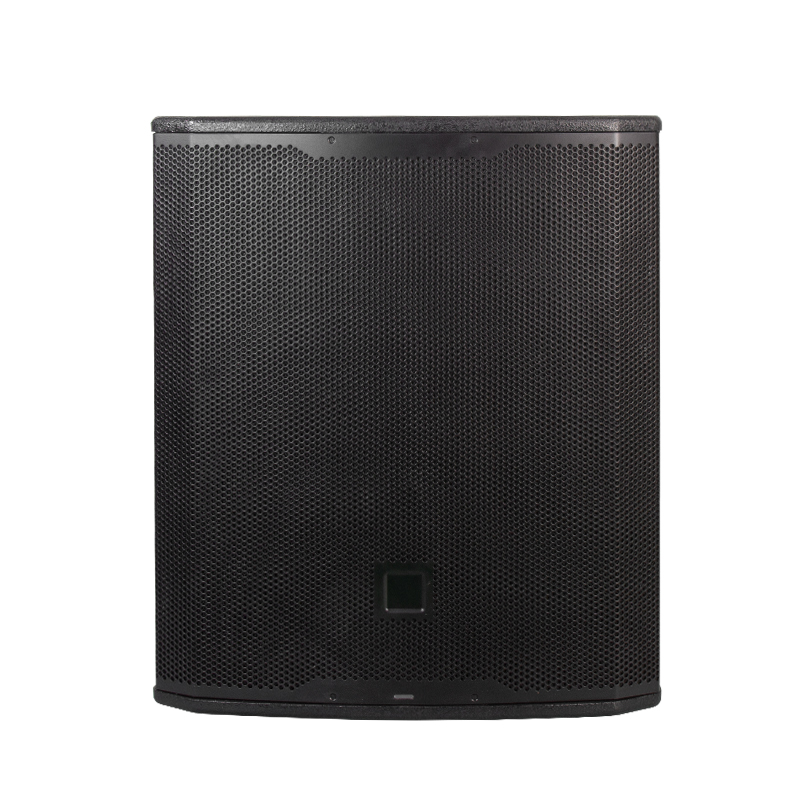
More, smaller cabinets invert the trade. A fleet of single 18-inch units — the PRX918 active subwoofer or SUB-8003 portable subwoofer class — gives the designer more positions to work with, lets a rental company scale a system cabinet by cabinet as bookings demand, and limits the damage when one unit is out of service. Two single cabinets can also be split into a distributed pattern later, which a pair of dual 18-inch cabinets cannot do as flexibly. Neither approach is universally correct; the room, the crew and the business model decide.
Distance, level and the limits of planning arithmetic
Buyers sometimes try to derive the count from level arithmetic: take the printed maximum SPL at 1 m and subtract 6 dB for every doubling of distance in free-field conditions, then decide how many cabinets are needed to hold a target level at the back of the room. As a planning estimate the arithmetic is legitimate, and it is worth running — with its limits stated. It assumes free-field radiation, ignores room reinforcement and boundary gain, says nothing about coverage evenness, and treats the printed maximum SPL as a single number rather than a figure with conditions attached.
The practical sequence that works better: run the arithmetic to bracket the answer, choose the deployment pattern the room allows, then verify on site with a measurement microphone before the final quantity is committed. For an installation contractor, that verification step is also what protects the margin — it is far cheaper to adjust a placement plan than to add cabinets after commissioning has exposed a gap in coverage.
Keeping the fleet count stable: driver availability
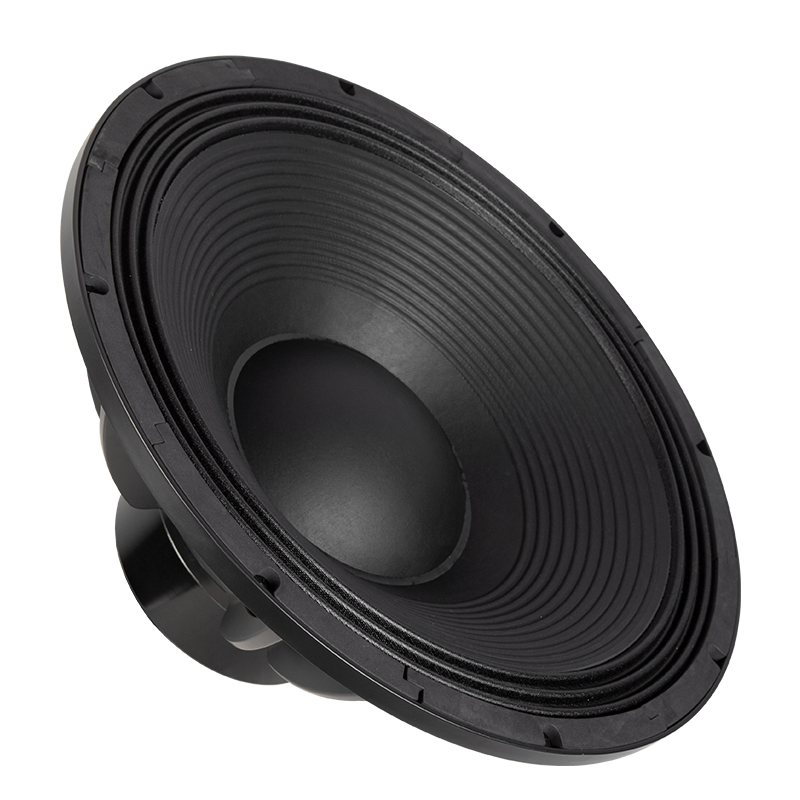
For rental fleets and installed estates, the count that matters year to year is the number of working cabinets. A blown driver takes a cabinet out of rotation until it is replaced, so driver availability belongs in the sourcing decision alongside the cabinet specification itself. Low-frequency drivers from the same range that the cabinets draw on — the 21SW152 at the 21-inch top of the range, or the 18SW115 with its neodymium motor — can be ordered against the same programme, and a spare-driver stock sized to the fleet is a routine line in an order rather than an exception.
Putting the quantity question to an active subwoofer manufacturer in China
For buyers sourcing from a China subwoofer factory, the quantity question is answered properly only when the enquiry carries the context behind it. The items below turn “how many do we need” from a guess into a specification the factory's engineers can respond to:
- Room data. Floor area, ceiling height, and the audience layout with the distances the farthest listeners sit or stand from the cabinets.
- Programme material. The mix of speech, live music and playback the system will carry, and the events that define the busiest case.
- Deployment pattern. Stereo pair, coupled block, distributed groups, or a cardioid arrangement — and any physical constraints on cabinet positions.
- Published figures with conditions. Sensitivity, maximum SPL, power and frequency response, together with the measurement conditions and response tolerance behind them.
- Mains build for the destination market. Nominal voltage, frequency, plug type and the cabinet-side connector, confirmed per market rather than assumed.
- Quantity structure. Whether the order is an evaluation quantity, a first programme volume, or a repeat order against a fleet plan, so production and packaging can be planned to match.
- Service stock. Spare drivers, grilles and hardware sized to the fleet, ordered against the same programme.
- Branding and documentation. Logo treatment, model numbering, packaging and the documents that ship with the goods.
An enquiry built this way gets a response that addresses the room and the pattern, not just the model number — and it gives both sides a written basis for the quantity actually ordered.
Frequently asked questions
Does adding more subwoofers always raise the level?
Not automatically. Cabinets placed close together can couple and produce more output than they would separately, but the gain depends on spacing relative to wavelength, on placement, and on the processing applied. Poorly placed additional cabinets can also create unevenness across the floor. The reliable method is to decide the pattern first and verify the result by measurement.
Can the factory tell me exactly how many cabinets my room needs?
A manufacturer can respond responsibly once the room data, the programme material and the intended deployment pattern are on the table. Without those inputs, any specific number would be a guess, and a guess that reaches production is expensive. Send the room variables with the enquiry and treat the response as an engineering recommendation to be verified on site.
Is one dual 18-inch cabinet equivalent to two single 18-inch cabinets?
They are different tools rather than equivalents. A dual-driver cabinet concentrates output in one position and simplifies cabling and transport; two single cabinets give the designer more positions and more flexible scaling. The printed figures show how the Audfine range compares on paper — identical sensitivity, maximum SPL and frequency response, with power and driver count as the working differences — and the room and the crew decide the rest.
How does the cabinet count affect a manufacturing programme?
Quantity shapes packaging, production scheduling and shipment planning, and it determines how much spare-driver stock makes sense. Stating the quantity structure early — evaluation, first programme volume, repeat orders — lets both sides plan the programme rather than react to it.
Discuss a subwoofer programme with the factory
Whether the project is a single room or a fleet programme, the useful first step is the same: send the room data, the programme material and the intended deployment pattern, and ask for a configuration rather than a catalogue. The Audfine technical team responds with published figures, placement suggestions and the quantity structure that fits the project.