Professional loudspeakers are specified on paper long before they are specified in a venue. A spec sheet is the first contract between a buyer and a manufacturer: it states what a cabinet or a driver will do under defined test conditions, and it is the document a procurement team returns to when an installation underperforms or a tender requires evidence. For B2B buyers sourcing from a professional speaker manufacturer in China, the ability to read that sheet independently is the difference between a purchase that meets the brief and one that merely looks plausible in a brochure.
This reference explains the specifications that appear most often on pro-audio product pages — power, impedance, sensitivity, frequency response, maximum SPL, crossover topology and dispersion — and shows how each figure should be read when you compare models or brief a supplier. The tables below are drawn from published Audfine product data so you can see the same parameters applied across line arrays, subwoofers, powered speakers and individual transducer components.
Power Rating: RMS and Peak Are Not the Same Number
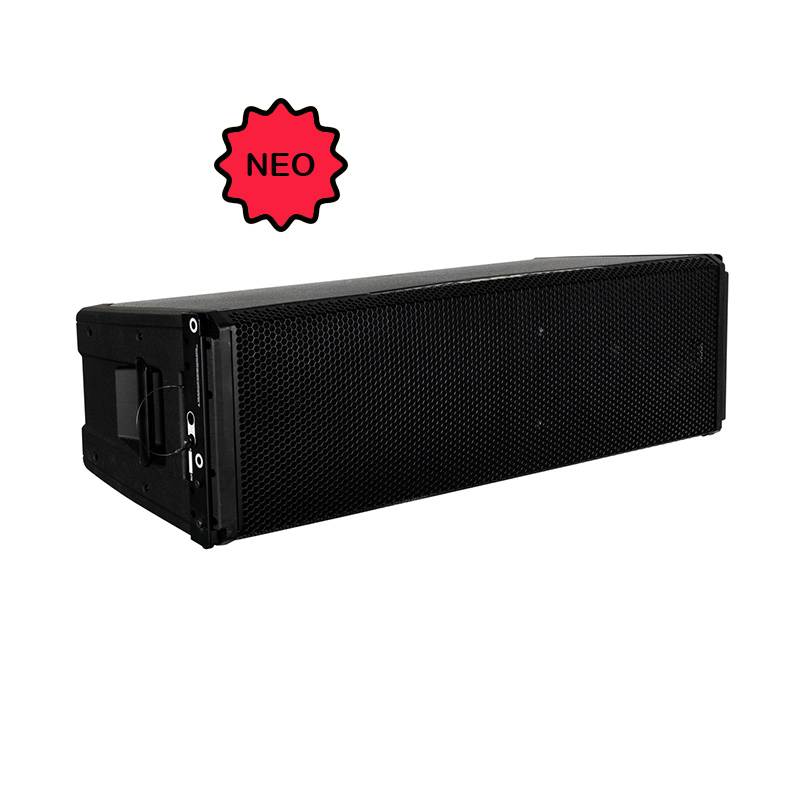
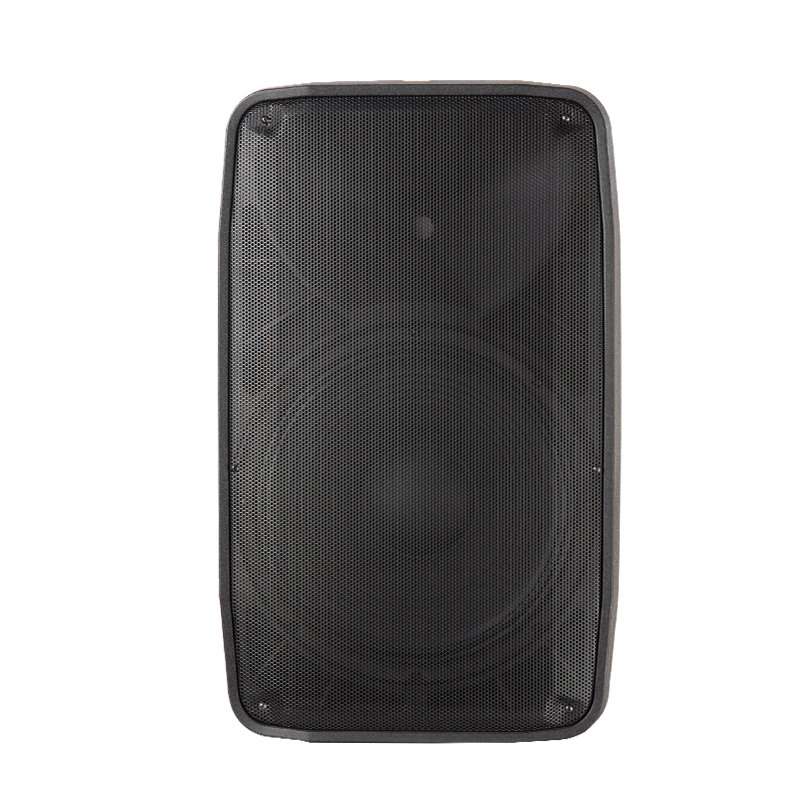
Every serious speaker or driver is rated with two power figures, and the gap between them is intentional. RMS power (sometimes written as continuous power) describes the thermal load the voice coil can sustain without long-term damage. Peak power describes a short burst the component can survive for a fraction of a second. On Audfine product pages the two are shown together, for example 400W RMS / 800W Peak for the HD-15A 15-inch powered loudspeaker and 2200W RMS / 4400W Peak for the HDL50-A dual 12-inch line array.
The figure that matters for system design is RMS, because that is the load your amplifier will deliver for the majority of a programme. A common mistake in procurement is to compare peak figures across brands; peak is the least standardised of the two and tells you almost nothing about usable output. When you issue an RFQ, ask the supplier to state the test signal and duration behind both numbers — a reputable PA speaker manufacturer will define them without hesitation.
Impedance: Why Most Pro Drivers Read 8 Ohms
Impedance is the electrical resistance a driver presents to the amplifier, measured in ohms. Across the entire Audfine transducer range — from 10-inch woofers to 21-inch subwoofer drivers and 1.42-inch compression drivers — the published impedance is consistently 8 ohms. This is not a coincidence; 8 ohms is the de-facto standard for professional low-frequency and high-frequency transducers because it allows predictable parallel wiring and keeps amplifier load within a safe band.
For buyers the practical takeaway is amplifier matching. If you bridge or parallel multiple 8-ohm drivers, the resulting load should remain inside the amplifier's rated range, and that calculation belongs in the system design, not in a last-minute field fix. When a supplier quotes a 4-ohm or 16-ohm variant, treat it as a deliberate option rather than an error, and confirm it maps to the amplifier stock you already run.
Sensitivity and Efficiency
Sensitivity describes how much sound pressure a speaker produces from a given input, almost always expressed as decibels at 1 watt (or 2.83 volts) measured 1 metre on axis. It is the single most useful number for judging how "loud" a box is per watt of amplifier. Published Audfine figures span a wide range by design: the HDL50-A line array module reaches 104 dB, the 15DS115 subwoofer driver sits at 97 dB, while the CD3601 1.42-inch compression driver is listed at 106 dB.
The reason sensitivity matters more than raw power is compounding. A cabinet that is 3 dB more sensitive needs half the amplifier power to reach the same level, which changes amplifier count, rack weight and cabling across a whole install. We have covered the relationship between sensitivity, power and maximum SPL in detail in a companion piece on reading sensitivity and maximum SPL figures, and the same published numbers are reproduced in the tables below.
Frequency Response: Reading Both Ends
Frequency response is the range of tones a speaker reproduces, quoted as a lower and upper limit. The honest version of this number states the tolerance band (typically -3 dB or -10 dB); the less useful version simply prints the outer edges where output has already fallen away. As a buyer you should always ask which tolerance applies.
The low end defines how much low-frequency support a system needs from subwoofers, and the high end defines whether a separate compression driver is required. Active full-range boxes such as the HD-15A and NX-915 are published at 45 Hz – 20 kHz, suitable for vocal and programme material without additional subwoofers for small rooms, while dedicated subwoofers such as the PRX918 and SUB-8003 are deliberately narrow at 35 Hz – 180 Hz so they concentrate energy where cabinets cannot.
Maximum SPL: The Ceiling, Not the Average
Maximum SPL at 1 metre is the loudest clean output a speaker can produce before compression or distortion. It is a ceiling, not a recommended operating level. A line array module like the HDL50-A is published at 140 dB, a number that supports long-throw coverage in large rooms; a compact active speaker published at 121–123 dB is sized for nearer-field use. Comparing maximum SPL only makes sense when sensitivity and power are read together, which is why the speaker overview table keeps the three columns adjacent.
One operational caveat belongs in every tender: maximum SPL at 1 metre does not describe the level at the back of a hall. Free-field level falls by roughly 6 dB for each doubling of distance, so a figure measured at the mouth of the cabinet must be translated through the room geometry before it becomes a coverage claim. Treat published maximum SPL as a component rating, and ask your supplier for array or stack modelling for the actual venue.
Crossover and System Topology
A crossover splits the audio band between drivers — low frequencies to the woofer, high frequencies to the compression driver or tweeter. In active systems the crossover is electronic and sits before the amplifiers, which is why active cabinets list a crossover frequency such as 2.0 kHz on the HD-15A and 200 Hz / 800 Hz on the bi-amped HDL50-A. Passive crossovers sit after the amplifier and introduce insertion loss that must be accounted for in sensitivity.
For buyers the crossover entry on a sheet answers a practical question: how many amplifier channels does this box need, and is the division point appropriate for the drivers used? A two-way active speaker with a 2.0 kHz crossover is a conventional, well-understood design; a three-way line array with multiple crossover points implies more amplification and more tuning, which is a support and training consideration for the installing team.
Dispersion and Coverage
Dispersion, usually quoted in degrees horizontally and vertically, describes the shape of the sound field a high-frequency section projects. It is the figure that decides whether a line array can reach the back rows without blasting the front, and whether a single cabinet covers a wide room or a narrow one. Because dispersion depends on the waveguide and horn rather than the cone, it is most visible in line array and compression-driver product pages, and it is the parameter most often omitted from lower-priced listings.
When you brief a line array supplier, ask for the nominal dispersion and how it behaves off-axis, because the on-axis number alone hides the falloff that determines audience uniformity. A clear dispersion specification is a strong signal that the manufacturer has measured the product rather than estimated it.
Reading a Specification Sheet at a Glance
When a tender lands on your desk with ten cabinets from different brands, a consistent reading order prevents the brochure from winning. Start with sensitivity, because it sets amplifier count before anything else. Move to frequency response and confirm the tolerance band, then to maximum SPL as the ceiling. Only after those three should you weigh power, because power is the means to reach the sensitivity-and-SPL target, not the target itself. Impedance and crossover come last as integration constraints that decide whether the box will actually connect to the amplifiers and drivers you already own.
This order also exposes missing data quickly. A sheet that prints a headline power figure but omits the sensitivity reference condition, or that lists a frequency range without a tolerance, is telling you it has not been measured to a standard you can verify. For a procurement team that is the more useful signal than any single number, because it predicts how the rest of the document should be treated.
Published Audfine Specifications
The two tables below reproduce the published parameters for a representative set of complete loudspeakers and for the full transducer range. They are presented exactly as listed on the product pages so you can verify each entry against the source. No figure here has been estimated or rounded.
Complete Loudspeakers
| Model | Type | Power (RMS / Peak) | Sensitivity | Max SPL @ 1m | Frequency Response | Crossover |
|---|---|---|---|---|---|---|
| HDL50-A | Line array speaker | 2200W RMS, 4400W Peak | 104dB | 140 dB | 45Hz - 18000Hz | 200Hz, 800Hz |
| HDL210 | Active line array speaker | 700W RMS, 1400W Peak | 99 dB | 131 dB | 75Hz - 20000Hz | 2.0 KHz |
| HDL26 | Active line array speaker | 250W RMS, 500W Peak | 95 dB | 131 dB | 95Hz - 20000Hz | 2.0 KHz |
| HDL28 | Active line array speaker | 700W RMS, 1400W Peak | 98 dB | 131 dB | 85Hz - 20000Hz | 2.0 KHz |
| PL210 | Active line array speaker system | 1000W+700W*4 RMS | 98 dB | 130 dB | 45Hz - 20000Hz | - |
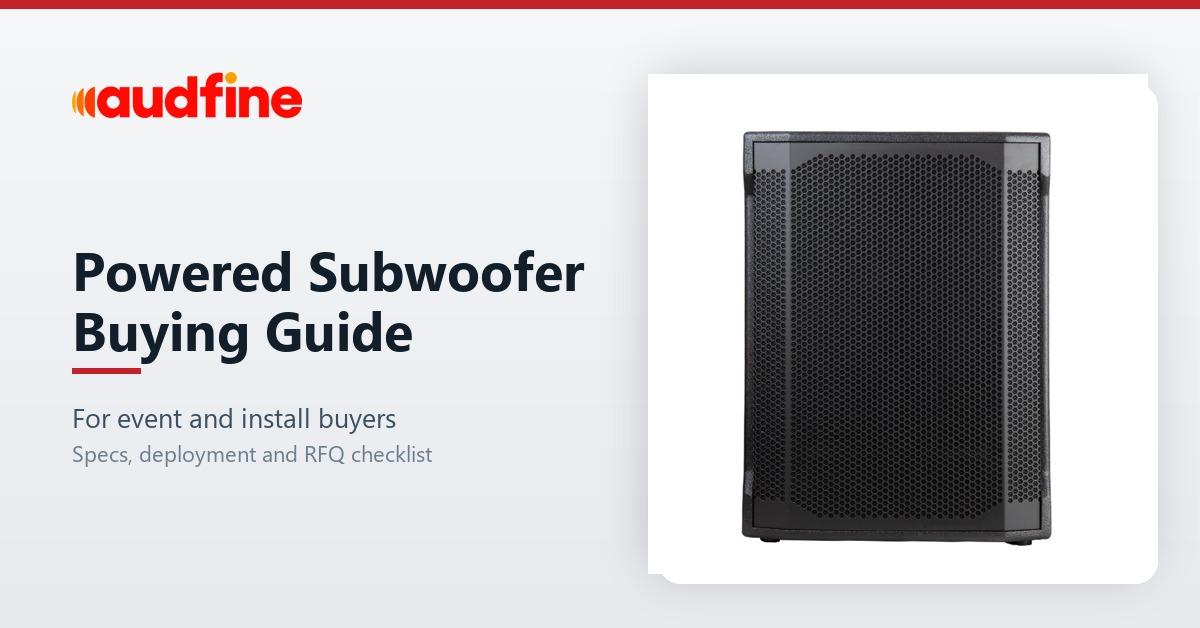
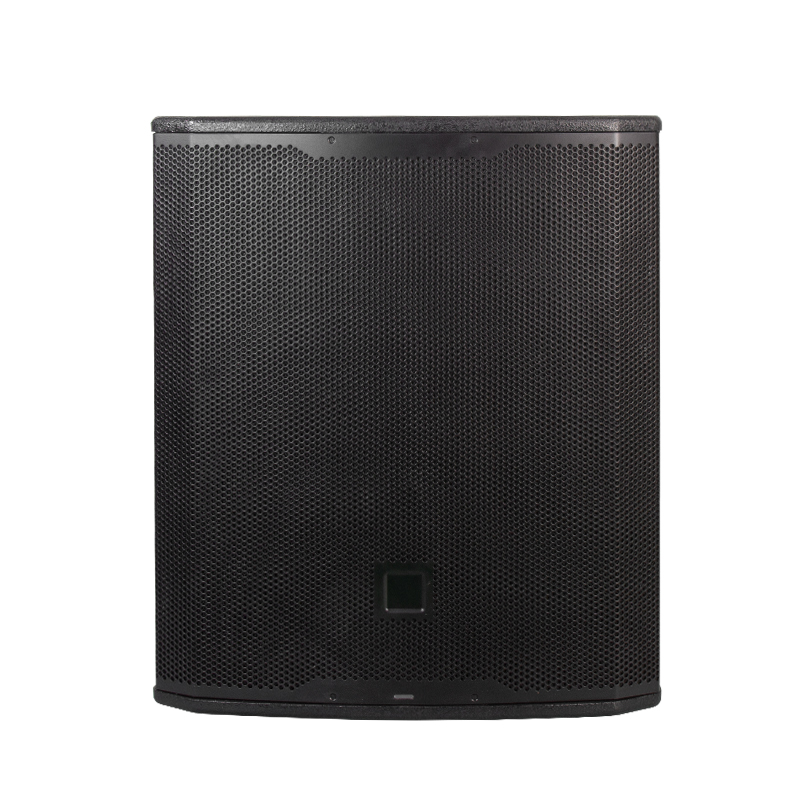
| PRX918 | 18" subwoofer speaker | 1000W RMS, 2000W Peak | 98dB | 131 dB | 35Hz - 180Hz | - |
| SUB-8003 | 18" subwoofer speaker | 1000W RMS, 2000W Peak | 98dB | 131 dB | 35Hz - 180Hz | - |
| DS218A | Dual 18 inches powered subwoofer | 2000W RMS, 4000W Peak | 98dB | 131 dB | 35Hz - 180Hz | 90 Hz |
| HD-15A | 15 inches powered loudspeaker | 400W RMS, 800W Peak | 96dB | 123 dB | 45Hz - 20000Hz | 2.0 KHz |
| NX-915 | 15 inches powered loudspeaker | 400W RMS, 800W Peak | 97dB | 123 dB | 45Hz - 20000Hz | 1.8 KHz |
| LSA-12A | 12 inches powered loudspeaker | 400W RMS, 800W Peak | 95dB | 121 dB | 50Hz - 20000Hz | 2.0 KHz |
Transducers and Drivers
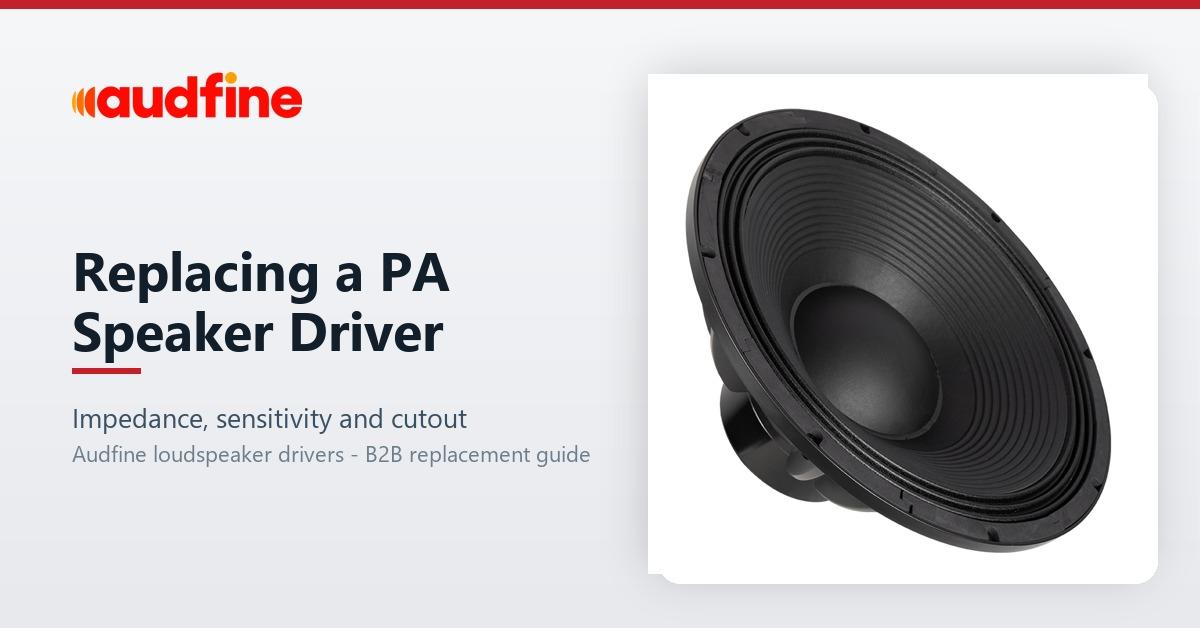
The driver table covers the low-frequency woofers and high-frequency compression drivers that sit inside cabinets or are supplied as components for OEM and service programmes. All list 8-ohm impedance, with power, sensitivity and response as published.
| Model | Type | Nominal Size | Power (RMS / Peak) | Impedance | Sensitivity | Frequency Response |
|---|---|---|---|---|---|---|
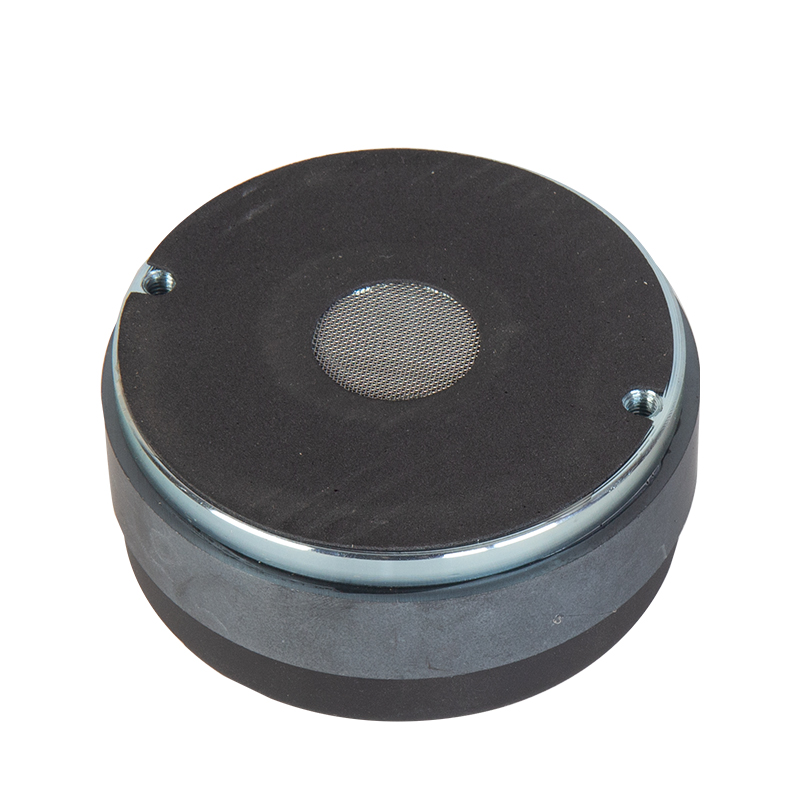
| CD3601 | 1.42" compression driver of speaker | 1.42" | 50W RMS, 100W Peak | 8 OHM | 106 dB | 1500 Hz - 18 KHz |
| BH453 | 1.75" compression driver of speaker | 1.75" | 60W RMS, 120W Peak | 8 OHM | 110 dB | 1200 Hz - 20 KHz |
| BH450 | 1.75" compression driver of speaker | 1.75" | 60W RMS, 120W Peak | 8 OHM | 110 dB | 1200 Hz - 20 KHz |
| PW127560A | 12" speaker woofer transducer | 12" | 300W RMS, 600W Peak | 8 OHM | 95 dB | 55Hz - 2500Hz |
| 12BHP300 | 12" speaker woofer transducer | 12" | 400W RMS, 800W Peak | 8 OHM | 97.5 dB | 55Hz - 5000Hz |
| 12BH300 | 12" speaker woofer transducer | 12" | 400W RMS, 800W Peak | 8 OHM | 97.5 dB | 55Hz - 5000Hz |
| 12NLD88 | 12" speaker woofer transducer | 12" | 700W RMS, 1400W Peak | 8 OHM | 98 dB | 50Hz - 3000Hz |
| 10NDL88 | 10" speaker woofer transducer | 10" | 500W RMS, 1000W Peak | 8 OHM | 96 dB | 60Hz - 2500Hz |
| 15DS115 | 15" speaker woofer transducer | 15" | 1600W RMS, 3200W Peak | 8 OHM | 97 dB | 35Hz - 1000Hz |
| 15X600M | 15" speaker woofer transducer | 15" | 600W RMS, 1200W Peak | 8 OHM | 98 dB | 45Hz - 3000Hz |
| 15NDL100 | 15" speaker woofer transducer | 15" | 800W RMS, 1600W Peak | 8 OHM | 98 dB | 45Hz - 3000Hz |
| 18SW115 | 18" speaker woofer transducer | 18" | 1600W RMS, 3200W Peak | 8 OHM | 96 dB | 30Hz - 1000Hz |
| 18BHP401DM | 18" speaker woofer transducer | 18" | 1500W RMS, 3000W Peak | 8 OHM | 98 dB | 30Hz - 2000Hz |
| 18BHP501ND | 18" speaker woofer transducer | 18" | 2000W RMS, 4000W Peak | 8 OHM | 98 dB | 30Hz - 1250Hz |
| 18BH401DM | 18" speaker woofer transducer | 18" | 1500W RMS, 3000W Peak | 8 OHM | 98 dB | 30Hz - 2000Hz |
| 21SW152 | 21" speaker woofer transducer | 21" | 2000W RMS, 4000W Peak | 8 OHM | 96 dB | 30Hz - 1000Hz |
What to Confirm When You Source from a Professional Speaker Manufacturer in China
Specification literacy protects a purchase only if the RFQ asks the right questions. The checklist below consolidates the points raised above into a single document you can paste into a request for quotation. It is written for buyers who need evidence, not adjectives.
- Reference condition for sensitivity. State whether you expect 1W/1m or 2.83V/1m, and confirm the supplier uses the same basis before comparing quotes.
- Frequency response tolerance. Ask for the -3 dB and -10 dB points, not just the outermost limits, so you can judge usable bandwidth.
- Impedance and amplifier load. Confirm 8 ohm (or the stated variant) and the resulting load when drivers are wired in your intended configuration.
- Power test definition. Request the signal type and duration behind both RMS and peak ratings.
- Dispersion pattern. Require horizontal and vertical coverage, plus off-axis behaviour for array products.
- Crossover topology. Confirm active or passive, the crossover frequency, and the number of amplifier channels the system expects.
- Bill of materials. Ask for the driver models, cabinet construction and magnet type so the specification is tied to real components.
- Sample and documentation. Request a pre-production sample and the full measurement document before committing to a volume order.
Working with an established OEM speaker supplier that publishes component-level data shortens this process, because the underlying driver specifications are already available for review. It also supports private-label and custom programmes where the buyer specifies the transducer set rather than accepting a sealed cabinet.
Frequently Asked Questions
Is a higher peak power rating always better?
No. Peak power is a short-duration survival figure and is the least standardised rating on a sheet. RMS power, sensitivity and maximum SPL together describe usable performance far more reliably than peak alone.
Why do most pro drivers list 8 ohms?
Eight ohms is the professional standard for transducers because it keeps amplifier loading predictable when drivers are wired in series or parallel. Audfine lists 8 ohms across its woofer and compression-driver range, which simplifies system design and amplifier selection.
Does maximum SPL at 1 metre describe the room?
It describes the cabinet, measured at its mouth. Sound pressure falls with distance, so the figure must be modelled through the room geometry before it becomes a coverage claim for an audience area.
Should I specify sensitivity reference condition in an RFQ?
Yes. Sensitivity is meaningless without its reference, and suppliers do not always print it. Stating 1W/1m or 2.83V/1m in the RFQ removes a frequent source of cross-brand confusion.
Conclusion
A professional speaker specification sheet is a design document, not a marketing summary. Read power as RMS first, confirm impedance and amplifier match, treat sensitivity as the efficiency that decides amplifier count, and use maximum SPL as a ceiling that still has to survive the room. Crossover and dispersion complete the picture by showing how the system is divided and projected.
For buyers evaluating a China pro-audio factory or preparing a tender, the eight-point checklist above turns a brochure into a verifiable brief. Audfine publishes component-level and system-level data across line arrays, subwoofers, powered speakers and transducers so that specification review can happen before a sample is shipped.