An audio brand at growth stage reaches the same fork in the road: build the product in-house, or partner with a factory that already builds pro audio for a living. Once the second path is chosen, a second question follows immediately — do you hand the factory a finished design and ask it to build exactly that (OEM), or do you start from the factory's existing engineering and adapt it to your brand (ODM)? Both routes are common in professional audio, and both are offered by established Chinese manufacturers. Choosing between them is less about which one is "better" and more about which one matches what your company can actually contribute: engineering time, market knowledge, or both.
This guide is written for importers, distributors, rental companies and brand owners who source loudspeakers, speaker drivers and headphones from an audio equipment manufacturer in China. It defines the two terms as they are actually used on factory floors, shows where the boundary blurs, matches each path to a buyer profile, and ends with the information to put in a first enquiry so the factory can quote the right kind of programme.
What OEM means in professional audio
OEM — original equipment manufacturer — describes the arrangement where the buyer owns the design and the factory builds to it. In pro audio, a genuine OEM brief arrives with substance behind it: a target specification for sensitivity, power handling, impedance and frequency response; enclosure drawings or a reference cabinet; crossover points; finish and grille requirements; branding artwork; and packaging defined to the buyer's retail or tour standards. The factory's job is to translate that package into tooling, sourcing, production and test, and to keep every subsequent run consistent with the agreed reference.
The buyer's job, in return, is heavier. Someone on the buyer's side has to answer engineering questions during sampling, evaluate measurement data, and decide what "good enough" means when a trade-off appears. OEM suits companies that carry their own product knowledge — an established loudspeaker brand extending a range, a distributor with a proven-selling spec that needs a second source, or an installation contractor with a repeatable system design that deserves its own model numbering.
The reward for that effort is differentiation. If the design is genuinely yours, the product on the shelf is not interchangeable with the next importer's catalogue, and the specification is the one you chose for your market rather than the one that was available.
What ODM means in professional audio
ODM — original design manufacturer — flips the starting point. The factory owns the design: the enclosure, the driver combination, the amplifier platform, the crossover and the test procedure already exist as a working product. The buyer selects a base design and adapts it. Adaptation can be light — branding, colour, grille, packaging — or deeper: a different driver, a modified crossover point, a different connector panel, or a cabinet re-proportioned for a different application.
ODM suits buyers whose strength is the market rather than the workbench: a distributor entering a new category, a rental company specifying a house system, an e-commerce brand that needs a defensible product without employing an acoustics team. Because the engineering platform is proven before you arrive, the main technical risk — does the design work as specified — is already largely answered by the existing product and its published figures.
The trade-off is exclusivity. A lightly adapted ODM product can be sold, with variations, to other buyers as well. Deeper changes — a unique driver complement, a distinct finish, buyer-specific packaging — move the product away from the shared base and increase differentiation accordingly.
Where the boundary actually sits
In day-to-day sourcing the two labels are less like separate boxes and more like two ends of a slider. A practical way to locate your project on that slider is to ask three questions:
- Who owns the specification? If the performance targets in the enquiry are yours, the project is OEM-shaped. If they come from the factory's existing datasheet, it is ODM-shaped.
- Who pays for new tooling? OEM typically involves tooling for the buyer's design; ODM reuses the factory's existing tooling, with charges appearing only where the buyer requests a change that needs new parts.
- Who answers engineering questions? If every sampling question routes back to the buyer's engineer, that is OEM. If the factory proposes solutions from its own platform and the buyer selects among them, that is ODM.
Most real programmes sit between the pure cases. A buyer may start ODM from an existing platform, then accumulate enough modifications over two or three revisions that the product becomes, in effect, their own design. That progression is normal, and factories generally prefer it to an unrealistic first brief.
Which path fits which buyer
Distributors and retail brands
If the category is new to your catalogue, ODM from a documented platform is usually the efficient entry. You can compare published figures across a factory's range — powered line arrays, active PA cabinets, subwoofers — and select the tier that matches your market positioning, then invest your budget in branding and market access rather than in first-generation engineering. Once a model proves demand, deepening it into a semi-exclusive variant is a natural second step.
Rental companies and installation contractors
Rental and install buyers buy systems, not single cabinets, and their specification questions are practical: coverage angles, amplifier platforms, rigging and transport. Many start from ODM platforms for the bulk of the fleet and use OEM only where their application genuinely demands it — for example a system processor preset set matched to a fixed install, or cabinet detailing matched to a branding programme.
Brand owners with their own engineering
Companies that already employ acoustic or electroacoustic engineers usually run OEM, because they can supply the one thing ODM does not require of them: a complete, testable specification. For these buyers the factory's value is manufacturing discipline — consistent builds, in-process checks, production test data — rather than design.
Catalogue platforms: what the starting points look like
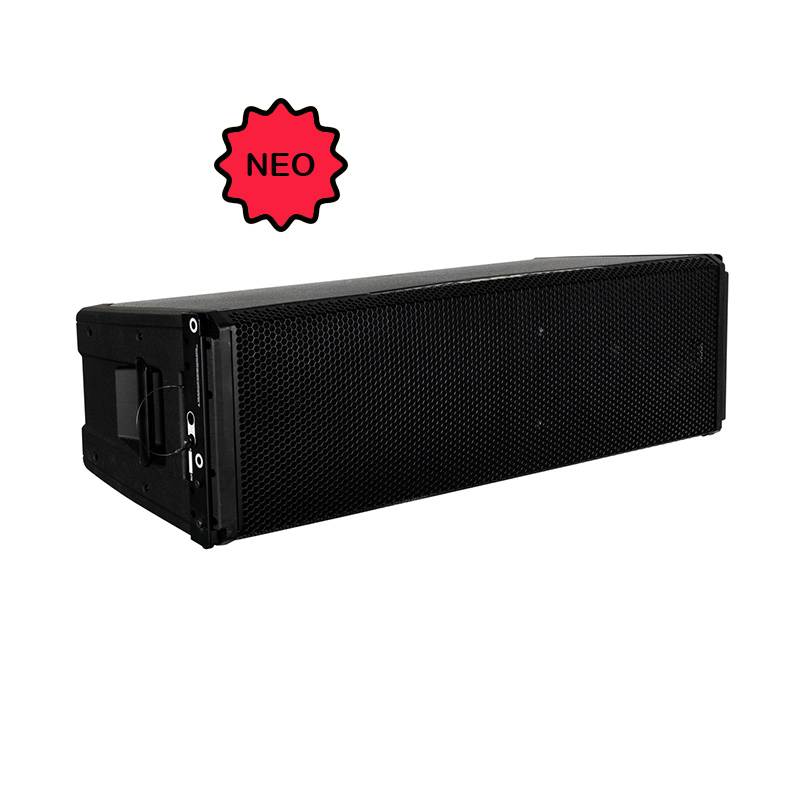
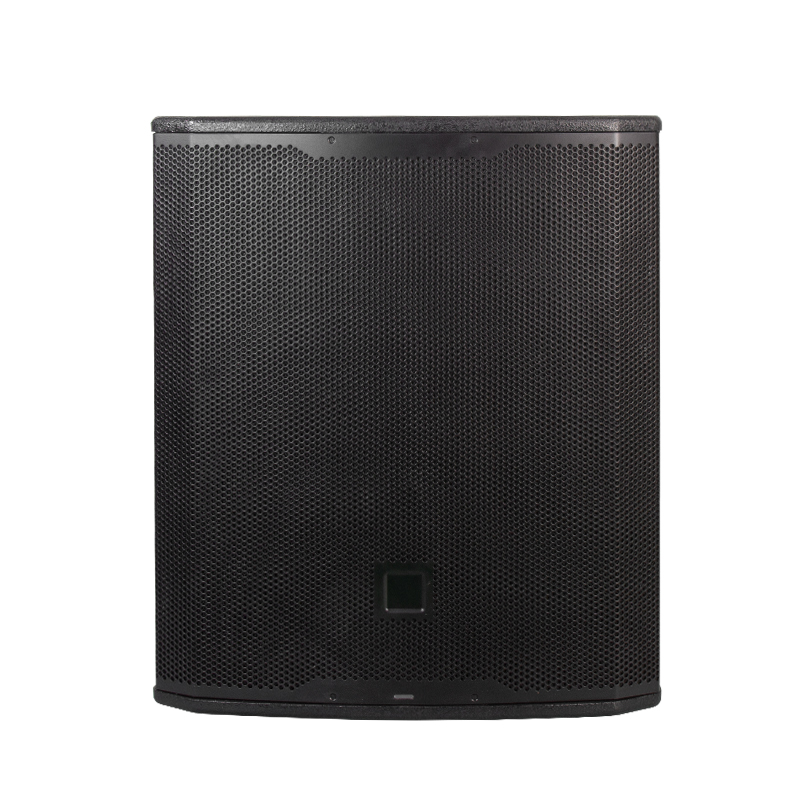
Concretely, an ODM starting point is a model with a public datasheet and a stable build history. Across the Audfine range those platforms span several product families. In active sound reinforcement, the active line array systems and the active PA speakers families cover powered full-range cabinets, line array elements and subwoofers with published sensitivity, power and frequency response figures — for example the PRX918 single 18-inch powered subwoofer, rated at 1000 W RMS / 2000 W peak with 98 dB sensitivity and a 35 Hz–180 Hz response.
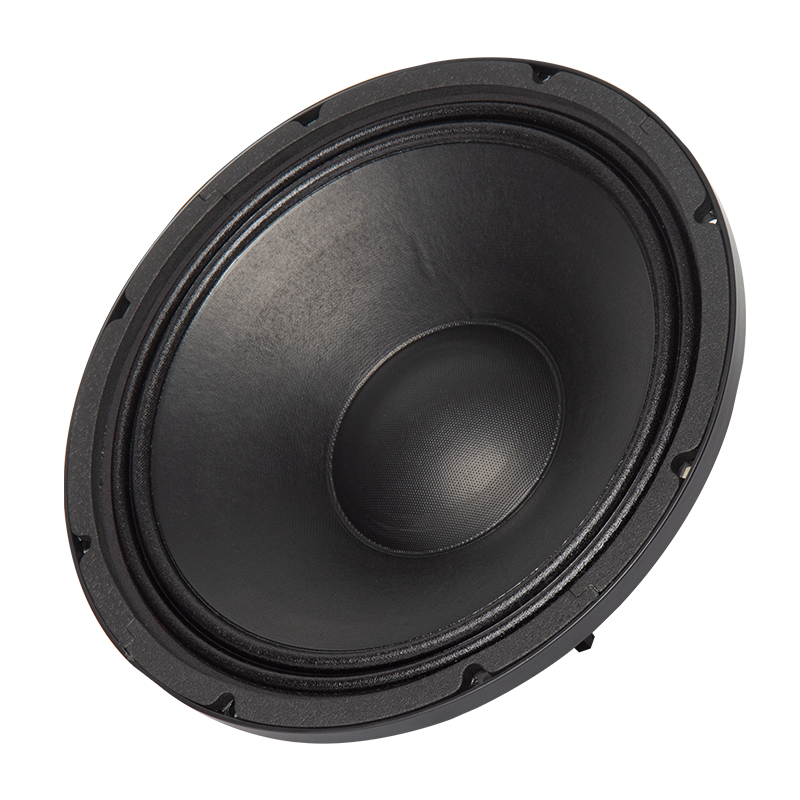
At component level, the same logic applies to transducers. A buyer building or revising passive cabinets can start from a documented woofer such as the 15-inch speaker woofer 15NDL100 — 800 W RMS / 1600 W peak, 98 dB sensitivity, 45 Hz–3000 Hz, neodymium motor with a dual-spider suspension — and specify around its measured behaviour rather than a blank sheet.
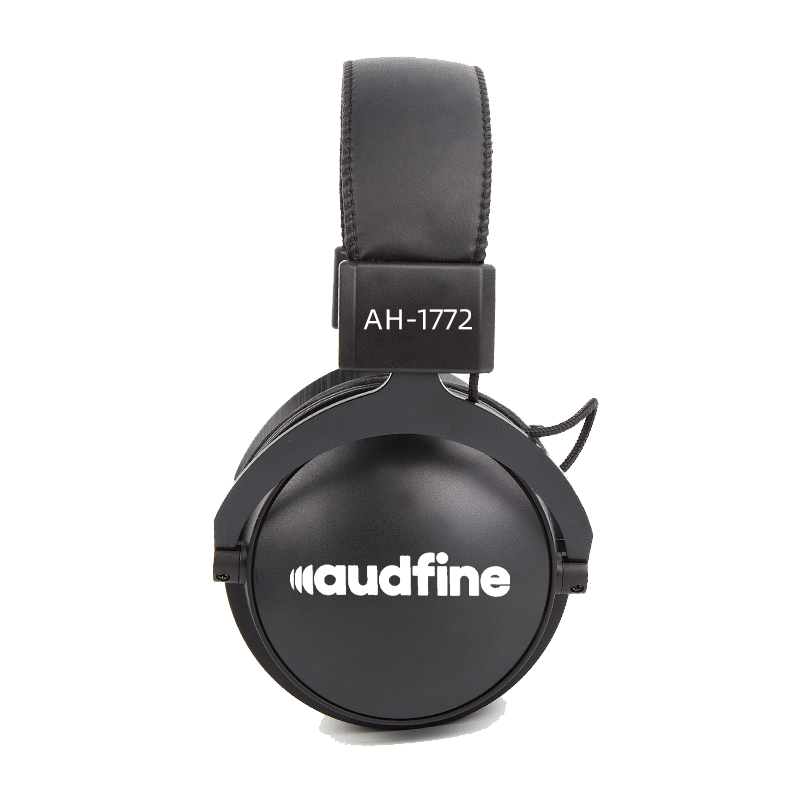
Headphones follow the same pattern with one difference: because the product is worn, adaptation is as much about comfort and cable architecture as about electroacoustics. The monitoring headphones model map shows how one family scales across impedance and driver size — a structure an ODM buyer can enter at the tier that matches their market, as with the DH-1772 studio monitoring headphone with its detachable braided cable, or move deeper into for a fully OEM programme with their own driver and housing specification.
What does not change between the two paths
Whichever end of the slider a project starts from, the discipline around it is the same, and it is what separates a programme from a transaction:
- A written specification. Every agreed figure — electrical, acoustic, mechanical — lives in a document, not in an email thread. The specification is what the production run is measured against, and what the approved sample embodies physically.
- An approved sample kept as the reference. The factory holds it; every later batch is compared against it. If a finish or a measurement drifts, the reference is how the drift is caught before shipment rather than after landing.
- Honest changes. When a component becomes unavailable or a measurement differs from the datasheet, the change is documented and confirmed in writing, never absorbed silently.
- Scale that follows demand. A factory that manufactures its own branded ranges alongside customer programmes can scale capacity for volume programmes as orders grow — a point worth confirming directly, category by category, in the enquiry.
Briefing an OEM and ODM audio manufacturer in China
Factories can serve both paths — Audfine, for example, produces loudspeakers, speaker drivers, headphones and studio equipment under its own brands and under customer programmes, shipping to more than sixty countries — but the quality of the first quotation depends almost entirely on what the enquiry contains. An enquiry that states the intended path and the boundaries of the buyer's own contribution lets the factory quote engineering effort, tooling and unit terms in one pass instead of guessing. Eight items cover it:
- The intended mode — OEM from your specification, ODM from a catalogue platform, or "undecided — advise", which is a legitimate answer.
- The product family and target market — active PA, line array, subwoofer, drivers, or headphones; and where it will be sold, since destination market shapes mains configuration, voltage, plug type and labelling.
- The performance targets you own — sensitivity, power handling, impedance, frequency response — or, for ODM, the published figures of the platform model you are starting from.
- Mechanical and industrial requirements — enclosure material and finish, grille, handles, rigging or pole-mount hardware, connector panel, and any dimensional envelope.
- Branding and packaging — logo placement, model numbering, artwork, retail or transport packaging, manuals.
- Sample expectations — what the first sample should prove, and how it will be evaluated and measured on your side.
- Trade terms preference — FOB, CIF, DAP or DDP, and the destination port or city, so the quotation reflects the delivered condition you actually need.
- Programme context — expected annual volumes in ranges, and whether the range will extend to further models if the first succeeds. Factories plan tooling and capacity around this; a credible context earns a more serious engineering response.
None of that requires engineering drawings on day one. What it requires is honesty about which parts of the product are yours and which parts you expect the factory to contribute — which is, in the end, the same question as OEM versus ODM.
Frequently asked questions
Is ODM quality lower than OEM because the design is shared?
No. Build quality is a function of manufacturing discipline, not of who drew the enclosure. A shared platform that has already shipped in volume has, if anything, more production history behind it than a first-generation OEM design.
Can a project start as ODM and become OEM?
Yes, and it happens often. Each documented modification — a different driver, a revised crossover, buyer-specific packaging — moves the product further from the shared base. After several generations of changes, the design is effectively the buyer's, with the factory continuing to manufacture it.
Who owns the tooling in each mode?
In OEM, tooling for the buyer's design is normally a buyer-funded item and follows the agreement reached in the quotation. In ODM, the factory's existing tooling stays with the factory, and charges arise only where a buyer-requested change needs new tooling. State ownership expectations explicitly in the enquiry so they are priced rather than assumed.
How small can a first programme be?
Factories that serve brand buyers are used to a sequence: a sample first, then a small trial order, then container-scale volumes. Ask what the factory considers a workable trial for the model in question rather than quoting a number in advance — the answer is category-specific.
What documents should an OEM or ODM buyer keep on file?
The agreed specification, the sample evaluation notes, the confirmed artwork and packaging proofs, and the correspondence around any engineering change. These four are what make the second production run match the first.
Choose the path, then brief the factory
OEM and ODM are not competing qualities; they are different divisions of labour. OEM asks the buyer to bring the design and rewards that investment with differentiation. ODM asks the factory to bring the design and rewards the buyer with speed and a proven platform. Most audio brands use both, on different lines, at different stages. The decision worth making carefully is not which label to use, but which contributions your company can genuinely make — and then saying so, in writing, in the first enquiry.
Contact the Audfine team to discuss an OEM or ODM audio programme.