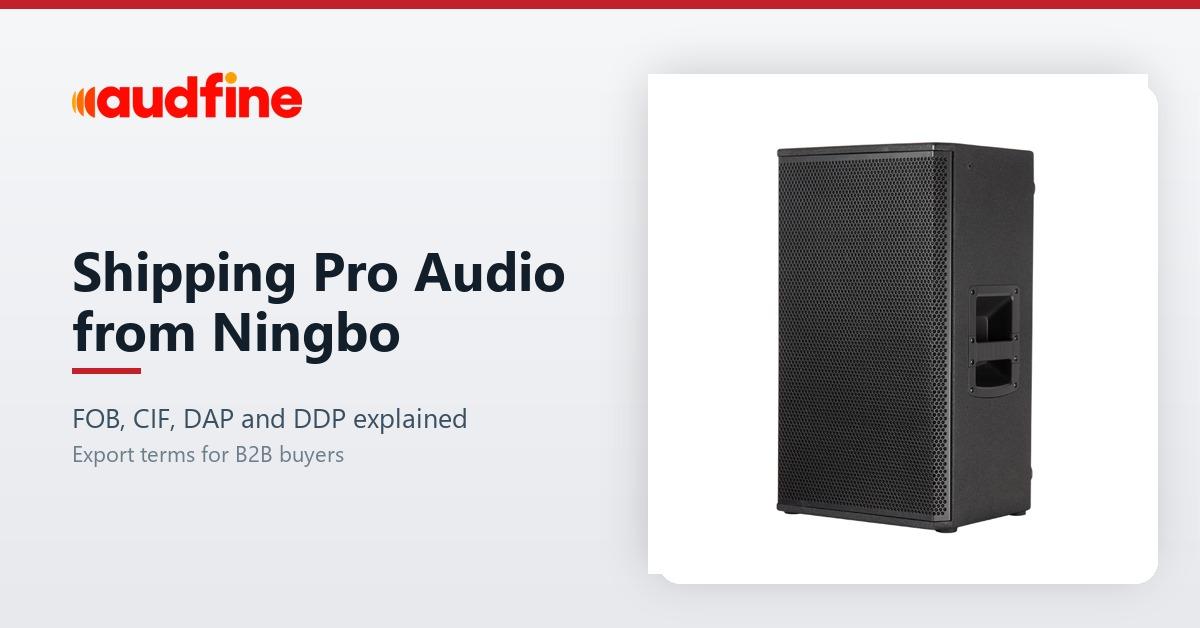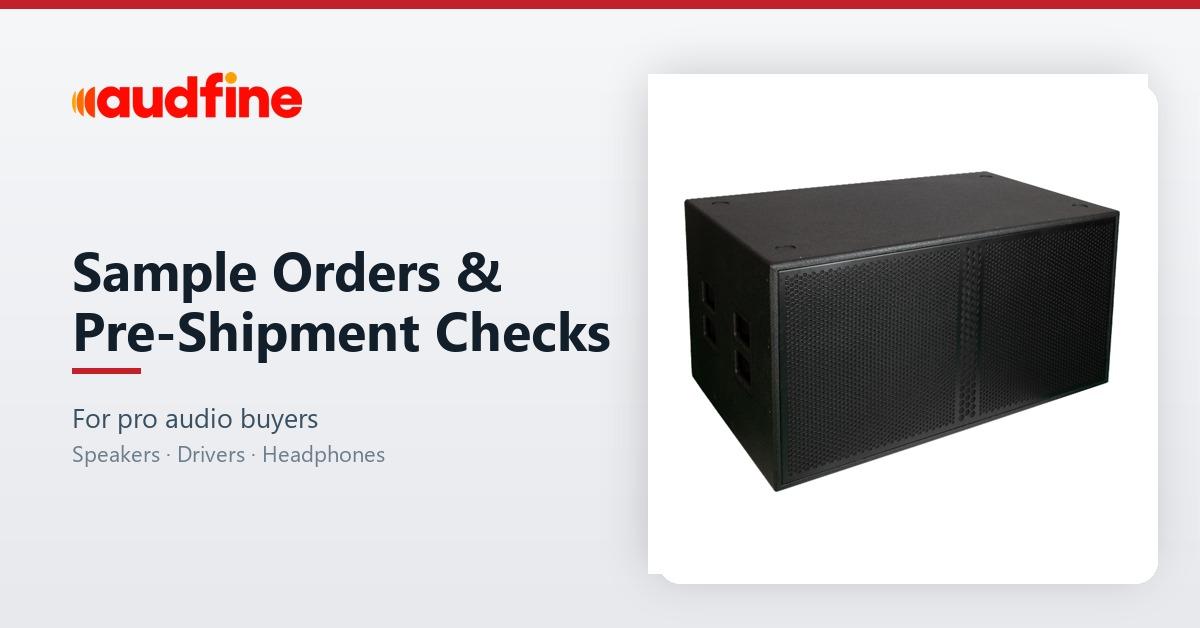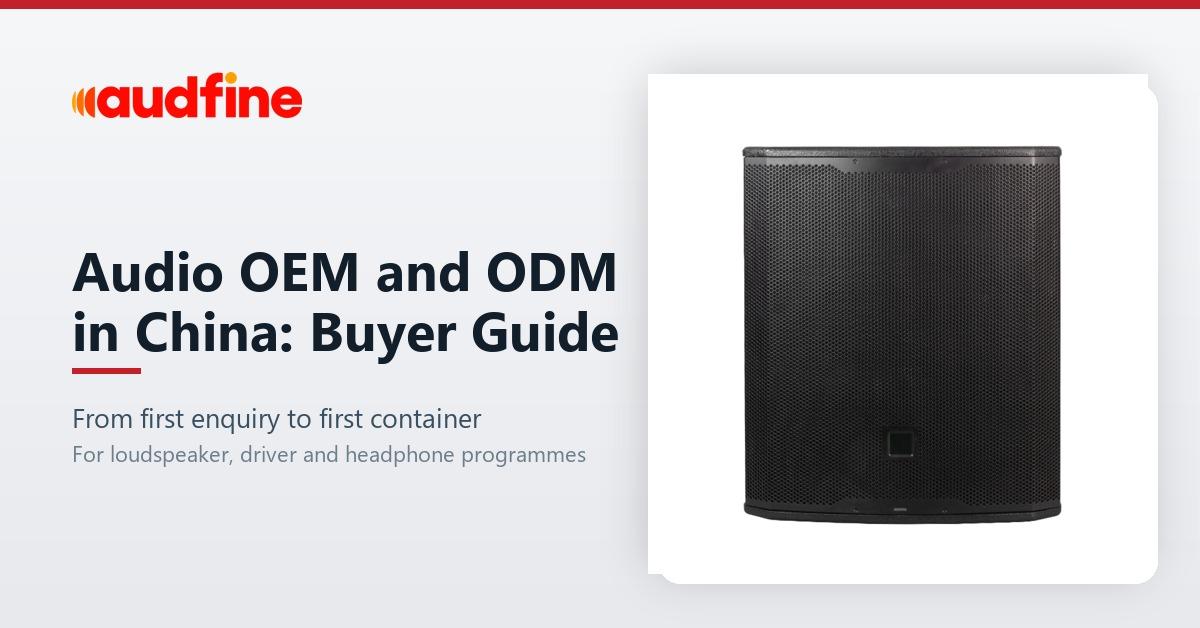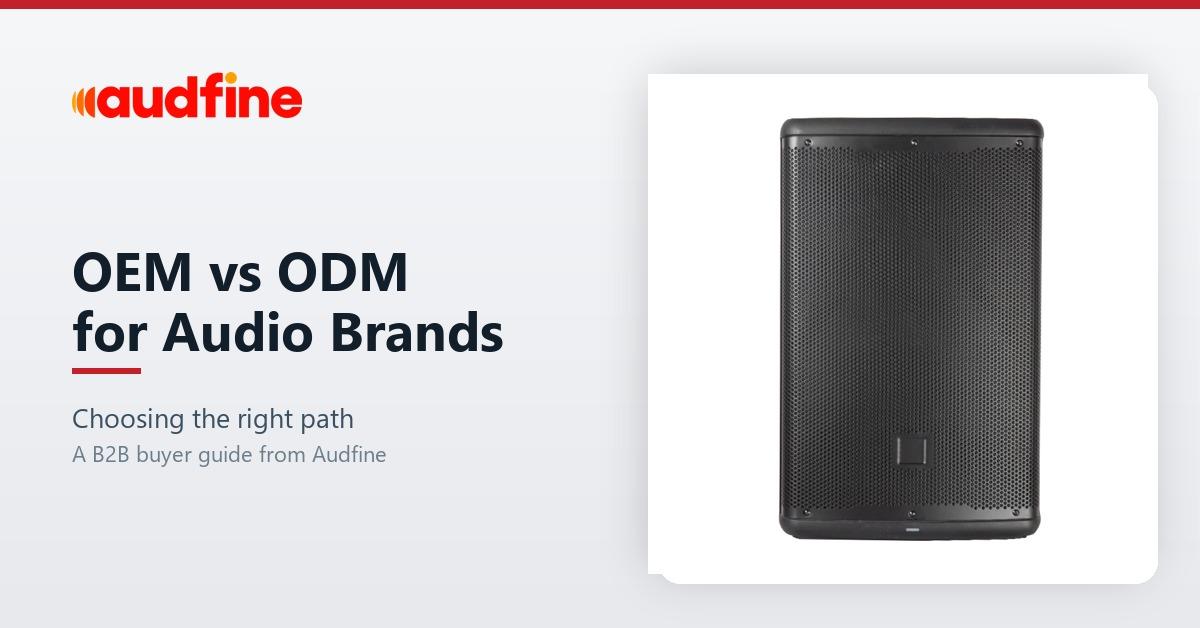
Freight terms look like paperwork, but in pro audio they decide who owns the goods at every kilometre between the production floor and your warehouse — and who pays for each leg. Two quotations for the same active line array can differ by thousands on paper simply because one is quoted ex factory and the other delivered to your door, and a buyer who compares them term-against-term rather than number-against-number will draw the wrong conclusion. This guide explains the four export terms this factory ships under — FOB, CIF, DAP and DDP — from the manufacturer's side of the table, and shows where each one fits a pro audio programme: shipping speakers from China as full containers, mixed cabinets-and-drivers loads, or cartons of monitoring headphones consolidated with PA goods.
Some context first. Audfine is a pro audio manufacturer established in 2009 in Ningbo, China, building active line arrays, PA speakers, powered subwoofers, raw speaker transducers and studio monitoring headphones under its own brands and under customer programmes. Browse the active line array speakers and active subwoofers ranges to see the export lines this article refers to. The company profile states the export frame directly: comprehensive shipping solutions including FOB, CIF, DAP and DDP, delivered through trusted logistics partners, with payment accepted by T/T, L/C or credit card, and products exported to more than sixty countries including the USA, Germany, Japan, the UK, Italy, France and Mexico. Everything below is how those four terms work in practice for an audio buyer.
Why the shipping term belongs in the RFQ, not after it
An incoterm is not a detail to settle once the order is confirmed; it is one of the variables that makes quotations comparable. If you send the same specification to three China speaker manufacturers and one quotes FOB Ningbo while another quotes DDP to your warehouse, the two numbers are not the same product: the second includes ocean freight, destination handling, import clearance and duties, and the first does not. Comparing them directly rewards the quotation with the narrower scope, not the better deal.
For an audio buyer the term also determines where risk transfers. A powered line array element or a pallet of raw drivers that gets dropped during destination handling is a very different problem depending on whether that leg was the seller's responsibility or yours — and whether the goods were insured on that leg at all. State the intended term in the RFQ, and each factory prices the same scope, which is the only condition under which quotations can be ranked honestly.
The four terms at a glance
The table below summarises the standard division of responsibilities under the four terms this factory offers. Exact scope always belongs in the quotation itself — the notes afterwards explain how each term plays out for pro audio cargo.
| Term | Seller's scope ends at | Buyer arranges | Typical fit |
|---|---|---|---|
| FOB Ningbo | Goods on board the vessel at the Chinese port, export clearance completed | Ocean freight, insurance, destination charges, import clearance, duties | Buyers with their own forwarder or consolidator in China |
| CIF | Destination port, with ocean freight and marine insurance paid by the seller | Destination handling, import clearance, duties, onward transport | Routine buyers who clear imports themselves but want freight managed |
| DAP | A named place in the destination country, ready for unloading | Import clearance and duties, unloading where agreed | Buyers who want door delivery but prefer to control import themselves |
| DDP | Delivered with import clearance and duties paid | Receiving and unloading | Buyers who want the simplest possible arrival |
FOB from Ningbo: the default for buyers with a forwarder
Under FOB, the seller delivers the goods on board the vessel at the named Chinese port and completes export clearance; from that point the freight, the insurance and everything downstream belong to the buyer. It is the term most used by established importers who already run a forwarder or consolidator in China, because it keeps the freight relationship — and the negotiated freight rates — in the buyer's own hands.
For pro audio the practical questions under FOB concentrate at the loading stage. Cabinets, subwoofers and drivers are dense, irregular cargo: a mixed load of line array elements, active subwoofers and cartons of drivers needs a palletisation and container loading plan agreed before the truck rolls, not improvised at the factory gate. Confirm who supplies the pallets, whether cartons are stacked and strapped to a written plan, and how the loading is documented with photographs. A factory exporting to more than sixty countries will have done this many times; the point of asking is that your specific mix gets the same discipline.
CIF: freight and marine insurance inside the seller's quotation
CIF moves two more legs onto the seller's side: ocean freight to the named destination port and marine insurance for that transit. The buyer still handles the goods at destination — port charges, import clearance, duties and onward transport to the warehouse. For buyers who order routinely but prefer not to negotiate ocean freight themselves, CIF turns two variables into one quotation.
Two confirmations make CIF unambiguous in audio programmes. First, the insurance scope: ask what the marine cover includes and at what value the goods are insured, so the figure in the commercial documents matches the cargo's real worth rather than a default. Second, the destination charges: freight prepaid to port does not include the local charges that accrue when the container lands, and knowing who pays those before booking prevents the most common surprise in the whole chain. Neither point is a difficulty — they are simply the two lines that should be written down.
DAP and DDP: shifting the journey, and the paperwork, to the seller
DAP and DDP extend the seller's scope all the way into the destination country. Under DAP the seller delivers to a named place with the main transport managed on the seller's side, while import clearance and duties remain the buyer's. Under DDP the seller delivers with import clearance and duties paid: the container arrives, the buyer unpacks, and the transaction is over.
DDP is the term buyers ask for most often and think about least. It is genuinely the simplest arrival — but it transfers the import role to the seller, which means the seller needs accurate information about the destination: the consignee and importer of record, the tax registration under which the import is declared, and the product categories as they are classified in the destination market. A professional active speaker programme with destination-market labelling and mains requirements has more moving parts than a generic consumer carton, so the DDP conversation is where details like voltage, plug type and marking get locked down. Give the factory complete destination information and DDP works exactly as advertised; leave gaps and the gaps surface at the border, which is the one place nobody wants to discover them.
Why the port matters: shipping from Ningbo
The factory sits in Yinzhou District, Ningbo, Zhejiang — a location that is not incidental to the logistics story. The company profile describes Ningbo as the largest seaport in the world; on the widely used cargo-tonnage measure, the Port of Ningbo-Zhoushan has ranked first globally for years. For a buyer the practical meaning is sail frequency: more departures per week to more destination ports means shorter waiting for vessel space and more routing options for a container of PA cabinets than a factory shipping from an inland industrial city.
Ningbo's second advantage for audio buyers is ecosystem. A port region that has handled speaker exports for decades accumulates the surrounding services — forwarders who know what a flight-cased line array element weighs, warehouse operators used to staging mixed loads of cabinets, drivers and headphone cartons, and inspection capacity nearby for pre-shipment work. Sample orders and pre-shipment inspections run at the factory before the container is even booked, which shortens the distance between a quality decision and a loaded container.
What a mixed pro audio container actually contains
Most programmes do not ship a single product in a single container. A typical order mixes categories, and each category brings its own packing and documentation questions to the shipping conversation:
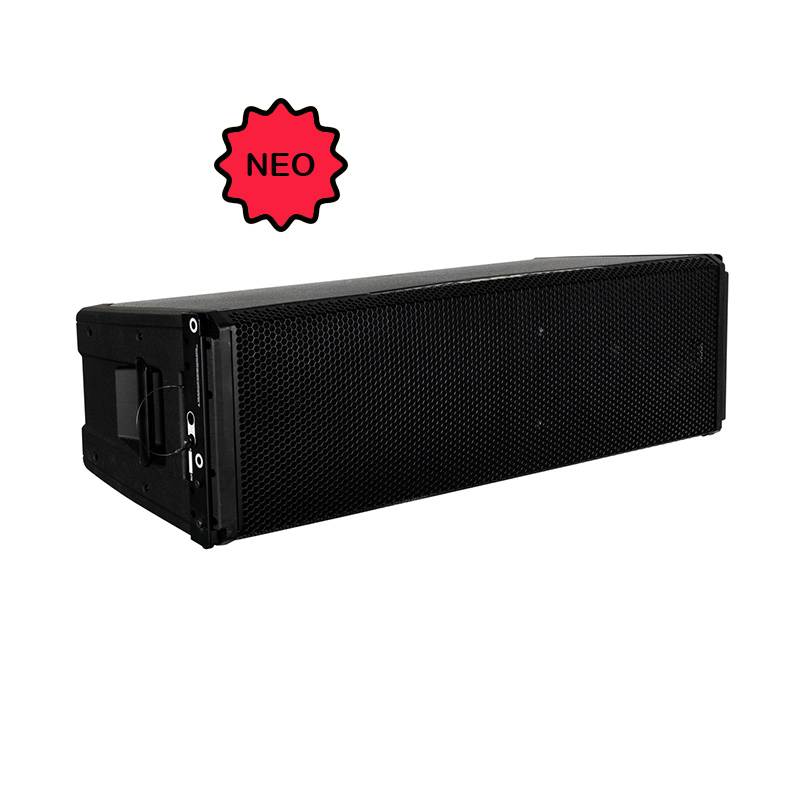
- Active line array and PA cabinets — the volume drivers of a load. Confirm carton construction, palletisation, stacking limits and whether cabinets travel upright or on their faces; a dual 12-inch powered line array speaker published at 2200 W RMS and 140 dB maximum SPL is a substantial object whose packing method deserves its own line in the order.
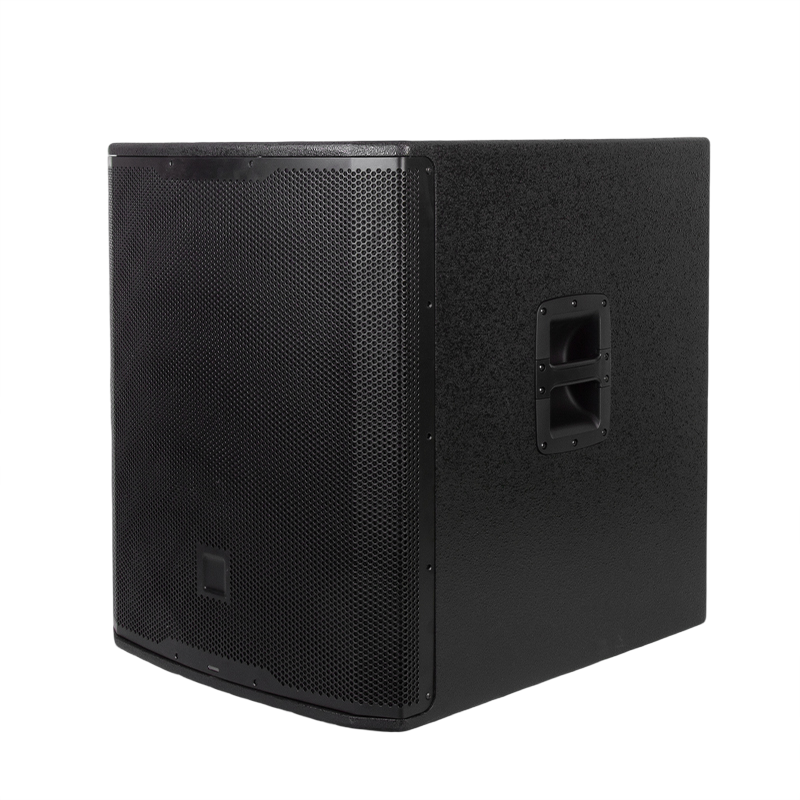
- Powered subwoofers — dense, heavy and few per layer. An 18-inch powered subwoofer rated at 1000 W RMS and 2000 W peak concentrates a lot of value in few cartons, which is why the loading plan and the insurance value matter more per unit than in most categories.
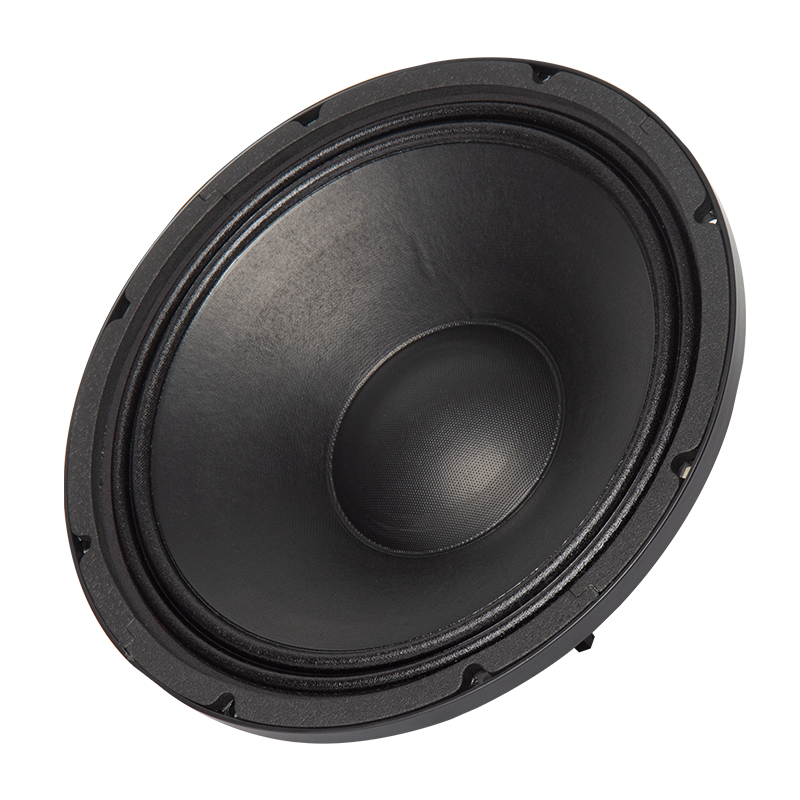
- Raw speaker drivers — compact but fragile at the cone and the surround. Cartons of drivers consolidate easily with finished goods; confirm internal packaging protects the cone against sustained top-down stacking pressure over a multi-week transit.
- Headphones — light, high-count cartons that fill residual container space efficiently. Confirm carton marking and inner counts so destination receiving can verify without opening every box.
The pattern across all four categories is the same: the factory knows how to pack and ship each one, and the buyer's job is to make sure the plan for this order — the mix, the destination, the term — is written down rather than assumed from the last shipment.
How shipping terms interact with payment terms
The commercial frame is a pair, not a single choice: the incoterm defines where responsibilities divide, and the payment method defines how money moves. This factory accepts T/T, L/C and credit card, and ships under FOB, CIF, DAP and DDP — which means the combination you intend for volume can be exercised from the very first order, including the trial.
Two interactions are worth planning deliberately. First, the sample shipment should travel on the same term as the intended production order, so the export documentation, the consignee details and the destination handling are all rehearsed on a small consignment where mistakes are cheap. Second, under documentary payment methods the shipping documents themselves carry weight, so the set of documents — and who issues them — should be agreed at the same time as the term. A buyer who settles term, payment and document list in one conversation gets a quotation that already reflects reality; a buyer who settles them in three separate emails gets a quotation that reflects whoever answered last.
Documentation you should expect with the shipment
Whatever the term, a commercial export shipment travels with a standard document set, and a buyer reviewing a pro audio quotation should expect it to be produced cleanly: a commercial invoice describing the goods and the transaction, a packing list matching carton counts and contents to the loading plan, and the transport document issued for the ocean leg. Depending on the destination market and the payment method, origin documentation and destination-specific paperwork are added — the exact set is one of the items to confirm in the RFQ, because document requirements differ by country and by the buyer's own import setup.
The habit that prevents disputes is the same one used in pre-shipment inspection: paperwork matches physical goods. Carton counts on the packing list match what was loaded; descriptions on the invoice match what is in the cartons; the goods match the reference sample. A factory that supplies photographs of the loaded container closes the loop with evidence.
Specifying shipping terms in your RFQ to a China pro audio manufacturer
The term is a five-minute item to specify and an expensive one to leave vague. Before writing to a pro audio manufacturer in China, put the following eight items in the RFQ so every quotation arrives on the same scope:
- The named term and place — not just "FOB" but FOB Ningbo, and for DAP or DDP the named destination, so scope is unambiguous.
- Who books the vessel — the buyer's forwarder under FOB, or the factory's logistics partners under CIF, DAP and DDP.
- Packing configuration — carton construction, pallet supply, stacking plan and whether the plan is documented with photographs at loading.
- Container type and load plan — what fits the intended mix of cabinets, subwoofers, drivers and headphone cartons, and how the plan handles the residual space.
- Insurance scope — under CIF and above, what the marine cover includes and at what value the goods are insured.
- Destination details — consignee, marking and labelling for the destination market, and mains voltage and plug type for powered units.
- The document set — exactly which documents accompany the shipment, and any destination-specific additions the buyer's import process needs.
- Term and payment together — the incoterm paired with T/T, L/C or card payment, stated once, so the quotation and the contract match.
Mistakes buyers make with shipping terms
Four patterns account for most of the friction this factory sees on the logistics side, and all four are avoidable at the RFQ stage:
- Comparing quotations on different terms. A DDP quotation will always look higher than an FOB quotation for the same goods — it includes four more legs of responsibility. Rank quotations on the same term, or convert them to a common basis first.
- Choosing DDP without supplying destination information. DDP puts the import role on the seller, and the seller can only work with what the buyer provides. Incomplete consignee or tax details slow exactly the arrival DDP was chosen to simplify.
- Treating destination charges as somebody else's problem. Under FOB and CIF the charges that accrue when the container lands are outside the seller's scope. Ask what they typically involve at your port so the landed total — not just the ocean leg — is what you planned for.
- Shipping the sample on a different term than the order. The sample consignment is the rehearsal for the export paperwork. Different term, different paperwork, no rehearsal — and the production shipment becomes the first performance.
Frequently asked questions
What is the difference between FOB and CIF when buying speakers from China?
Under FOB the seller delivers the goods on board at the Chinese port with export clearance done, and the buyer arranges ocean freight and insurance. Under CIF the seller pays ocean freight and marine insurance to the destination port, while the buyer still handles destination charges, import clearance and duties. The goods, the vessel and the route can be identical — the difference is who arranges and pays for the middle of the journey.
Does DDP mean I pay nothing when the container arrives?
Under DDP the seller covers transport, import clearance and duties to the named destination, so the buyer's scope at arrival is receiving and unloading. For it to work smoothly the buyer must supply complete destination information — consignee, import details, market-specific requirements for the products — because the seller is declaring the import on the buyer's behalf.
Can I use my own freight forwarder in China?
Yes, and FOB is the term designed for it: the factory completes export clearance and delivers the goods on board, and your forwarder takes the booking from there. Coordinate the handover — which forwarder, which terminal, which cut-off — in the order documents so the factory's loading schedule and the vessel's schedule line up.
Which documents come with a pro audio export shipment?
The core set is a commercial invoice, a packing list and the transport document for the ocean leg; origin documentation and destination-specific papers are added as the market and the payment method require. Confirm the exact set in the RFQ, and ask for loading photographs so the documents can be checked against the physical load.
Can the sample order ship on the same terms as production?
Yes, and it should. The factory accepts trial orders and samples for quality testing and ships under FOB, CIF, DAP and DDP, so the sample consignment can travel on the term you intend for volume — rehearsing the documentation, the consignee details and the destination handling while the stakes are still small.
Which categories can ship in one container?
Active line arrays, PA speakers, powered subwoofers, raw speaker drivers and studio monitoring headphones all ship from the same factory and consolidate well in mixed loads, provided the palletisation and loading plan accounts for each category's packing. State the intended mix in the RFQ and the load plan can be agreed before the goods are finished.
Start the shipment conversation
A pro audio shipment that arrives as planned is the output of a dozen small decisions made early: the term and place, the packing plan, the insurance scope, the document set, the payment pairing. Specify them once in the RFQ and every quotation you receive becomes comparable — and every container afterwards repeats a routine that already works. Contact the Audfine team with your destination and product mix, and the FOB, CIF, DAP and DDP options for your programme come back priced on the same scope.