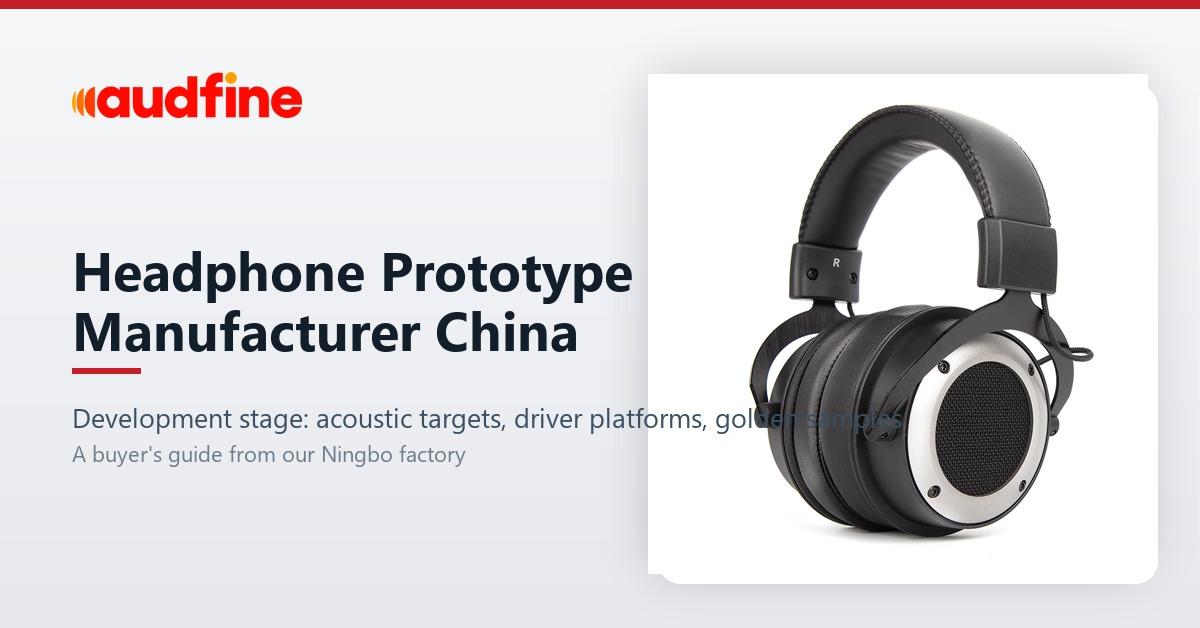
A headphone prototype manufacturer, China based and export focused, is where an audio brand lands once it stops shopping catalogs and starts building its own product. And no, the programme is not usually won or lost at the tooling stage. It is won earlier, in decisions nobody photographs. Which driver? Which impedance? Which target curve, and how wide a band around it? We build monitoring headphones in Ningbo, and we run this stage with buyers every month. What follows is the conversation we usually have across the table. What does a prototype programme actually cover? Which acoustic numbers do you fix before tooling? And what goes into the brief so the first sample is worth measuring?
A prototype is not a sample
Buyers mix the two words up all the time. Understandable, but it is where the confusion starts. A sample comes off a shelf: an existing model, evaluated as it stands. A prototype does not exist yet. It gets built toward your intent: your driver choice, your impedance, your pad material, your cable, your target curve. Nothing on a shelf can equal it, for the simple reason that nobody has built it.
The distinction matters commercially. Catalog sampling is quick, and the reason is blunt: the engineering is already paid for. Prototyping takes engineering time. Somebody has to make the acoustic, electrical and mechanical calls with you, then prove them out on real units. Our sample order and pre-shipment inspection guide covers the catalog path; this article is about the path where the product starts as a conversation.
In our experience, most buyers evaluating a headphone prototype manufacturer, China included, arrive with three questions. Can the factory turn a market brief into acoustic targets? Can it hold those targets through tooling and into production? Who owns the reference data along the way? Everything below is our answer to all three, in practice.
The acoustic numbers you fix before tooling
Tooling is where money hardens. Cut the cup, yoke and pad geometry in steel, and changing the driver size stops being a tweak. It becomes a retooling conversation. So the prototype stage exists to lock a short list of numbers while everything is still soft.
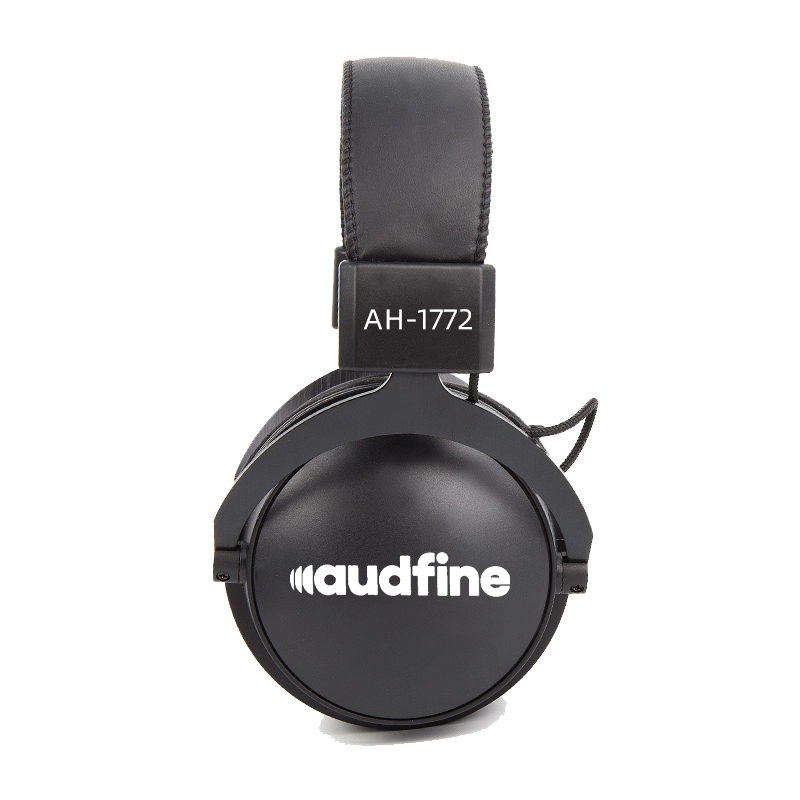
Driver size and type. Monitoring headphones run 40, 45 or 50 mm dynamic drivers, mostly. Pick a size and you have also picked the sensitivity headroom, the low-end behaviour and, indirectly, the cup depth. Cup depth then picks the ear pad family for you. We publish platforms at 50 mm, the DH-1772 tier, and at 45 mm, the MR-830X tier; those two cover most monitoring briefs we get.
Impedance. This is a system decision, not a component one. A 32 ohm unit pairs with interfaces and mobile recorders; an 80 or 250 ohm unit expects dedicated outputs and holds its behaviour better on long cable runs. The DH-1772 ships in 32, 80 and 250 ohm versions, which tells you the impedance call was made per configuration, not once for the family. Name every impedance version you plan to sell in your brief. Each one is its own acoustic configuration, and each gets verified on its own.
Sensitivity window. We print tolerance bands, not single numbers, and we suggest you do the same in your brief. The DH-1772 is 99±3 dB, the DH-7500 and DH-1771K are 97±3 dB, the DH-7300 is 98±3 dB. A band is an agreement you can hold a sample against; a single figure is a promise nobody can honour.
Frequency response coverage. A sweep defines the floor and ceiling the unit must hold. The four platforms above run 10 Hz to 35 kHz, 10 Hz to 40 kHz, 18 Hz to 35 kHz and 12 Hz to 40 kHz respectively. Different tunings for different monitoring jobs. If your brief says "flat", attach a target curve instead; adjectives do not survive a measurement.
| Platform | Driver | Freq. response | Sensitivity | Impedance | Power |
|---|---|---|---|---|---|
| DH-1772 | Ø50 mm neodymium | 10 Hz - 35 kHz | 99±3 dB | 32 / 80 / 250 ohm | 400 mW / 1800 mW max |
| DH-7500 | Ø50 mm neodymium | 10 Hz - 40 kHz | 97±3 dB | 32 ohm | 350 mW / 1800 mW max |
| DH-1771K | Ø50 mm neodymium | 18 Hz - 35 kHz | 97±3 dB | 32 ohm | 350 mW / 1500 mW max |
| DH-7300 | Ø50 mm neodymium | 12 Hz - 40 kHz | 98±3 dB | 32 ohm | 400 mW / 2000 mW max |
Those figures come from our own published datasheets, and the full printed context is in our monitoring headphone spec sheet guide. In a prototype brief they play a different role: they are the reference windows your new unit's measurements get compared against.
Driver selection is a platform decision
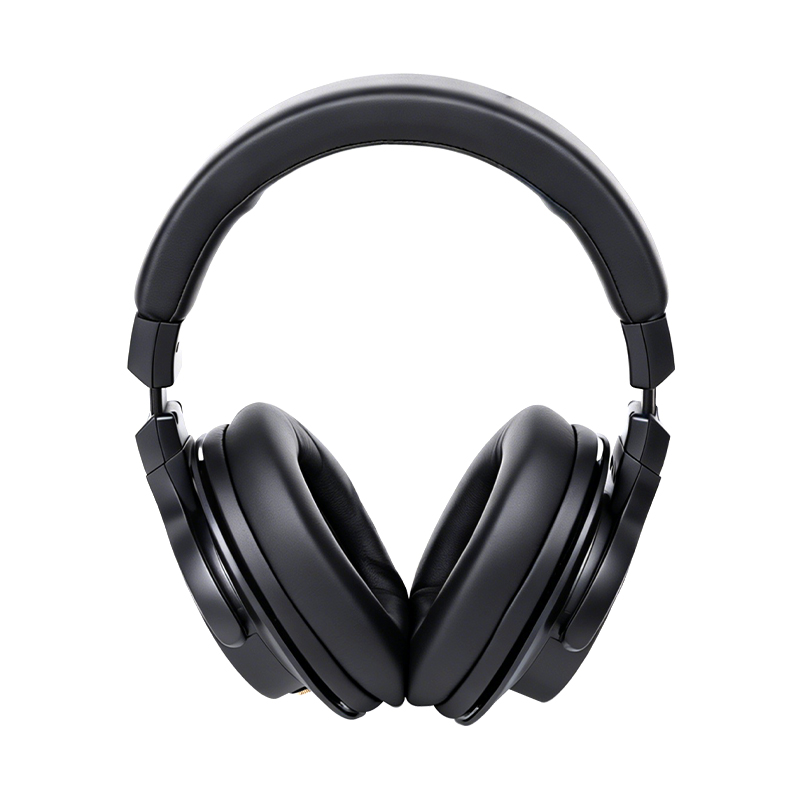
Here is something we say often and buyers believe only after the first prototype: the driver is not a component you pick, it is a platform you commit to. Changing pads or cable terminations later is routine. Changing the driver after tooling means new acoustic volume, new porting, sometimes a new cup.
So the prototype stage should include driver listening and measurement on your actual target curve, with your actual source gear. We measure candidates on a fixture, hand you the sweeps alongside listening notes, and let the data argue with the ears. A driver that measures well but sounds closed-in on your programme's material is a finding, not a failure; the point is to learn it at unit one.
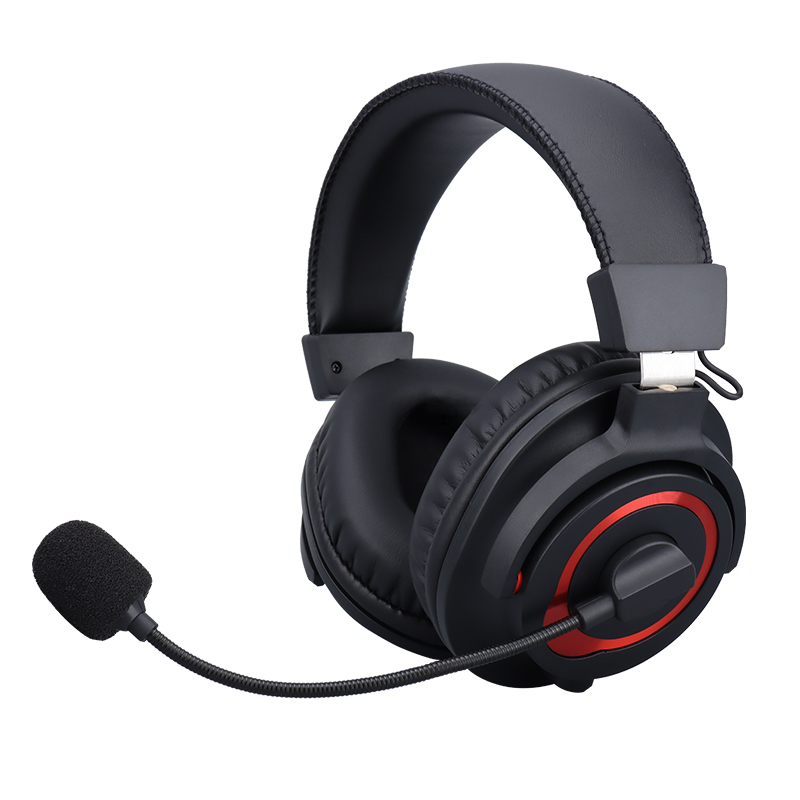
Platform thinking also covers accessories. The DH-3400M runs a 50 mm driver with a detachable microphone cable and splitter, a communication monitoring configuration. Detachable cables, pad families, swivel hardware, these are prototype-stage decisions because they touch the cup and yoke geometry. Our serviceability guide on ear pads and cables explains why we design for replaceable parts; the prototype stage is where that gets built in or locked out.
Mechanical and tooling reviews: where drift hides
Acoustic targets get the attention, but most late-stage surprises in headphones are mechanical. The pad seats unevenly and the bass response shifts. The strain relief is under-molded and a channel drops after a month of flexing. The swivel rivet wears early. None of these show up in a datasheet; all of them show up in returns.
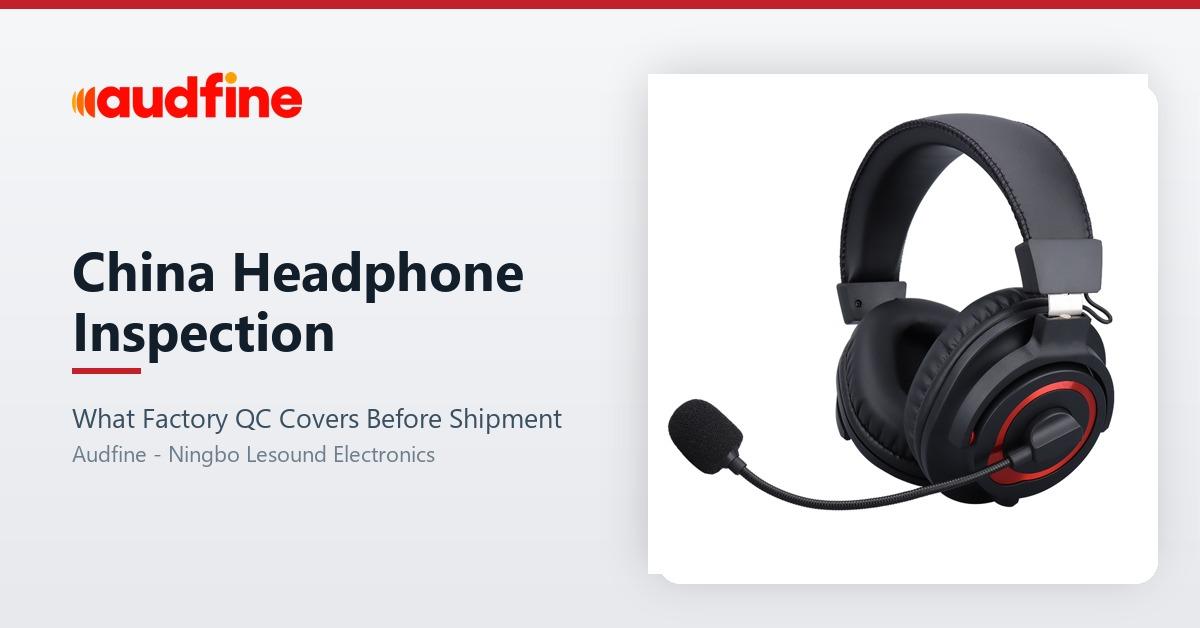
A structured prototype review walks the assembly the way a service tech would. Driver seating in the cup. Solder joints at the terminal. Cable strain relief, pad fit, hinge and swivel action, plug retention. Each item gets checked against the golden sample, and failures get fixed inside the loop, not logged for later. Later still, when a lot is judged against that golden sample before shipment, as our China headphone inspection guide describes, the chain holds up for one reason: the prototype stage produced a reference worth defending.
From prototype to golden sample to production
The development stage has a natural sequence, and it is worth naming because it defines who approves what.
First prototype units. Built to the agreed brief, measured on our fixture, sent with the sweep data. This is the decision round. The buyer listens, compares against the target curve, and the brief gets revised. Two or three rounds is common; sometimes one is enough. We do not treat the count as a schedule promise. It is however many rounds the brief needs.
Golden sample sign-off. The round that everyone accepts becomes the golden sample, the physical reference the whole programme is judged against. Who keeps it, and whether a duplicate exists, gets written down. This is the single most important artefact in cross-border headphone programmes, because it removes interpretation from every later argument.
Pilot run. A short run on the production line, using production fixtures and production operators, sampled and measured. Here the prototype's acoustic band meets real manufacturing variation. Tolerance bands get confirmed, or tightened. Either outcome is useful.
Mass production against the golden sample. From here the programme runs on inspection and AQL sampling, which the earlier guides cover. The prototype stage's job was to make that stage boring, and boring is the goal.
Commissioning the prototype: an eight-line RFQ checklist
Send the same brief to three factories and you will get three very different first rounds back. The difference is rarely skill; it is brief quality. Eight lines we suggest every buyer put in writing:
- The product intent in one paragraph: monitoring, broadcast, installation, and who the user is.
- The driver platform or the acoustic constraints: size tier, impedance versions, pad family.
- The target curve or a reference unit, with the tolerances you expect.
- The printed windows to hold: frequency response floor and ceiling, sensitivity band.
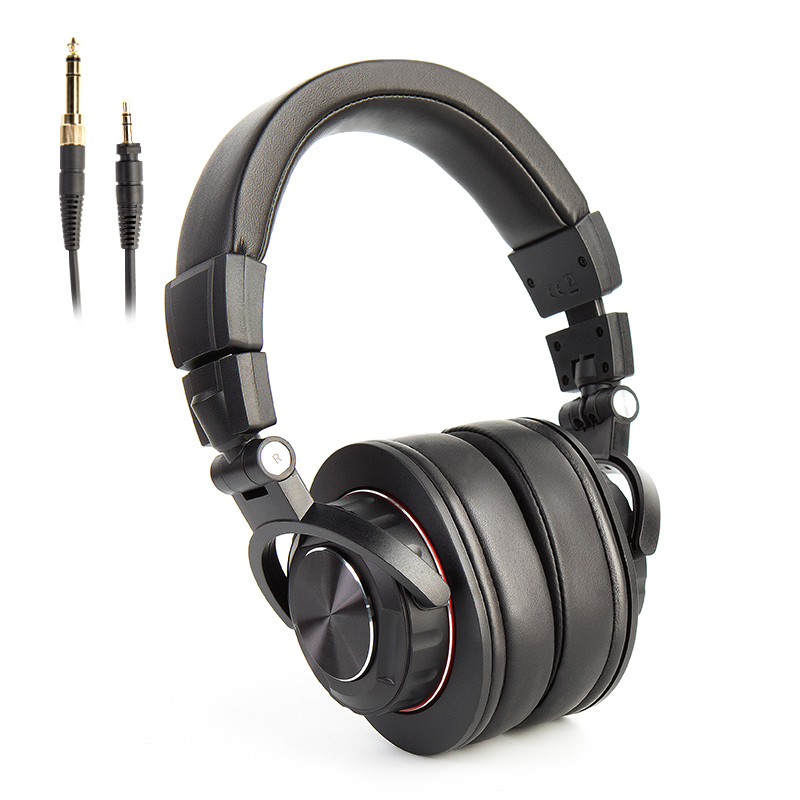
- Mechanical requirements: detachable or fixed cable, pad type, folding or fixed yoke, plug type.
- Accessory scope: microphone cables, splitters, carrying cases, spare pad sets.
- The destination market and its documentation expectations.
- Who keeps the golden sample, and what data you receive at each round.
A headphone prototype manufacturer, China or anywhere else, that answers those eight lines in the first reply has run this stage before. One that goes quiet on item four, the tolerance windows, is telling you something. And if the decision between bespoke development and a branded catalog platform is still open, our OEM vs ODM comparison for audio brands sets out which stages each path skips.
How we run the prototype stage in Ningbo
We are Ningbo Lesound Electronics, building monitoring headphones and pro audio transducers since 2009, sixteen years this year, shipping to buyers in more than 60 countries from a 7,000 square metre factory. Monitoring headphones leave our lines at a rate of roughly 10,000 finished units in a typical month, and that volume is built on the same development stage described above: brief, measurement rounds, golden sample, pilot run.
Our acoustic fixture work is in-house, the measurement data from your prototype rounds comes to you, and the golden sample arrangements are written into the programme. Buyers visit, or send their engineers, and work from the same sweep plots we do. If you want to see the platform range before writing a brief, the monitoring headphone model map lays out the current lineup, and our product range covers the speaker and transducer side of the factory.
Frequently asked questions
How many prototype rounds does a headphone programme usually need?
One to three is the honest range for a brief that was written properly, because the first round either lands inside the target curve or reveals a mechanical constraint nobody had on paper. Programmes that skip the written brief and go straight to "make it like this, but different" are the ones that burn rounds. The brief is the cheapest round you will ever buy.
Can you prototype from a competitor's unit?
We can measure and discuss a reference unit's behaviour, and most prototype briefs include one. What we will not do is copy a branded product outright. The productive version of this conversation is: what does that unit do that your market needs, and what should yours do differently. That framing produces a brief, and a brief produces a product you can actually own.
What measurements come with prototype units?
Frequency response sweeps, channel tracking, and sensitivity against the agreed band, per unit, per impedance version. Buyers running their own verification later appreciate having the factory-side data to compare against, and discrepancies between two measurement setups are themselves useful information.
Do you prototype earphones as well as headphones?
Our development programmes centre on the monitoring headphone platforms listed above, at 45 and 50 mm driver tiers, including communication configurations with microphone cables. If your brief sits outside that range, send it anyway; the first reply will tell you plainly whether it is a fit for our lines.
How do we start a prototype conversation with Audfine?
Send the product intent, the impedance versions you plan to sell and your target curve, or just the reference unit you have in mind, through our inquiry page. We reply with the platform options, the published windows they hold and what data you receive at each round, so the first prototype round starts from numbers instead of adjectives.