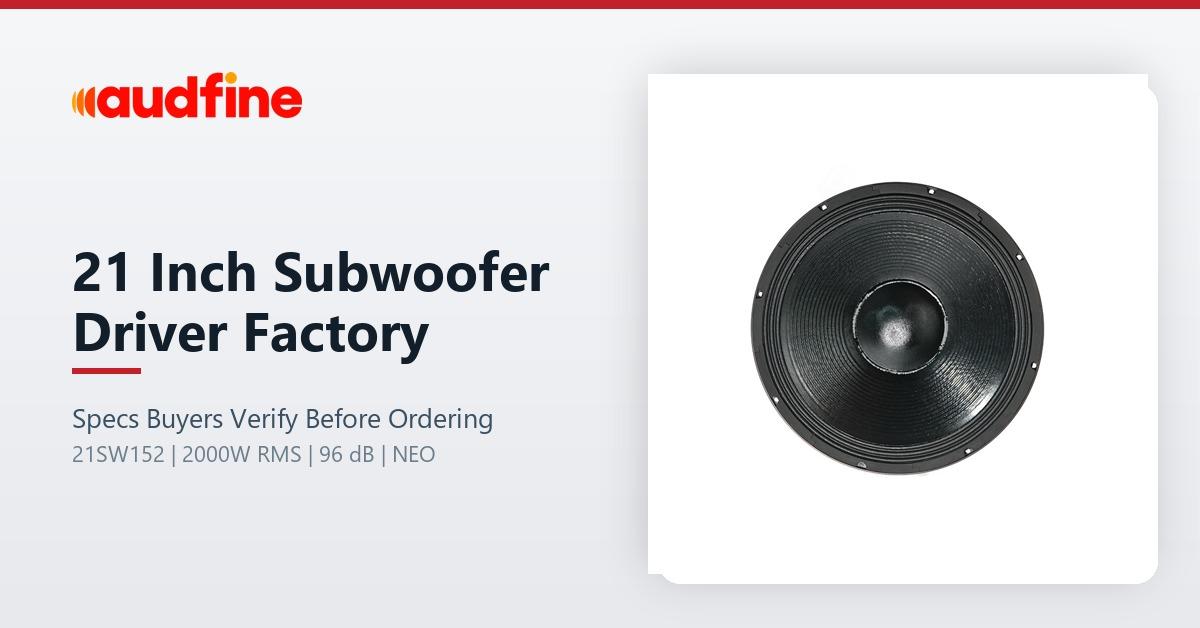
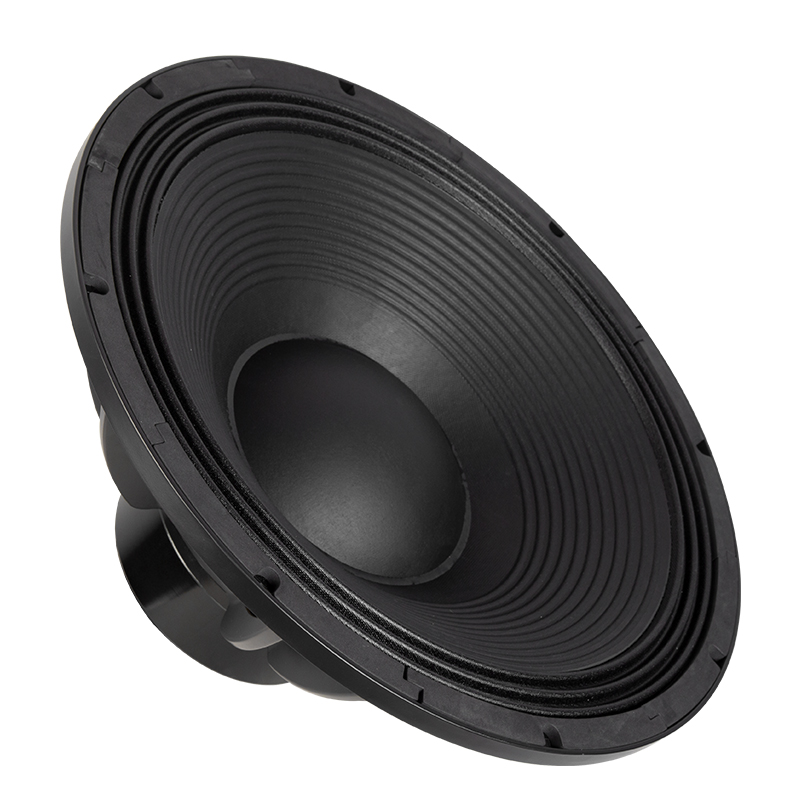
A serious 21 inch subwoofer driver factory review should start with numbers on a datasheet, not adjectives. So here are ours. The driver is the 21SW152, our 21-inch low-frequency transducer. 2000W RMS. 4000W peak. 96 dB. A 30 Hz to 1 kHz window. A 6-inch inside/outside voice coil. A neodymium motor. Below we go line by line, explain what each figure means when you are specifying cabinets, and finish with the ten checks we ask for before any RFQ in this size class.
Why the 21-inch class exists at all
For most of PA history, 18 inches was the ceiling. Then cabinets shrank. Expectations didn't. A 21-inch cone pushes more air per stroke than an 18-inch one, and that is the whole point: in some designs, one driver in a box can match the output of a dual-18 cabinet. Fewer drivers, fewer crossover headaches, a simpler amplifier count.
That is the theory. In practice? It depends on the driver you actually bolt in. Bolt in a 21-inch frame with a small coil and a weak motor, and the diameter promise dies right there. We have watched it happen. A cabinet builder buys on diameter alone, then calls us wondering why the box runs out of breath at 40 Hz.
Torn between the two formats? We put 18-inch and 21-inch head-to-head in our 18-inch vs 21-inch subwoofer driver comparison. Here, we stay on the 21-inch class itself. How to buy it well.
The 21SW152: published numbers first
Everything below comes from the product page for the 21SW152 speaker woofer transducer. We publish the same figures on the datasheet and on the site, and we would rather you cross-check both than trust either one.
| Item | 21SW152 |
|---|---|
| Nominal diameter | 21 inch |
| Power handling | 2000W RMS, 4000W peak |
| Nominal impedance | 8 ohm |
| Sensitivity | 96 dB |
| Frequency response | 30 Hz - 1000 Hz |
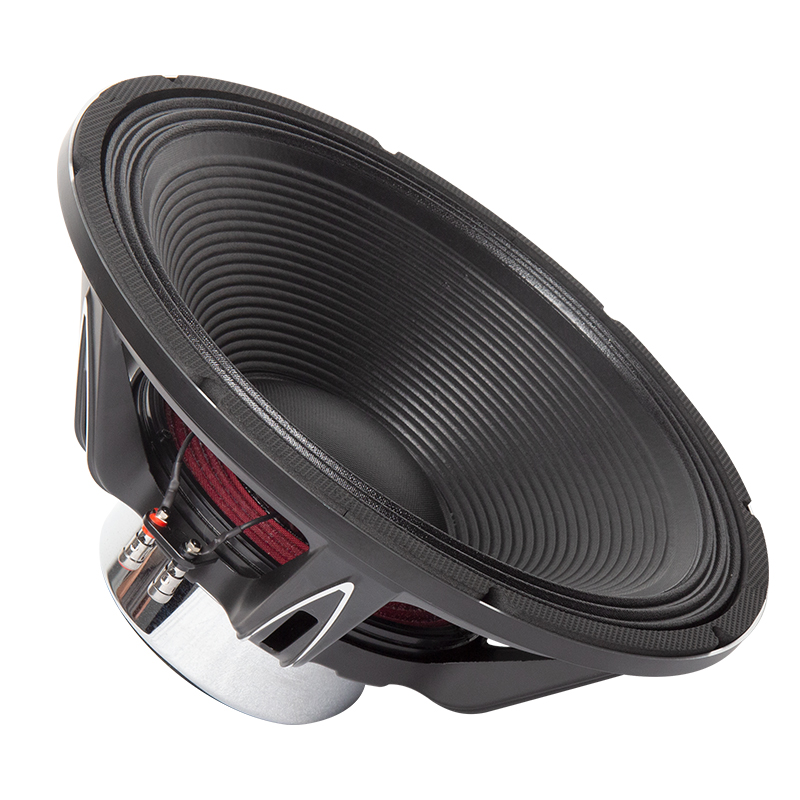
| Voice coil | 6 inch glass fiber former, inside/outside winding |
| Magnet | Neodymium, black yoke |
| Basket | Die-cast aluminum |
| Spider | Double spider |
| Cone | Paper |
A short note on that sensitivity figure. 96 dB at 1W/1m sits where most serious 21-inch drivers land. Suppliers quoting 99 or 100 dB for this class are usually measuring something else, or measuring it somewhere else. Ask which. Every time.
Voice coil and magnet: read the coil line carefully
Two details on the coil line matter more than the rest. First, the diameter: 6 inches, written GBF6 on our sheet. A large winding for this class. It is the reason a 2000W RMS rating survives a full festival night instead of twenty minutes of it. Second, the winding layout: inside and outside. Wire on both faces of the former. Twice the surface to shed heat, and an impedance curve that stays flat as the coil warms.
The former material matters too. Glass fiber does not soften the way paper formers can when a hard bass line parks the coil at high temperature. And the neodymium motor keeps the whole assembly lighter than an equivalent ferrite build, which your road crew will notice the first time they lift one.
We explain these trade-offs in more depth in our woofer driver basics guide on voice coils, magnets and power handling, so here we will keep to what is specific about the 21-inch size: thermal mass. A coil this big takes a long time to heat and a long time to cool. That is a genuine advantage on long high-duty cycles, and it is invisible on a datasheet.
Power ratings: RMS, peak, and the question you must ask
Our sheet reads 2000W RMS and 4000W peak. Peak is 3 dB above RMS, which is the standard relationship, not a marketing number. But the rating you can actually use depends on the test condition behind the RMS figure: test signal type, duration, and whether the driver was mounted in a specific enclosure volume during the test.
Different factories run different test protocols. Both can be honest and still produce different numbers. So when you compare two 21-inch drivers, put the same three questions to every supplier. What signal was used? How long did the test run? What enclosure, if any? No answer? Then treat the rating as unverified and ask for a sample instead. Buyers running OEM speaker driver programmes do this all the time, and no competent factory will refuse.
Basket, spider and cone: hardware you can check by hand
Three lines on our table are mechanical, and all three are easy to check by hand before anything ships.
The die-cast aluminum basket holds alignment under heat. Stamped steel can flex over years of thermal cycling. A flexed basket shifts the coil in the gap. Casting aluminum costs more. The trade is mechanical, not cosmetic.
The double spider keeps the coil centered at high excursion. A 21-inch cone at full stroke exerts serious leverage on everything holding it straight. One spider can do the job on smaller drivers. At this diameter, two is the sensible floor.
The paper cone is not a budget choice, whatever the forums say. Treated paper still gives the stiffness-to-weight behavior the sub band needs, and it is what most reference-grade subwoofer drivers use. Coating quality varies between factories, which is one more thing a sample will tell you.

21 inch next to 18 inch: the published figures side by side
Numbers first. Conclusions never. Our 18-inch line includes the 18BHP501ND speaker woofer: 2000W RMS, 4000W peak, 98 dB, 30 Hz to 1250 Hz, 5-inch coil, neodymium, double spider. Put it next to the 21SW152 and the overlap jumps out. Same power rating. Same 30 Hz floor. The 21-inch gives up two dB of published sensitivity and picks up an inch of coil.
What does that mean for a cabinet builder? The two classes are closer than the diameters suggest. Your enclosure volume, your tuning target and your amplifier inventory decide this, not which driver looks more impressive at a trade show. On paper, the dB gap favors the 18-inch for raw efficiency. Coil and cone area favor the 21-inch for displacement headroom. Real-world results depend on the box. Anyone who tells you otherwise is selling something.
Sourcing from a 21 inch subwoofer driver factory: the verification checklist
Here is the part most RFQs skip. When you evaluate any 21 inch subwoofer driver factory, the datasheet gets you a shortlist. The checklist below is what separates a supplier from a profile page. We answer these ten items for every serious enquiry, and we would expect any factory you talk to, including us, to do the same.
- Published sensitivity conditions. What does the dB figure assume? Ours is 96 dB. Ask every supplier for their measurement setup, in writing.
- Power test protocol. Signal type, duration, enclosure. Same three questions as above, applied to every model on your shortlist.
- Coil construction. Diameter, former material, winding layout. A "6-inch coil" claim should come with a winding depth figure.
- Spider count and surround design. At 21 inches, double spiders and a triple-roll surround are the configurations we would expect to see.
- Basket material. Die-cast aluminum versus stamped steel, and why.
- Thiele-Small parameters. Fs, Vas, Qts, Xmax, Sd. You need these for enclosure simulation; if a factory will not share them, the conversation is over.
- Mechanical drawings. Baffle cutout, bolt circle, mounting depth. Our drawings are available on request with the sample programme.
- Sample policy. Samples exist so you can measure the driver in your own box. A factory confident in its numbers encourages this.
- Production visibility. Ask what the lines actually run. Our speaker driver production runs at roughly 7,000 finished drivers each month, and capacity can be scaled for volume programmes. Ask every supplier for their per-category figure, not a single blended number.
- After-shipment support. Replacement cones, coils and spider sets, and how replacements are matched to your batch. Serviceability is a procurement topic, not an afterthought; we covered the matching problem in our driver replacement guide.
One more thing worth saying. If your programme also includes finished active subwoofer cabinets rather than raw drivers, our active subwoofer range and the driver spec reference in our speaker drivers explained guide both give you the same published-numbers approach at system level.
Frequently asked questions
Is a 21-inch driver automatically deeper than an 18-inch one?
No. Cone area helps displacement, but low-frequency extension is set by the motor, the suspension and the enclosure together. Our own 18BHP501ND and the 21SW152 share a 30 Hz published floor. Model the box first; buy the driver second.
Why is the 21SW152 rated 96 dB when some 21-inch drivers claim more?
Because sensitivity figures are only comparable when the measurement conditions match. Our 96 dB is the number we will defend in a sample test. When a competing datasheet claims 99 dB for the same class, ask for the test setup. If the answer is vague, the figure probably is too.
What enclosure volume does the 21SW152 need?
That depends on your tuning target, and we do not publish a single recommended volume because it would be wrong for half the applications. Request the Thiele-Small parameters and the mechanical drawing, and run the simulation for your own box. Our engineering team reviews customer simulations before sample orders as part of the standard process.
Do you supply drivers under customer brands?
Yes. OEM and ODM driver programmes are a normal part of our business, from cone and coil specification through to basket casting and finished-goods branding. The contact page reaches our export engineering team directly, and we reply with datasheets, drawings and T/S parameters before we talk about anything else.
How do I verify the driver survives my duty cycle?
Three steps. First, match the RMS rating to your amplifier and limiter settings with real program material in mind. Second, run a sample in your enclosure at show-level duty for as long as your worst night runs. Third, ask the factory how the coil and spider are specified against thermal failure. A factory that builds 6-inch inside/outside coils into a 2000W RMS rating has already done that engineering; one that cannot explain it has probably not.