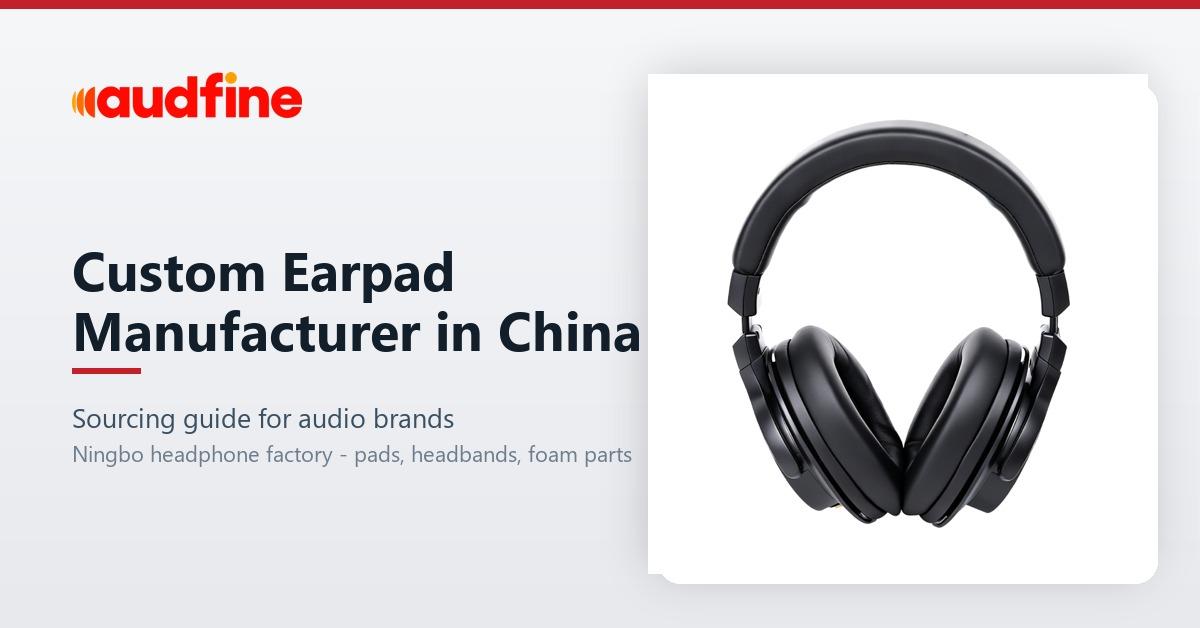
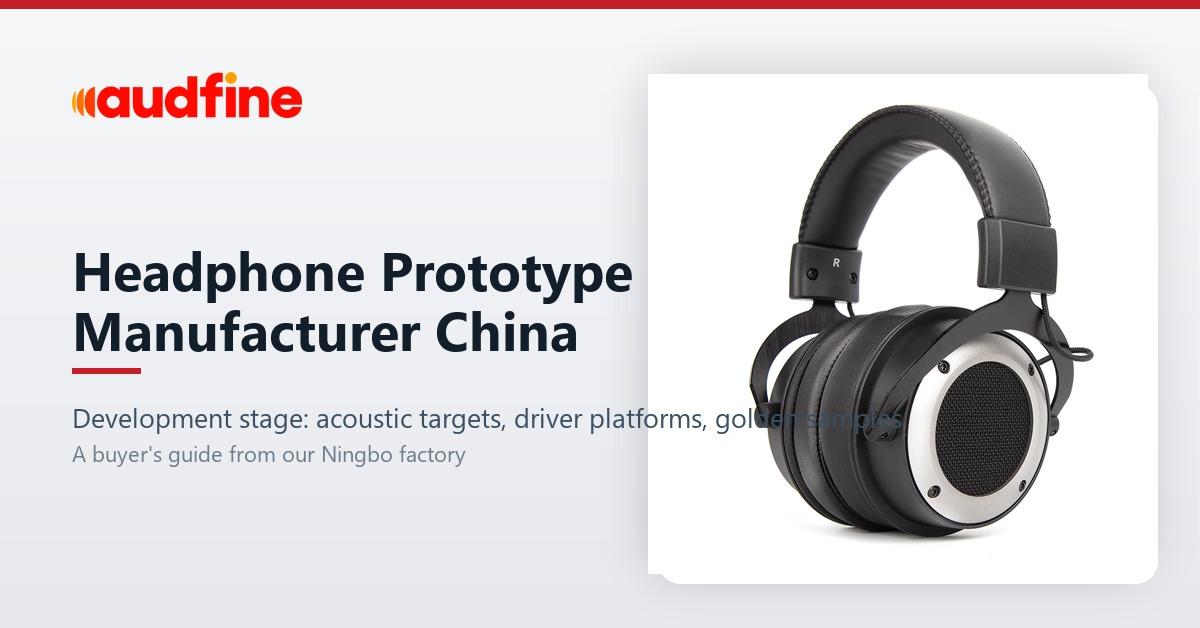
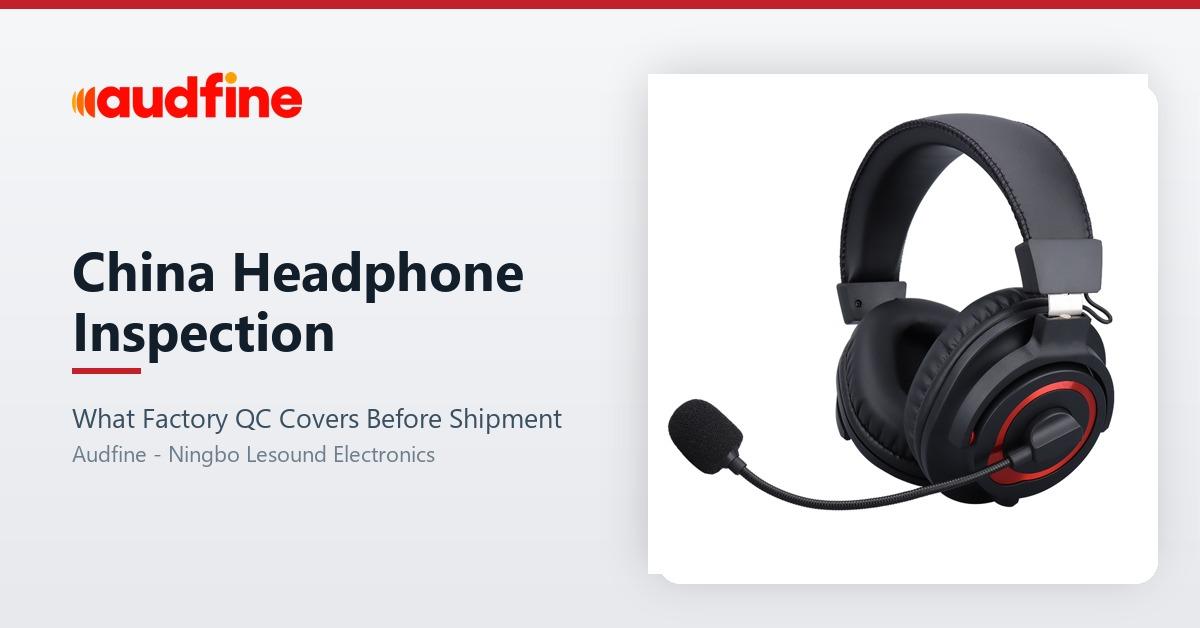
Sourcing teams usually start from a custom earpad manufacturer China search — a reasonable first step, but only a first step. The pad is the only part of a monitoring headphone that touches both the listener and the acoustic seal at the same time, and it is the first part a fleet wears out. We build monitoring headphones in Ningbo, pads are part of our own bill of materials, and we receive a steady flow of enquiries from brands that need pads, headband covers and foam components made to their own drawings. So this guide covers what a custom earpad programme actually includes, which pad formats we publish across our own range, why pad choice is an acoustic decision rather than a cosmetic one, and what to put in an RFQ so a factory can quote accurately.
What a custom earpad programme actually covers
Most enquiries start with one word, pads. In practice a soft-component programme covers four families of parts, and it is worth being explicit about which one you mean.
Ear pads. The cushion that seals the driver to the side of the head. Shape can be round or oval, the inside can be cut for flush or recessed drivers, and the attachment can be pinned, screwed, clipped or bonded. Every one of those variables changes the tooling, so every one of them belongs in the RFQ.
Headband covers and crown pads. The strip that carries the weight of the headphone on the top of the head. It wears from hair products and handling long before the cups wear out, and on many models it is a separately stitched part.
Foam components. Inside the cup there are damping pads, spacer rings and baffle foams. These are invisible on the finished product, but they sit directly in the acoustic path, so their thickness and density are acoustic parameters, not just comfort parameters.
Protective and storage soft goods. Pouches, wraps and case liners round out the accessory chapter. Our own catalogue, for example, lists solid carrying cases and soft carrying bags alongside the headphones themselves.
A buyer who arrives with all four families defined gets a materially better quotation than a buyer who asks for "pads" in a single line. The factory knows what it is tooling, and you know what you are comparing.
The pad formats we publish across our own range
The clearest way to show what a headphone earpad supplier actually delivers is to look at what we publish for our own models. Across more than twenty monitoring headphones in the 2026 catalogue, the pad specification is written on the spec page of each model, not buried in a footnote.
| Pad format | Where it is published | Typical fit |
|---|---|---|
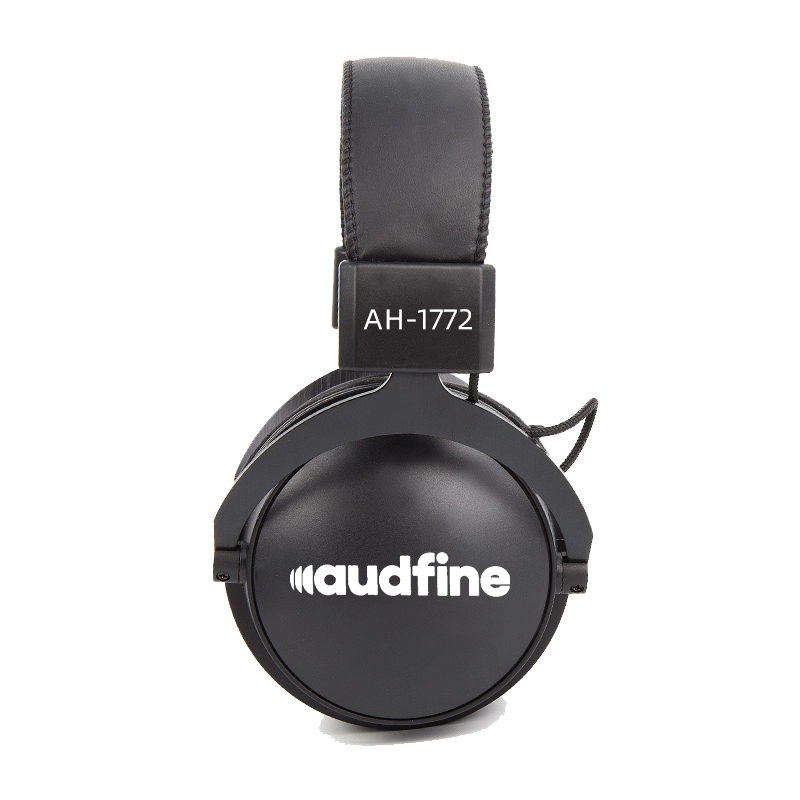
| Soft skin-friendly leatherette | DH-1772 spec page | Closed-back studio tracking; wipes clean for shared facilities |
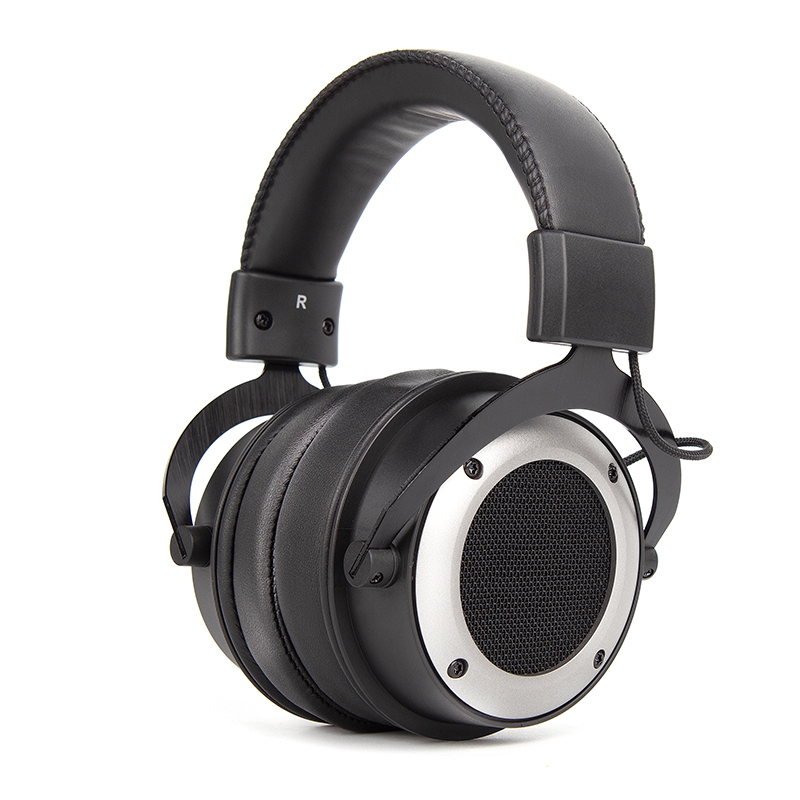
| Flannel | DH-1772B listing; open-back DH-990 | Open-back acoustic designs and long listening sessions |
| Air-mesh | DH-7100 listing | Foldable bodies and rental fleets; long-session comfort |
| Round leather / round lint / square leather replacement pads | Accessories chapter | Spare-parts programmes for models already in the field |
| Extra ear-pads or cable as an option line | Options column on nearly every spec page | Ordering pads together with the headphones, per order |
Three points in that table deserve emphasis. First, the same acoustic platform can carry different pads: the DH-1772B shares the DH-1772's published specification — a 50 mm neodymium driver, 10 Hz to 35 kHz at 99 ±3 dB, in 32, 80 and 250 Ω versions — and is listed with flannel pads instead of the skin-friendly leatherette. Second, pad format follows the acoustic architecture: flannel appears on the open-back DH-990, where the cup is deliberately not sealed against the head. Third, the accessories chapter carries dedicated replacement pads in round leather, round lint and square leather formats, so a parts programme can be assembled per model rather than improvised.
Why the pad is an acoustic component, not a trim part
The most common mistake we see in pad enquiries is treating the pad as upholstery. It is not. On a closed-back headphone the pad is the last seal in the acoustic system. Change its compressibility and you change how far the driver sits from the ear canal; change its material and you change leakage at the rim; and low-frequency response is exactly the region that suffers first when a seal goes soft.
This has three practical consequences for a custom pad programme.
Sample against the same model, on the same fixture. A pad should be evaluated mounted on the headphone it was designed for, not in the hand. Two pads that feel identical can measure differently once the cup compresses them.
Ask what changes and what stays. When a buyer asks us to fit a different pad material to an existing model, the honest answer starts with the acoustic consequences. A denser foam firms up the rim seal; a thicker pad moves the ear further from the driver and can thin the top end. Those effects are manageable, but only if they are measured, which is why pad changes belong in the same engineering conversation as driver and cabinet changes.
Plan for compression set. Foam that has spent two years compressed in a cupboard does not spring back the way foam that has been sitting on a shelf in a rotated stock does. Buyers who run rental or education fleets already know this: the pad is a consumable, and the replacement cycle belongs in the operating budget, not in the defect column.
The deeper background on how these figures interact with the rest of the datasheet is in our monitoring headphone spec sheet buyer's guide.
Briefing a custom ear pads factory: what to send for an accurate quotation
A pad quotation is only as good as the information behind it. Factories quote from geometry, material and volume expectations; leave one out and the number that comes back is a guess dressed up as a quotation. What separates one custom earpad manufacturer China listing from another is rarely the word custom — it is what each factory can do with the details below. When you write to a custom ear pads factory — us or anyone else — the following eight items turn a vague enquiry into a quotable package.
1. Geometry. A drawing with outer diameter, inner cutout, thickness and mounting-hole positions. A CAD file is better; a dimensioned sketch of an existing pad is a usable start.
2. A reference sample. If you are replacing or cloning an existing pad, send the pad itself. Samples communicate hand feel, foam grade and stitching density faster than any drawing.
3. Material reference. Leatherette, lint, flannel or air-mesh, plus the foam family. If you only know the commercial name of a material you liked, say so — materials are matched by specification, not by brand name.
4. Attachment method. Pinned, screwed, clipped or bonded. This decides the back plate tooling and whether the pad can be replaced in the field without tools.
5. The host model. Which headphone, or which cup diameter, the pad must fit. If the pad is for a model already in your fleet, the model number is the shortest route to the right tooling.
6. Colour and surface finish. Stitching colour, perforation, embossing. Small items, but they drive the minimum decorative tooling.
7. Annual volume band. Not a contract — a band. Factories size the tooling and the process to the band; a pad quoted for a pilot programme and a pad quoted for continuous production are different parts.
8. Packaging format. Poly bag, blister, or paired with the headphone carton. Our own catalogue ships cases and bags as accessory lines, so pads can be packed into the same logistics flow rather than separately.
Buyers who send all eight items typically get a usable quotation and a sampling plan in the first reply. Buyers who send two usually get questions — which is fine, but slower. Our inquiry page is structured around exactly these fields, and the same discipline works with any capable factory.
Quality checks specific to pads and soft components
Pads fail differently from electronics, so they need a different check sheet. The items that matter on a pad lot are concrete and observable.
Foam density and rebound consistency. Compare sampled pads against the approved sample by hand and by compression. Density drift shows up as comfort complaints months later, long after the shipment has been paid for.
Seam and stitching strength. The seam is where a pad opens up. A pull check on sampled pads catches weak stitching before the fleet does.
Bond and clip integrity. However the pad attaches, it should survive repeated fitting cycles. A pad that tears on its third removal turns a consumable into a support ticket.
Surface finish consistency. Leatherette grain, flannel nap and mesh texture should match across a lot. Mixed-surface pads look like factory seconds even when they measure fine.
These checks slot naturally into a standard inspection routine. How they fit into the broader pre-shipment process — sampling logic, acoustic confirmation, reporting — is covered in our China headphone inspection guide, and the same lot-level thinking applies to a pads-only shipment. The discipline that connects an approved pad sample to clean mass production is the same one covered in our sample order and pre-shipment inspection guide.
How we run earpad and accessory production in Ningbo
A short factual note on our own setup, since buyers reasonably ask whether pads are a sideline or part of the line.
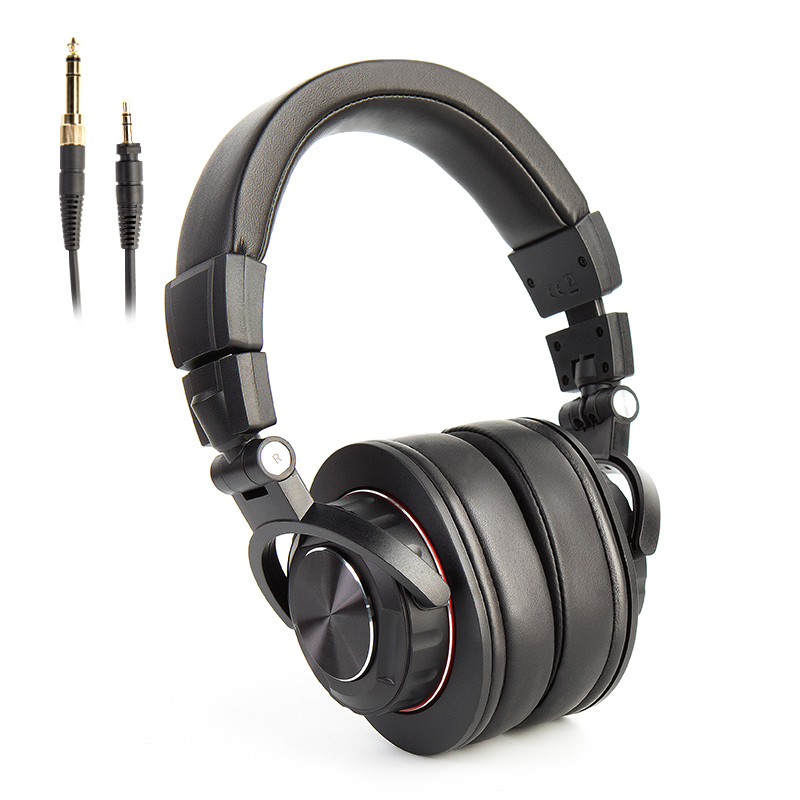
We have manufactured headphones and acoustic components in Ningbo for sixteen years, in a 7,000 m² factory. Monitoring headphones are the core of our output — on the order of ten thousand pairs in a typical month — and pads, headband parts, cables and cases are produced within the same operation, not sourced blind and packed in. The pad formats in the table above are not catalogue decoration; they are the formats our own models ship with, which means the tooling, the material sources and the inspection routine already exist.
For buyers building their own headphone programmes, the pads are one chapter of a wider conversation — our monitoring headphone model map shows how the platforms divide, and the spare-parts planning side of pad programmes is treated in detail in our guide to replacement ear pads and cables. For pad buyers the relevant point is narrower: soft components are engineered parts in this building, with the same batch thinking as drivers.
Frequently asked questions
Can I order custom pads without ordering finished headphones?
Yes, within the published options. The catalogue lists extra ear-pads as an orderable option line on nearly every model, and the accessories chapter carries replacement pads as standalone items. For fully custom geometries — your own shape on your own model — the programme starts from your drawing or sample, and the right first step is the RFQ package described above.
Which pad materials are available for custom programmes?
The published range covers leatherette, lint, flannel and air-mesh families. Within those families the foam grade, density and surface finish are the variables we tune against your sample. If you need a material outside the published families, send the physical reference — materials are matched by specification and hand feel, and the sampling stage exists to close that gap.
Do different pads change the sound of a headphone?
They can, and on closed-back models the difference is measurable rather than imagined. The pad controls rim sealing and driver-to-ear distance, and both parameters act on low-frequency response first. This is why we treat a pad change as an engineering change: sample, measure on the host model, then approve. It is also why flannel pads appear on our open-back models — there the acoustic architecture already assumes a non-sealing rim.
How do I start an earpad RFQ with Audfine?
Send the eight RFQ items above through our contact page, ideally with a photo or drawing of the pad. We will confirm which of the published formats is closest, what needs custom tooling, and what the sampling path looks like. If the pad belongs to one of our own models, include the model number — it shortens the conversation considerably.
Conclusion: buy the pad as an engineered part
An earpad decides how a headphone seals, how long a shift feels, and how a fleet ages. Treat it as upholstery and you will feel the difference in returns; treat it as an engineered component and it becomes one of the highest-leverage upgrades in the whole bill of materials. Most custom earpad manufacturer China enquiries we receive start with one photo of a worn pad; a drawing plus a sample starts a much better conversation. The pad formats across our own range — from the skin-friendly leatherette on the DH-1772 to the air-mesh on the DH-7100 — are published precisely so that buyers can specify rather than guess. The full model context is on our products page, and the sampling path in the RFQ section above is all it takes to begin.