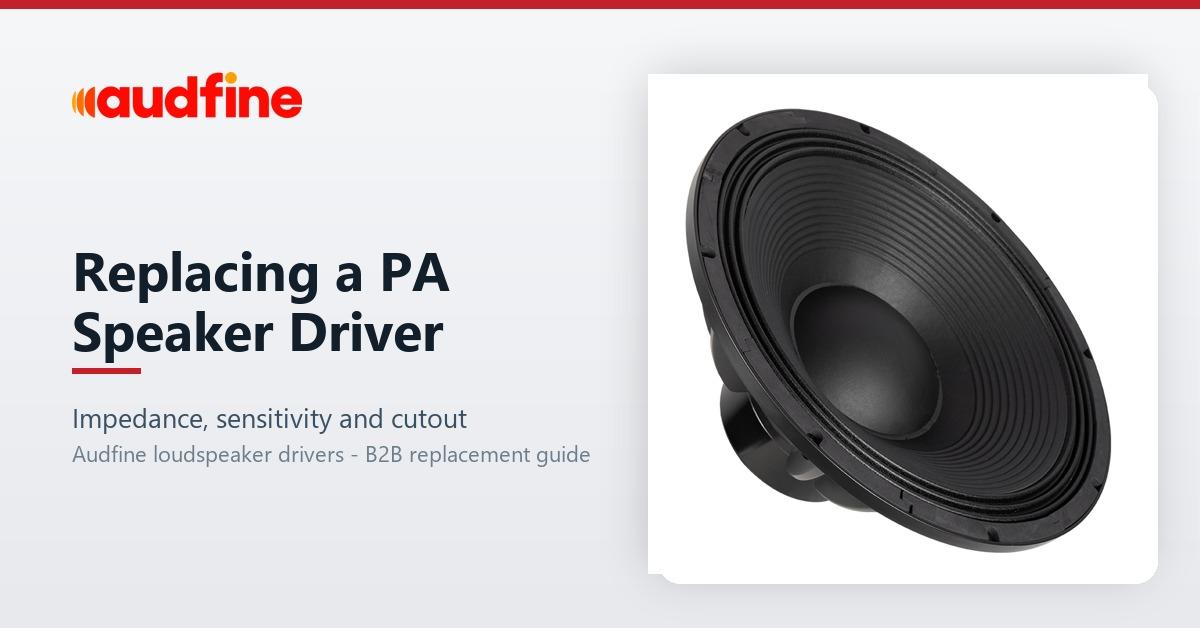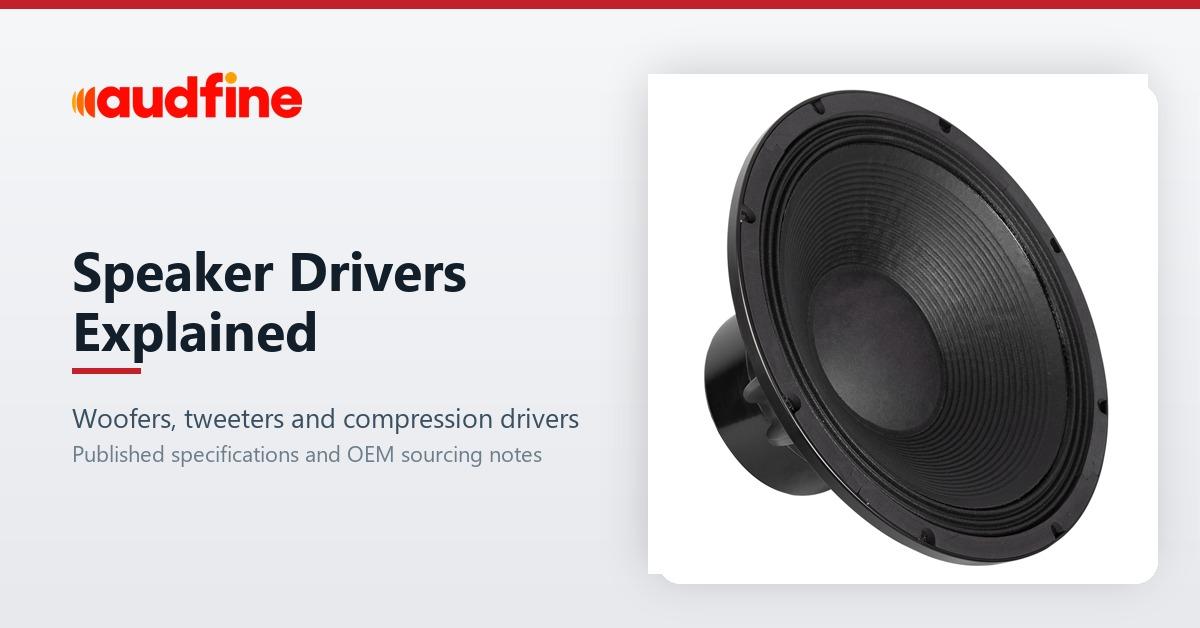
18-Inch vs 21-Inch Subwoofer Drivers: Choosing the Right Driver for Your Cabinet
For anyone building subwoofer cabinets — an OEM brand developing its own low-frequency line, a rental company replacing worn cones, or an installer specifying a fixed installation — the choice between an 18-inch and a 21-inch driver shapes everything downstream: cabinet volume, amplifier rating, system weight and the lowest octave the system can hold at programme level. Both sizes are established in professional low-frequency design, and both are represented in the Audfine transducer range with published specifications that can be compared directly, model by model.
This guide puts the two sizes side by side using the figures published on the Audfine product pages — four 18-inch models and one 21-inch model — and then sets out how buyers typically split the two sizes across applications. Audfine is the brand of Ningbo Lesound Electronics Co., LTD., a professional audio manufacturer and exporter based in Ningbo, China, supplying loudspeaker drivers and finished cabinets to overseas brands on an OEM and ODM basis.
The published figures side by side
| Model | Size | Power (RMS / Peak) | Sensitivity | Frequency Response | Voice Coil | Magnet | Spider |
|---|---|---|---|---|---|---|---|
| 18SW115 | 18" | 1600 W / 3200 W | 96 dB | 30 Hz – 1000 Hz | GBF 4.5" IN/OUT | Neodymium | Double |
| 18BHP401DM | 18" | 1500 W / 3000 W | 98 dB | 30 Hz – 2000 Hz | GBF 4" IN/OUT | Ferrite | Silicone |
| 18BH401DM | 18" | 1500 W / 3000 W | 98 dB | 30 Hz – 2000 Hz | GBF 4" IN/OUT | Ferrite | Silicone |
| 18BHP501ND | 18" | 2000 W / 4000 W | 98 dB | 30 Hz – 1250 Hz | GBF 5" IN/OUT | Neodymium | Double |
| 21SW152 | 21" | 2000 W / 4000 W | 96 dB | 30 Hz – 1000 Hz | GBF 6" IN/OUT | Neodymium | Double |
Three points hold across the whole table. First, every model listed is an 8-ohm transducer with a paper cone in a die-cast aluminium basket, so the meaningful differences sit in the motor, the coil and the suspension rather than in the cone material. Second, peak power ratings are consistently double the RMS ratings across the line, which makes amplifier matching straightforward at specification stage. Third, every published frequency response starts at 30 Hz — the two sizes differ in how far up they run and how much continuous power they take, not in where they start.
The 18-inch line-up: three motor strategies
18SW115 — neodymium motor, 4.5-inch coil. The 18SW115 18-inch woofer publishes 1600 W RMS with 3200 W peak, 96 dB sensitivity and a 30 Hz to 1000 Hz response. Its motor combines a neodymium magnet with a GBF 4.5-inch IN/OUT voice coil on a double-spider suspension. Neodymium keeps motor weight down, which matters most for touring cabinets that are loaded, stacked and rigged by hand night after night.
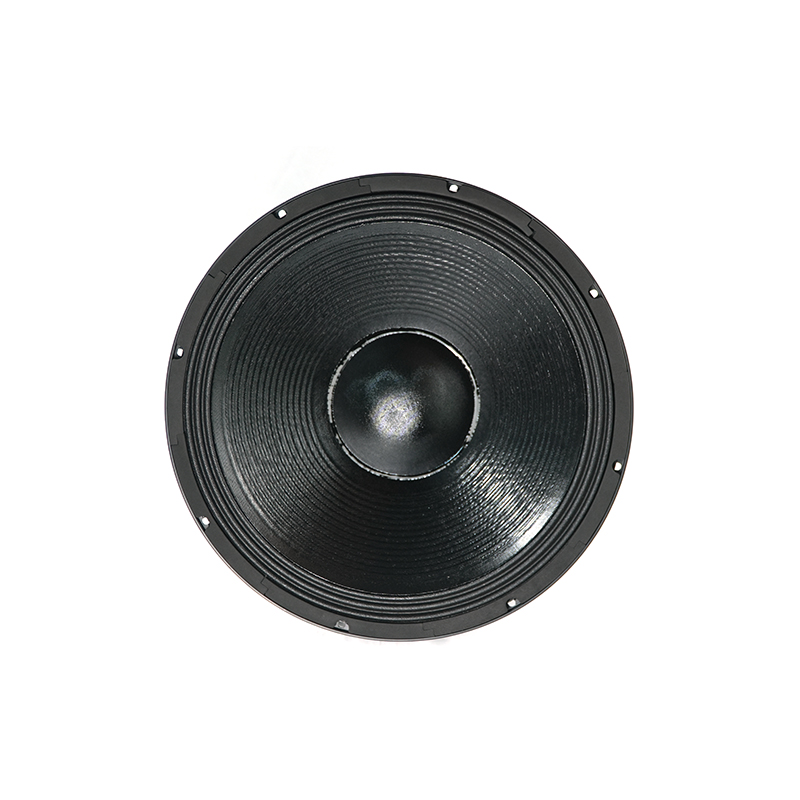
18BHP501ND — the highest power figure in the range. The 18BHP501ND 18-inch woofer publishes 2000 W RMS with 4000 W peak, 98 dB sensitivity and a 30 Hz to 1250 Hz response. The coil steps up to a GBF 5-inch IN/OUT winding, again driven by a neodymium magnet and held on a double spider. This is the model to shortlist when the amplifier platform is already fixed at a high continuous rating and the cabinet design cannot give up sensitivity.
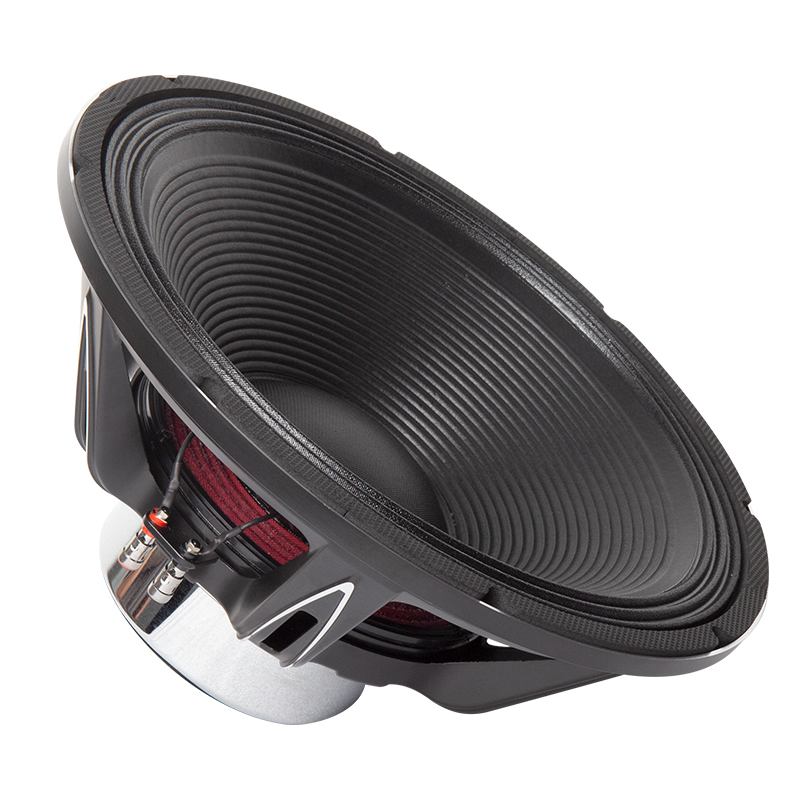
18BHP401DM and 18BH401DM — ferrite motor, widest published range. These two models carry different part numbers but identical published specifications: 1500 W RMS with 3000 W peak, 98 dB sensitivity, a 30 Hz to 2000 Hz response, a GBF 4-inch IN/OUT coil and a ferrite motor with a chrome-plated T-yoke. The suspension is the distinctive part — a silicone spider rather than the double-spider layout used on the neodymium models — and the 2 kHz upper limit is the widest published range of any 18-inch model in the line, leaving room for crossover choices in sub-top systems. The ferrite motor trades weight for budget headroom, which suits fixed installations and budget-focused OEM programmes.
Because both are listed separately, both can be evaluated on their own product pages: the 18BHP401DM 18-inch woofer and the 18BH401DM 18-inch woofer.
The 21-inch option: what the extra cone area buys
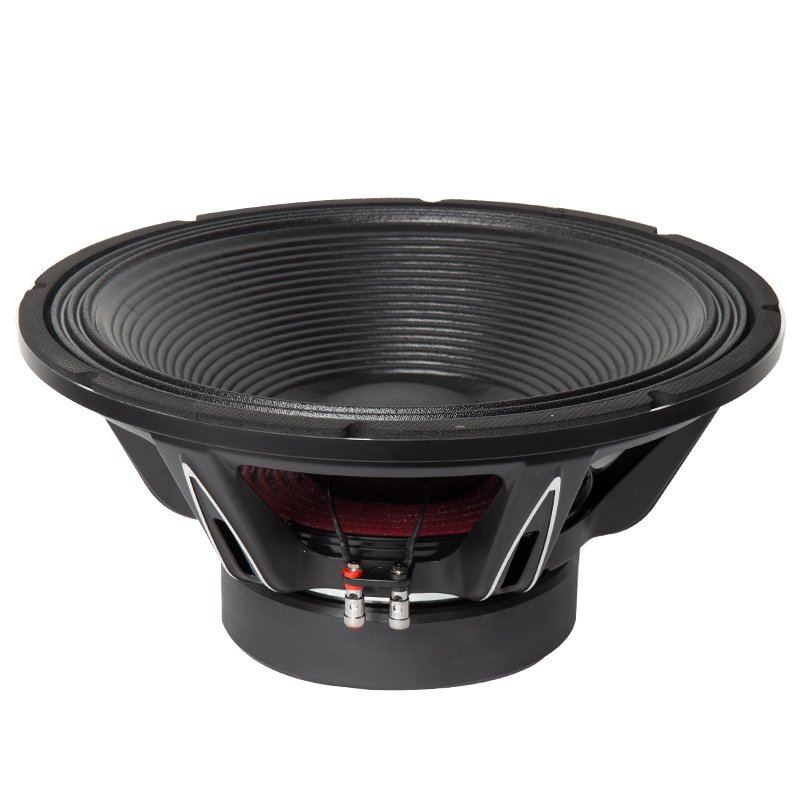
The 21SW152 21-inch woofer publishes 2000 W RMS with 4000 W peak, 96 dB sensitivity and a 30 Hz to 1000 Hz response, driven by a GBF 6-inch IN/OUT voice coil, a neodymium magnet and a double-spider suspension. Set beside the 18-inch models, two differences stand out.
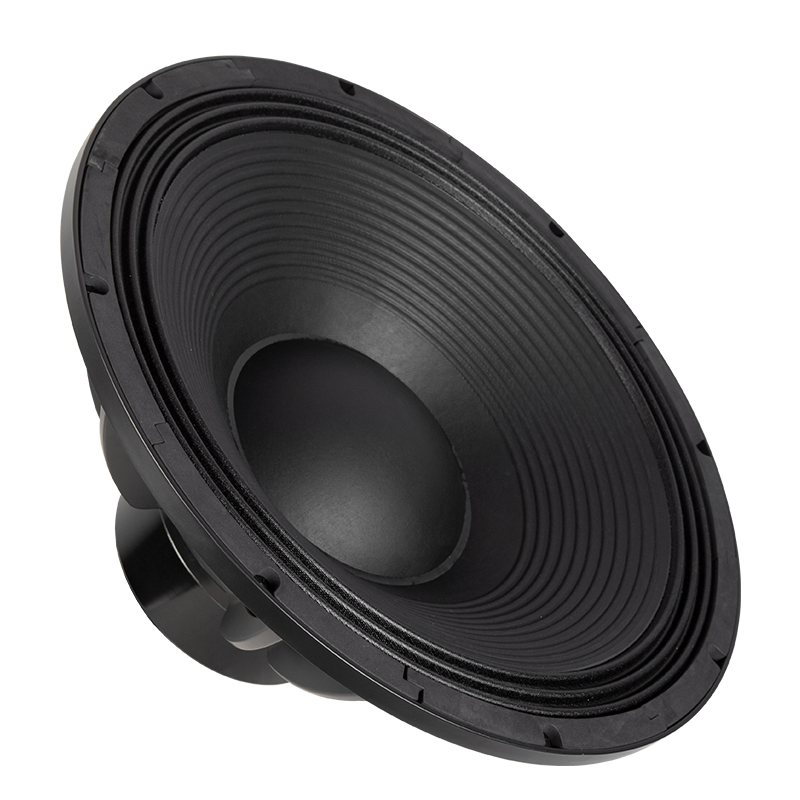
First, radiating area. A 21-inch cone sweeps roughly a third more surface area than an 18-inch cone, so for a given cone excursion it moves proportionally more air — the physics reason 21-inch designs exist at all. Second, coil diameter. The 6-inch coil is the largest in the range, one inch wider than the 5-inch coil on the 18BHP501ND, and presents correspondingly more surface area for heat dissipation at the same 2000 W RMS continuous rating.
The trade-offs are mechanical rather than electrical. A 21-inch driver demands a larger cabinet volume, adds weight to the enclosure and narrows the range of cabinet formats it fits. Rental stock built around 18-inch boxes cannot simply swap sizes either, because the baffle cut-out, the internal volume and the tuning all change together. In practice, 21-inch projects are new cabinet developments rather than upgrades to existing boxes — a point worth settling before the RFQ stage, not after.
Matching the driver to the enclosure and the amplifier
Application patterns follow from the figures above rather than from size loyalty. A few recurring mappings:
- Touring subwoofer cabinets. Weight-sensitive programmes lean towards the neodymium 18-inch models — the 18SW115 at 1600 W RMS or the 18BHP501ND at 2000 W RMS — where motor weight saving compounds across every box in the array.
- Fixed installations. The ferrite 18BHP401DM / 18BH401DM pair suits permanent installs, where weight is irrelevant once rigged and the 98 dB sensitivity with a 30 Hz to 2000 Hz window gives the processing designer more crossover freedom.
- Sub-top two-way systems. Where the sub must blend into a full-range cabinet through an active crossover, the wider published response of the ferrite pair is the deciding specification.
- Flagship low-frequency designs. The 21SW152 earns its place when the cabinet is being engineered around the driver from the start and the goal is maximum air movement per box.
How coil size tracks power handling across the whole transducer range — not just the 18- and 21-inch models — is covered in more detail in the woofer driver basics guide.
Finished products show how the 18-inch platform carries through to a complete enclosure: the PRX918 18-inch powered subwoofer pairs an 18-inch low-frequency section with its own amplifier and processing stage, which is the route most OEM brands take when they want a matching finished box rather than a bare transducer.
Sourcing 18-inch and 21-inch subwoofer drivers from a China manufacturer
For cabinet builders, audio brands and distributors sourcing transducers from a China manufacturer, the specification conversation is the same at either cone size, and it normally starts with six inputs: the target cabinet volume and tuning, the amplifier's continuous rating and processing limits, the sensitivity target, the preferred motor material (neodymium for weight, ferrite for budget), the suspension layout, and the duty cycle the product will see in its destination market. Supplying those six items with the first enquiry shortens the path from shortlist to sample considerably, because it lets the factory narrow the range to the models whose published behaviour matches the enclosure instead of trading spec-sheet numbers back and forth.
Sample requests are supported across the Audfine transducer range, and each model's product page carries the full published specification set, so 18-inch and 21-inch candidates can be compared on identical terms before anything ships. For buyers running OEM or ODM programmes, the same evaluation process applies whether the driver is destined for a touring subwoofer, an installed club system or a branded product line.
Sample evaluation checklist for subwoofer drivers
- Measure free-air resonance and the impedance curve in the target cabinet volume, not just on the bench.
- Run the driver at the amplifier's continuous rating long enough to observe thermal compression, if any.
- Compare in-band sensitivity in the finished box against the published figure.
- Check spider and surround behaviour at maximum excursion, listening for mechanical noises at the stroke limits.
- Confirm coil former and winding construction with the supplier rather than inferring it from the power number.
- Verify basket dimensions and baffle cut-out against the enclosure drawing before committing tooling.
Which size should the next cabinet use?
Where the published data points: 18-inch remains the working default for subwoofer programmes, with three distinct motor strategies inside the Audfine range covering touring weight limits, high continuous power and budget-focused installations. The 21-inch size is justified when a new cabinet is being engineered around maximum air movement per box and the mechanical trade-offs are acceptable. Because both sizes share the same platform — 8 ohms, paper cone, die-cast aluminium basket, peak ratings at double the RMS figure — a product line can carry both without fragmenting the amplifier or processing design behind it.
Send your subwoofer driver specification to the factory — cabinet volume, amplifier platform and target response are enough for a first model recommendation at either size.