Pick a topology before you buy the boxes. The fork is simple: do the cabinets drive themselves, or does the power sit in a separate rack? We're a line array speaker supplier serving rental houses and install crews, and we hear this question every week. Neither answer is universal. The fit depends on your job mix, your crew, and how many spare amplifiers you'll warehouse.
Two topologies, two inventory philosophies
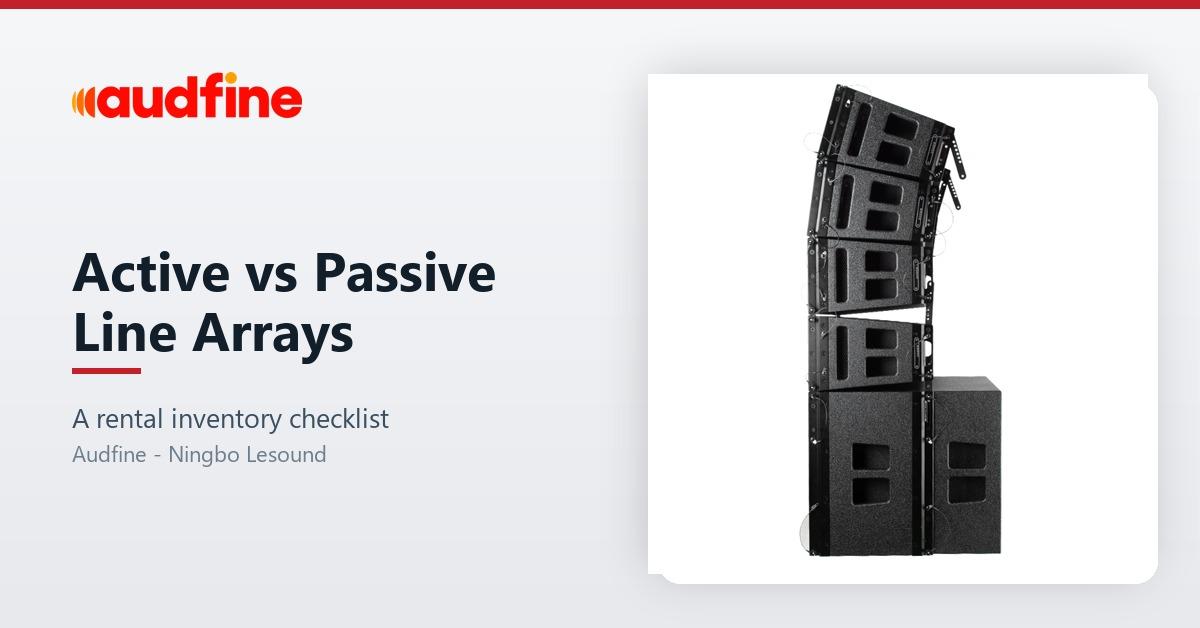
An active line array carries its amplifier and DSP inside the cabinet. Power, limiting and crossover are matched at the factory. The box arrives pre-aligned. A passive line array ships as an acoustic load only. Your amplifier, processor and limiting live in an external rack you specify, tune and maintain yourself.
That one difference cascades. Truck space. Rigging time. Failure modes. The skill set your technicians need on site. Treat the choice as inventory design, not a spec-sheet beauty contest.
What active line arrays put on the rental company
The upside is consistency. Every box is voiced by the same built-in electronics, so a replacement drops into the array without a re-tune. Cable runs shrink to signal and mains. That trims setup time on a one-night corporate or a weekend festival. For a fleet that turns around fast, the simplicity pays for itself in labour.
Now the trade-offs. Weight, and a single point of failure. Each powered cabinet is heavier than its passive cousin. If the on-board amplifier fails, the whole box is down until it returns to the bench. A rental shop needs a sensible spares ratio and a service channel it can actually reach on a Monday. Not just a lower headline figure.
What passive line arrays put on the rental company
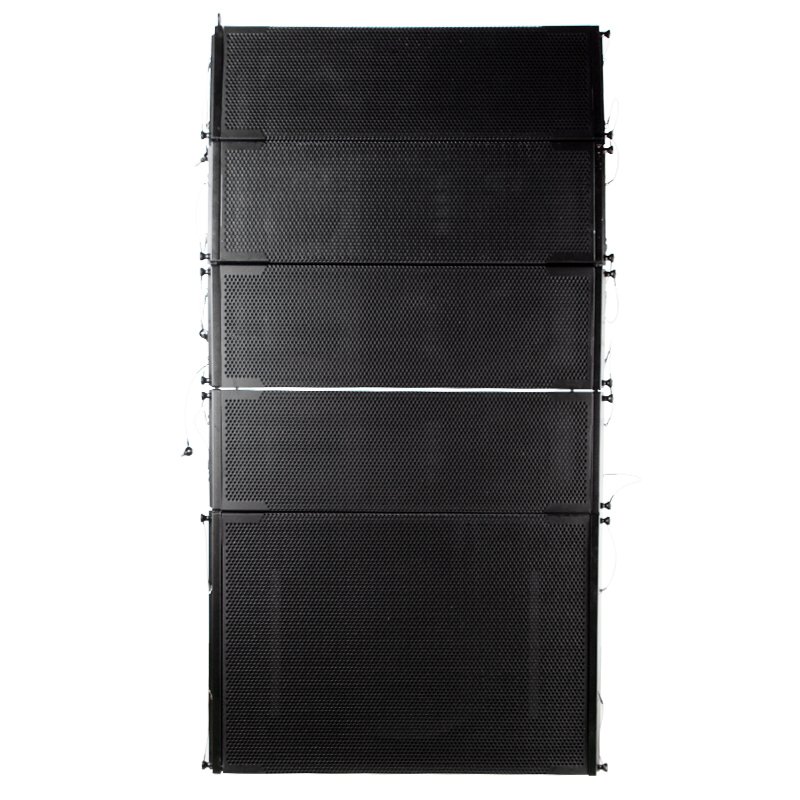
Passive systems hand you the amplifier layer. You can pair one amp platform across several box types. Upgrade the processing without retiring the cabinets. Keep a failed amplifier in rotation while a spare slides in. For operations that already run a standardized amp and DSP inventory, that flexibility is attractive.
The catch is integration. Every passive array needs a matched amplifier, a processor with the right presets, and a technician who can verify the tuning before doors. That's labour you pay on every deploy. It also assumes the amp inventory is itself maintained and available. Most shops we visit underestimate that second part.
Amplifier topology and what it means for the bench
Most modern powered cabinets use Class D. Efficient, and light. The heat stays managed inside the box. For a rental house, that means fewer separate amp racks to move. A failed module now takes the cabinet offline, though, not just the amplifier.
Passive rigs invert that. The amplifier is a field-replaceable unit. You do own, store and test a parallel inventory of amps and processors. Neither path is free. Which inventory would you rather staff, store and troubleshoot?
Cable, weight and the van
Cabling is where the two topologies feel most different on a load-in. An active array needs only signal and mains at each cabinet. A typical hang runs a few XLR loops and a power drop. Quick to dress. Quick to strike. A passive array adds amplifier and speaker cabling per zone, plus the weight and cube of the amp rack riding in the truck.
The offset is per-box mass. Passive cabinets are lighter to lift because the amplifier is elsewhere, which some crews prefer on long rigs. Active cabinets move that mass into each box. There's no universal winner here. Would your team rather carry lighter boxes plus a rack, or heavier boxes and almost no rack at all? We still train every crew on the array manuals, though. Lighter boxes don't excuse poor rigging. A clean hang beats a light one every time.
Matching inventory to the job mix
A fleet built mostly for corporate, worship and mid-size events leans toward active. Fast turnarounds. Fewer variables. Less specialized labour per call. An operation that also runs large touring productions, where amplifier platforms are standardized and crew is deep, may prefer passive for the rack-level flexibility. A mixed fleet is common too. Active boxes cover the bulk of small shows, with a passive rig held in reserve for the occasional large deployment.
Turnover matters as well. Boxes that sit idle between Saturday weddings still occupy warehouse square footage and tie up capital. The amplifier question changes how much of that footprint is cabinets versus racks, and how quickly each can be redeployed. We've seen idle passive rigs eat a whole bay that could have held three times the active inventory.
Fixed install versus touring
The weighting shifts again by application. A fixed install, a church, a conference hall, a theme-park venue, is commissioned once and then left to run. That favours active systems. The tuning locks at the factory. Less external gear to fail. The daily operator rarely touches the signal path. Labour is a one-time effort, not a per-event one.
Touring and semi-permanent production work differently. Shows move. Rigs change. The people on site vary. Some operations like having the amplifier layer separate, so a failed amplifier is a five-minute field swap rather than a cabinet off the truss. Others accept active for the simpler advance and the smaller truck. Neither is wrong. The right call follows how often the system is struck, and who maintains it between calls.
Spares, service and the powered-box reality
Plan the spare strategy up front with active systems. A practical rule we discuss with rental buyers is one service-capable spare per several flying boxes, plus a defined turnaround target with the manufacturer. A line array speaker supplier that also develops its own electronics can usually service modules in-house, which shortens the loop compared with a box assembled from third-party amplifiers. We write the spare plan into the quote for every fleet we ship, and you should expect the same from any supplier you shortlist.
For passive fleets the parallel question is amplifier spares and preset management. Who owns the DSP files? How are they version-controlled? What happens when a processor is substituted on site? Get that wrong and two otherwise identical boxes no longer sound alike. It happens more than buyers admit.
Reading the published numbers
Read the quoted figures the way a rental house should. Max SPL, coverage angle and crossover point describe what the box does in a reference condition, not necessarily in your room. Treat the printed number as the manufacturer's statement. Confirm the measurement condition in your RFQ, because the same cabinet can read differently under a different test. Ask at what distance the SPL was measured, too. One metre or four changes the headline figure.
A line array speaker supplier that's straight about what its numbers mean, and what they don't, saves you from discovering the gap on a show night. Ask for the rigging and array guidelines alongside the datasheet, since how boxes combine vertically matters more to the audience than a single on-axis figure. The spec is a starting point for a conversation, not the end of one. We'd rather you challenged our numbers than trusted them blindly.
Questions to put to a line array speaker supplier
Before you commit a purchase order, the conversation with any line array speaker supplier should cover more than the headline number. Ask about production scheduling at your expected order volume. Ask what documentation your destination market expects. Ask whether the cabinet can be finished or badged to your program. Clarify the spare-parts pipeline and the service turnaround, because a powered box that fails mid-tour is only as good as the bench behind it.
A supplier that also runs its own enclosure and electronics development can usually support custom finishes, private-label programs and the long-term spare continuity rental fleets depend on. Ningbo Lesound Electronics, the manufacturer behind Audfine, has built pro audio since 2009 and ships to more than 60 countries. That's the kind of track record worth verifying on a factory visit rather than taking on a spec sheet.
Active line arrays in the Audfine catalog
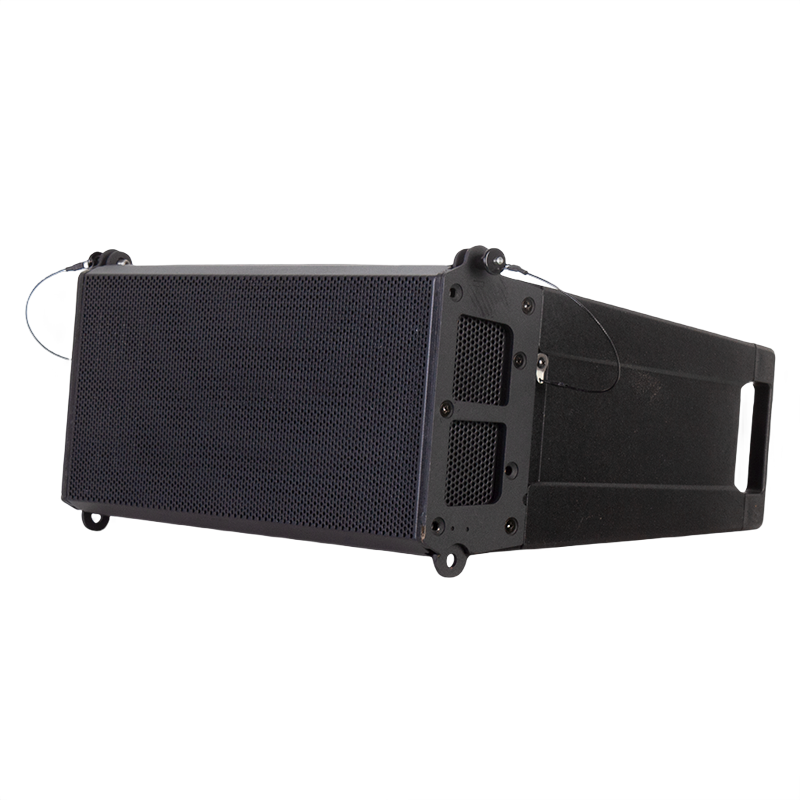
For rental buyers evaluating the active path, two Audfine cabinets show the trade clearly. The PL210LA pairs dual 10-inch woofers with titanium compression drivers in a powered two-way format rated for 130 dB. The HDL26 is a compact powered two-way built around dual 6.5-inch drivers, with switchable DSP modes for speech, live music, DJ playback and monitor use. Both are voiced at the factory, so a replacement drops straight into an existing hang.
Questions rental buyers actually ask
Do I need an external amplifier with active arrays? No. The amplifier lives inside the cabinet. You run signal and mains to each box, and that's the whole hookup. Passive rigs need the rack, the presets and a technician who can dial them in before doors.
Which topology is cheaper to spare? Passive, if you already own a standardized amp platform. Active, if you don't want a second inventory to store, test and track. Most shops we talk to land somewhere between the two.
Can one cabinet cover both job types? Rarely, and not well. Match the box to the event. Keep a mixed fleet if your calendar genuinely spans corporate one-nighters and full touring builds.
Where to take the conversation next
Choosing between active and passive is less a spec contest and more an inventory-design exercise. Map your typical events first. Map your crew depth. Map your spare strategy. The topology follows. Scoping a fleet and want a second read on the amplifier question? The Audfine team can walk through cabinet choices against your actual job list. For venues weighing full systems rather than arrays alone, our active PA speaker systems guide applies the same sourcing logic to point-source boxes. For the wider sourcing picture, our China audio OEM/ODM buyer guide covers factory audits and private-label programs in more depth, and the active line array category lists the full powered range.