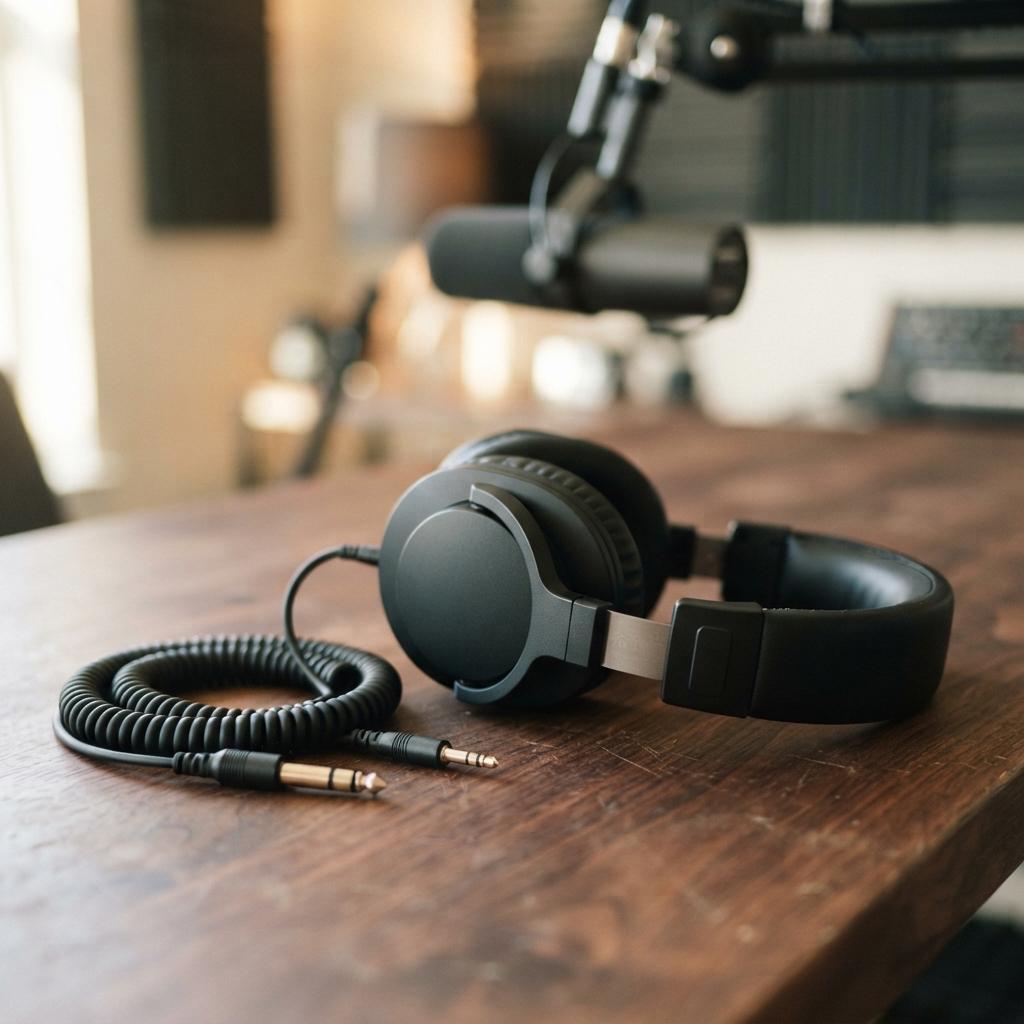
Quick answer: The best headphones for podcasting are closed-back, wired, over-ear monitoring headphones with a consistent pad seal, a detachable cable and an impedance that your interface can drive comfortably. For most studios that means a 32 Ω model with sensitivity around 97–100 dB, replaceable ear pads and a 3.5 mm cable that also accepts a 6.35 mm adapter.
That answer sounds simple, but the details behind it decide whether a podcast studio records clean audio or fights bleed, fatigue and cable failures every week. This guide is written for studio owners, production companies and distributors who buy monitoring headphones in quantity, and it uses the published specifications of four Audfine closed-back headphones for podcasting to show what to compare.
Key takeaways
- Closed-back, over-ear designs are the default for recording because the pad seal reduces headphone bleed into the microphone.
- Wired monitoring avoids Bluetooth latency and battery dependence during a record.
- 32 Ω and 97–100 dB sensitivity is an easy load for laptops, interfaces and mixers.
- A detachable cable and replaceable pads decide how long a headphone stays in service.
- For brand owners, the pad, cable, connector, packaging and compliance package matter as much as the driver.
Why closed-back, wired headphones suit podcast work
Bleed control protects the recording
In a podcast recording, the microphone sits close to the speaker's mouth, and an open-back headphone leaks monitor audio outward. A closed-back cup with a soft, sealing pad reduces that leakage, so the host can hear the mix without the microphone picking up the guest track. Pad condition matters more than the marketing label: a compressed or hardened pad loses its seal and raises bleed even on a well-designed headphone.
Wired monitoring removes latency and battery variables
Bluetooth headphones for podcasting are convenient for editing and listening back, but wireless codecs add delay that makes live monitoring distracting, and a depleted battery ends a session. A wired headphone with a detachable cable gives a predictable signal path from the interface or mixer, which is why wired models remain the working standard in studios.
Over-ear pads spread pressure for long sessions
A two-hour interview plus setup and notes means three hours of wear. Over-ear leather pads distribute pressure around the ear rather than pressing on it, and an adjustable headband lets one headphone fit a rotating cast of hosts, guests and producers. Comfort is not a luxury in this application; it decides whether the presenter keeps the headphone on through the last take.
Who these headphones are for — and who they are not for
They fit: podcast studios recording one to four people, video interview setups, voice-over booths, remote-production kits, and distributors building a monitoring line for broadcast and creator customers.
The best over ear headphones for podcasting share three practical traits: a pad that seals around the ear, a cable that can be replaced, and a headband that stays comfortable for a full session. Driver size and frequency response matter, but they cannot compensate for a poor seal or a cable that fails after three months.
They are not the first choice for: commuters who want active noise cancellation, gamers who need surround processing, or listeners who prefer a tuned consumer bass response. Those are different products with different design goals, and a studio should not compromise its monitoring chain to serve them.
Specifications to compare before you buy
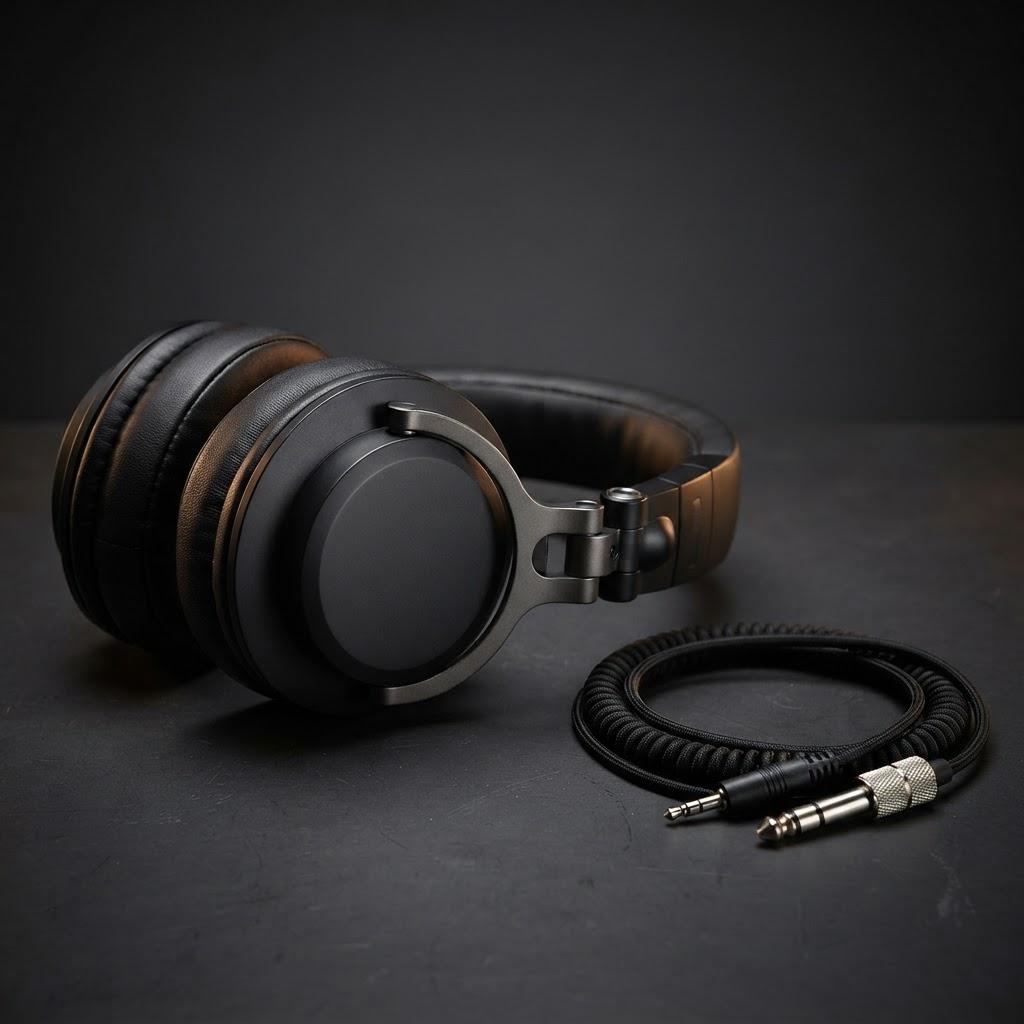
The table below uses the published figures for four Audfine monitoring headphones. All four are closed-back headphones for podcasting and studio tracking, with leather ear pads, an adjustable headband and a detachable 3 m OFC cable terminated in a 3.5 mm plug with a 6.35 mm adapter.
| Model | Driver | Impedance | Sensitivity | Frequency response | Power handling | Positioning |
|---|---|---|---|---|---|---|
| DHG60 | 50 mm neodymium | 32 Ω | 100 ± 3 dB | 15 Hz–30 kHz | 350 mW rated / 1200 mW max | Podcast and studio monitoring; folding, 90° swivel cups |
| AH1775 | 50 mm neodymium | 32 Ω | 97 ± 3 dB | 18 Hz–35 kHz | 350 mW rated / 1500 mW max | Studio tracking and instrument monitoring |
| DH3000 | 40 mm neodymium | 32 Ω | 97 ± 3 dB | 18 Hz–25 kHz | 350 mW rated / 1000 mW max | Tracking, rehearsal and drummer monitoring |
| MR730S | 45 mm neodymium | 32 Ω | 97 ± 3 dB | 10 Hz–26 kHz | 450 mW rated / 1500 mW max | Voice-over, tracking and general studio use |
Two readings of this table matter. First, all four models present the same 32 Ω load, so a single headphone amplifier or interface can drive any of them without a dedicated high-gain output. Second, the differences are in driver size, sensitivity, low-frequency extension and mechanical features, not in a dramatic change of operating principle. Buyers shortlisting the best wired headphones for podcasting should start there, and anyone comparing the best studio headphones for podcasting should weigh comfort and spare-part support alongside the numbers.
Audfine models for podcasting: what the specifications show
DHG60: the general podcast studio choice
The DHG60 pairs a 50 mm neodymium driver with 100 ± 3 dB sensitivity, the highest of the four, and a 15 Hz–30 kHz response. Its 350 mW rated power handling and 1200 mW maximum are modest compared with the larger studio models, which is appropriate for speech monitoring at sane levels. The frame folds, the cups swivel 90°, and the headband adjusts, so it packs into a small kit and fits different presenters. A detachable microphone is listed among its accessory options. See the DHG60 monitor headphones for podcasting.
AH1775: the higher-headroom studio option
The AH1775 uses a 50 mm neodymium driver with 97 ± 3 dB sensitivity and a wider 18 Hz–35 kHz response, and it raises maximum power handling to 1500 mW. That headroom is useful where a producer wants the same headphone for tracking and for louder monitoring in a live room. It is positioned for studio tracking and instrument monitoring, and the detachable cable and leather pads follow the same service logic as the rest of the range. Details are on the AH1775 over-ear studio monitor headphone page.
DH3000: the lighter 40 mm tracking model
The DH3000 steps down to a 40 mm neodymium driver with 97 ± 3 dB sensitivity, an 18 Hz–25 kHz response and 1000 mW maximum power handling. It is the model to consider when a studio wants a lighter feel for long tracking sessions or a lower-cost monitoring option for multiple positions. The 90° swiveling cups and adjustable headband remain. See the DH3000 monitoring headphone.
MR730S: voice-over and general studio work
The MR730S uses a 45 mm neodymium driver, 97 ± 3 dB sensitivity, a 10 Hz–26 kHz response and the highest rated power handling in this group at 450 mW, with 1500 mW maximum. Its positioning is voice-over and studio tracking, which makes it a sensible match for narration booths and interview studios that also record music beds. The MR730S studio headphone for voice-over page lists the full specification.
Six selection criteria that matter in a working studio
1. Pad seal and passive isolation
Ask how the pad is attached and whether replacements are available. A pad that clips or slides into a groove can be changed by the studio; a glued pad turns a worn headphone into waste. Pad geometry also changes the low-frequency response, so replacing a compressed pad restores both comfort and the sound the designer intended. Our guide to custom earpad sourcing explains why pads are acoustic parts, not cosmetic ones.
2. Impedance and sensitivity match your interface
Headphone impedance for podcasting deserves a check before you order. A 32 Ω, 97–100 dB headphone reaches useful level from a laptop, a USB interface or a small mixer. Higher-impedance designs can offer other benefits, but they need more voltage and may sound thin from a basic output. If your studio already owns high-impedance headphones, read headphone impedance: 32 vs 250 ohm before adding a second pair.
3. Cable, connector and strain relief
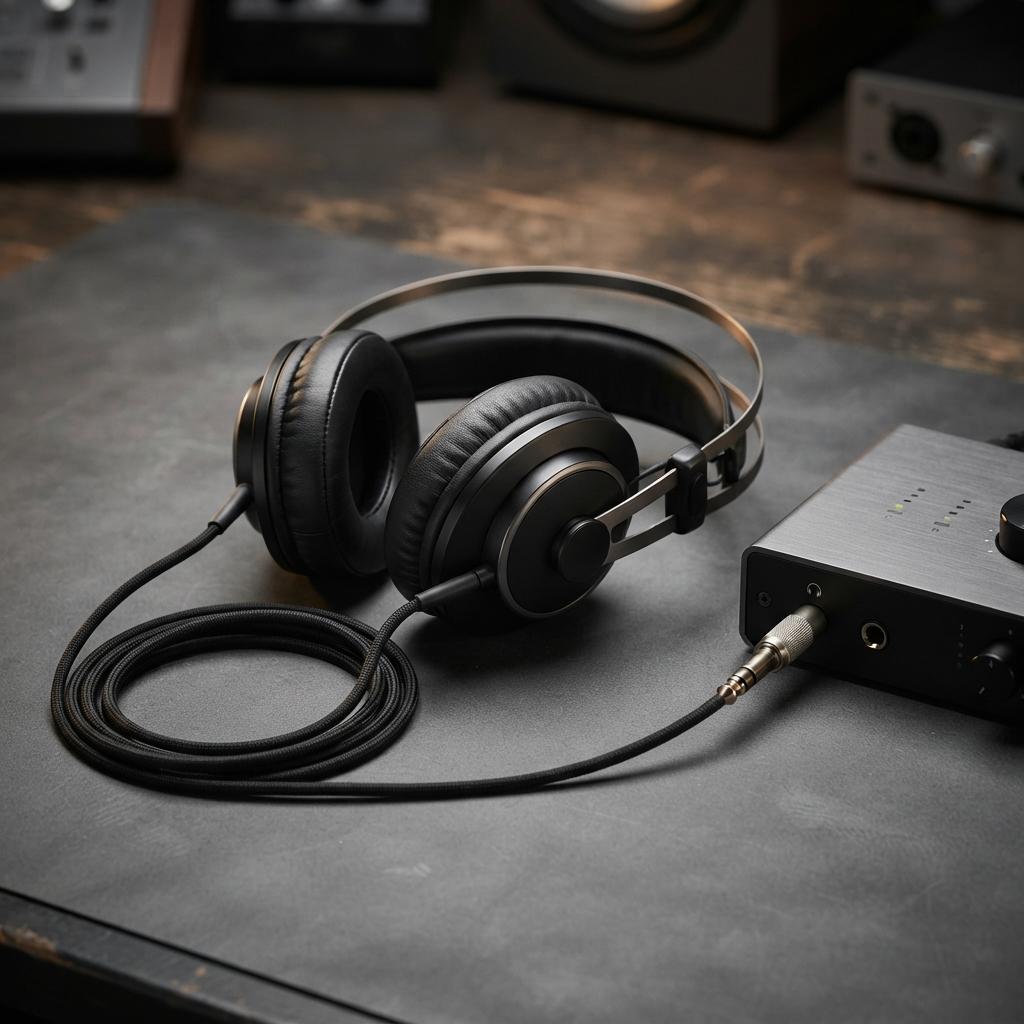
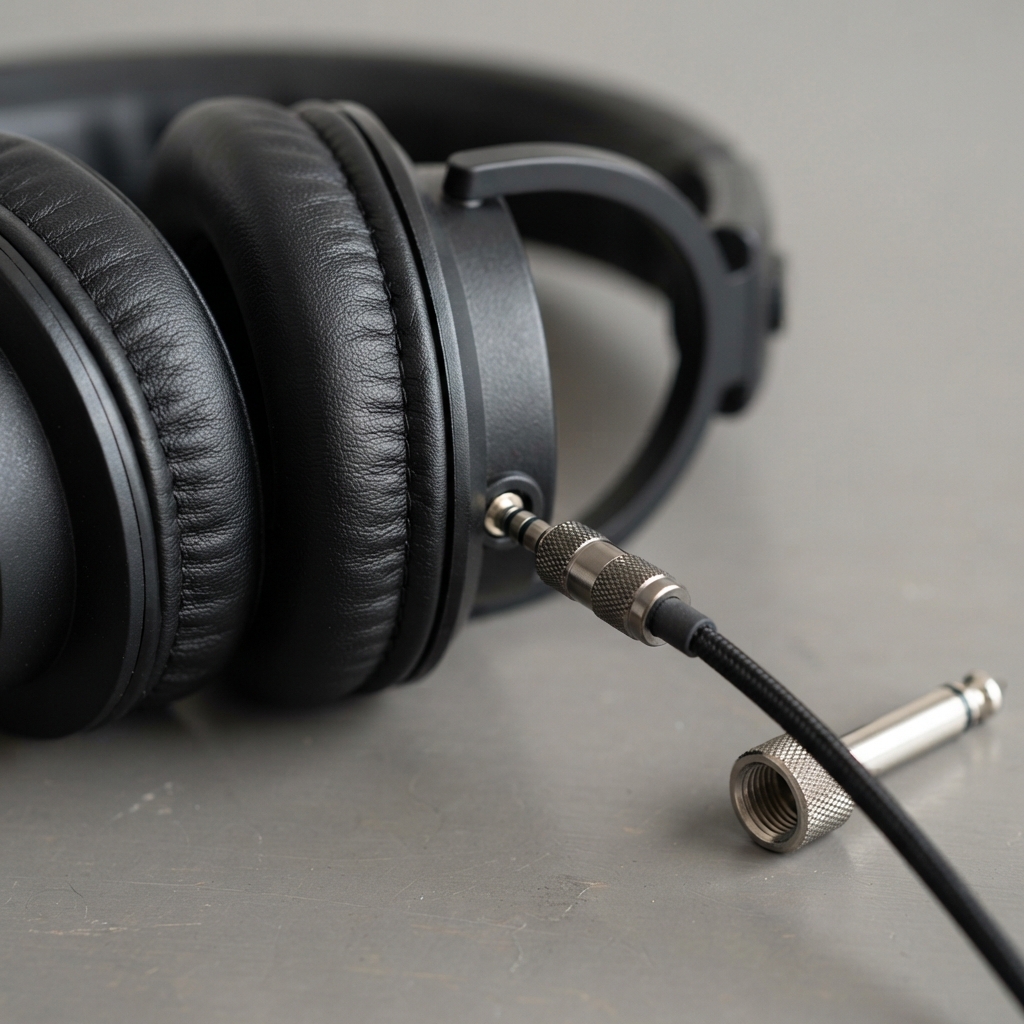
Prefer a detachable headphone cable with a standard 3.5 mm plug and a supplied 6.35 mm adapter. The cable is the part most likely to fail in daily use, and a detachable design lets the studio replace it in minutes instead of scrapping the headphone. Check that the connector housing is moulded with a strain relief and that the cable length suits your desk: 3 m reaches around a console but becomes a trip hazard in a small booth, where a shorter cable or a cable tie is better.
4. Comfort across a two-hour record
Clamping force, pad softness and weight distribution decide comfort. An adjustable headband should extend smoothly and hold its position; a pad should seal without requiring the band to press hard. For shared studios, look for a wide adjustment range rather than a single fixed fit.
5. Serviceability and spare parts
Ask for spare pads, spare cables and the connector type before the first order. A monitoring headphone that can be repaired keeps a studio running and protects a distributor from returns. The replacement pads and cables guide covers the accessory SKUs to plan.
6. Headset microphone or separate microphone
For a solo host who needs a simple setup, a headset with a boom microphone can be convenient. For a two-person interview, separate microphones and closed-back headphones usually give better control of tone and bleed. Decide which workflow you are buying for, because a headset microphone is an accessory choice, not a substitute for a studio microphone.
Common mistakes when buying headphones for podcasting
- Buying consumer noise-cancelling headphones for recording. Active processing and Bluetooth latency are the wrong trade-offs for live monitoring.
- Ignoring pad wear. A flattened pad leaks sound and changes bass response; budget for replacements from day one.
- Matching only the driver size. A 50 mm driver is not automatically better than a 40 mm driver; sensitivity, damping and pad seal matter as much.
- Choosing a fixed cable to save a few dollars. The cable fails first, and a fixed cable often ends the product's service life.
- Setting monitoring levels by feel. Long sessions at high level cause fatigue and risk hearing damage; set a level you can work at for hours.
- Ordering a custom pad or logo without a sample. Pad firmness and logo placement are easier to approve in hand than on a drawing.
Hearing safety: set monitoring levels deliberately
Podcast work often runs for hours, so monitoring level is a health decision, not only a mixing decision. The U.S. Occupational Safety and Health Administration sets a permissible exposure limit of 85 dBA as an 8-hour time-weighted average, with higher levels allowed for shorter periods (OSHA 29 CFR 1910.95). In practice, keep the monitor level as low as you can while still hearing sibilance and room noise, and take breaks between long records.
Loudness targets for the finished podcast are a separate question. The Audio Engineering Society's TD1004.1.15-10 recommendation addresses loudness for audio streaming and network playback (AES TD1004.1.15-10). A consistent delivery loudness helps listeners, but it does not tell you how loud to monitor while recording; set that level independently and conservatively.
For distributors and brand owners: specifying an OEM podcast headphone
Audfine is the headphone brand of Ningbo Lesound Electronics, a pro audio manufacturer established in Ningbo, China in 2009. The company's published profile states that it exports to more than 60 countries, supports OEM and ODM programs, and states that products comply with RoHS, REACH and California Prop 65, with CE and UL certification applied for when a customer requires it. Bulk production is quoted at a minimum order quantity of 1000 pieces, and shipping can be arranged on FOB, CIF, DAP or DDP terms.
When you write the brief, specify the platform (DHG60, AH1775, DH3000 or MR730S), pad material and firmness, cable length and connector, logo method, packaging, and the compliance documents your market needs. If you are comparing podcast headphones OEM programs, ask which models are available for ready-to-ship orders alongside custom production, so a launch does not wait for a full tooling cycle. The OEM headphone manufacturer selection guide and the Audfine model map are useful companions to this article.
Frequently asked questions
Are headphones necessary for podcasting?
Yes for recording. Headphones let the host hear the mix, the guest and their own voice without speaker audio entering the microphone. They also make it possible to catch plosives, room noise and level problems during the take rather than in editing.
Can you use wireless headphones for podcasting?
You can use them for listening back and editing, but wired headphones are the safer choice for recording. Bluetooth adds latency and depends on a battery, while a wired connection gives a stable monitor feed.
What is the best headphone for podcasting?
There is no single best model. A closed-back, wired, over-ear headphone with a 32 Ω load, 97–100 dB sensitivity, replaceable pads and a detachable cable covers most podcast studios. Choose the driver size and power handling around your monitoring level and comfort needs.
Do podcast headphones need a microphone?
Not necessarily. A separate studio microphone usually gives better control for interviews. A headset with a boom microphone is a reasonable convenience option for solo hosts, remote recordings and simple video setups.
Is 32 ohm good for podcasting?
Yes. A 32 Ω headphone is easy to drive from laptops, interfaces and small mixers, which is why all four models in the comparison table use it. Sensitivity still matters: a 97 dB model needs a little more gain than a 100 dB model.
Can I use studio headphones for podcasting and mixing?
Yes. A closed-back monitoring headphone can be used for both, but mixing decisions should be checked on monitors and on more than one playback system. Use the headphone for detail, editing and tracking, not as the only reference.
How long do podcast headphones last?
Life depends on the cable, pads and headband rather than the driver alone. A detachable cable and replaceable pads let a studio keep a headphone in service for years; a fixed cable and glued pads shorten that cycle.
Can we order custom podcast headphones with our logo?
Yes, OEM and ODM programs are available, including logo printing and colour choices. Share your target specification, quantity and market requirements through the contact page so the factory can confirm the configuration and quotation.
Conclusion
Headphones for podcasting should be chosen like a tool: closed-back for bleed control, wired for a stable monitor feed, comfortable for a long record, and serviceable enough to stay in the studio. The four Audfine models in this guide share a 32 Ω load and a detachable 3 m cable, and differ in driver size, sensitivity, response and power handling, which gives buyers a clear starting point for a specification.
If you are equipping a studio or building a private-label podcast headphone line, send your requirements through our contact page and we will match the right model, pad and cable configuration to your market.