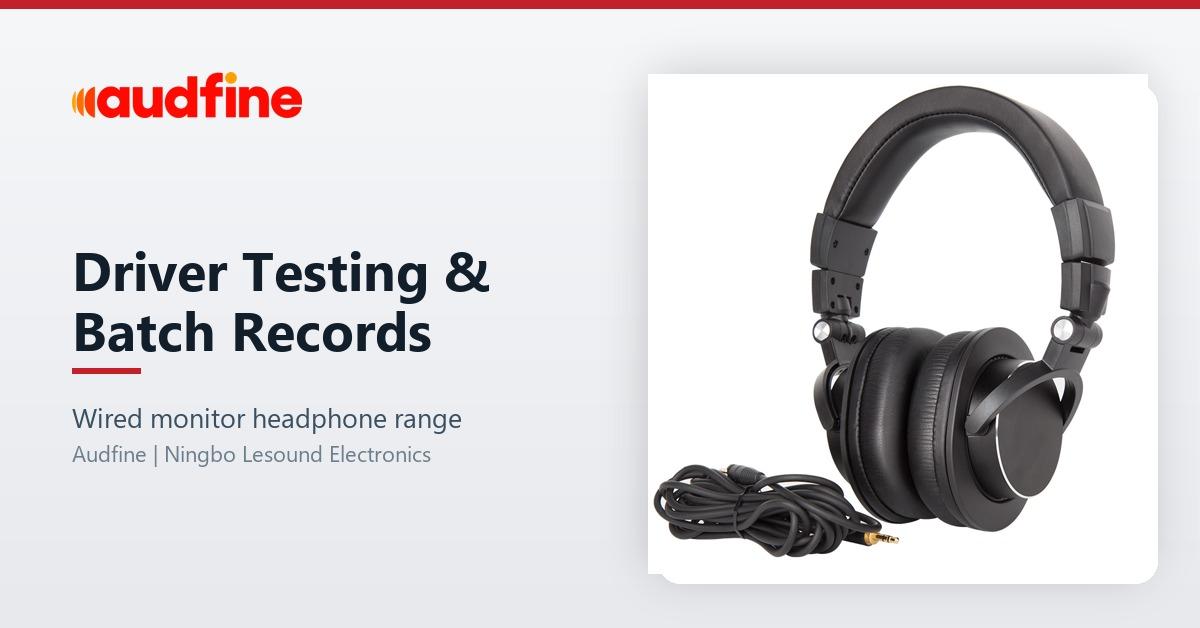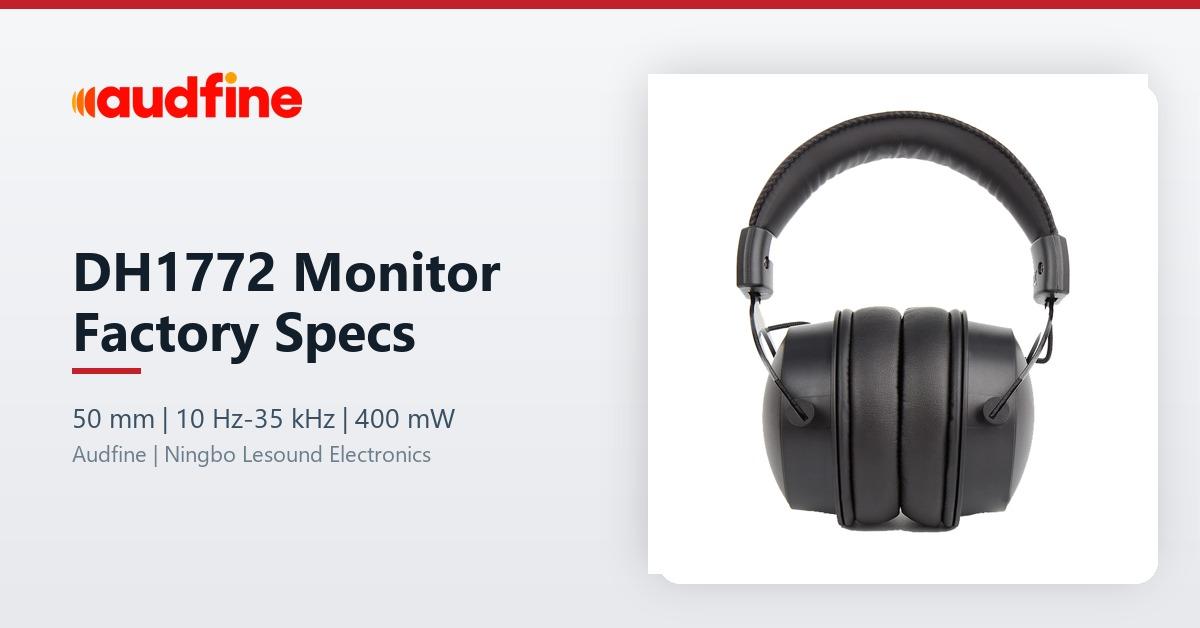
A headphone driver testing supplier China buyers can audit writes each check against a named model row, not against a range-wide promise. On the Audfine sheet DH1772 is printed at a 50 mm driver, 32 Ω, 400 mW RMS and 99±3 dB; DH7300 carries a 50 mm driver at 32 Ω, 350 mW and 97±3 dB; MR830X is printed at 45 mm and 450 mW. Audfine is the headphone brand of Ningbo Lesound Electronics, the manufacturer and brand owner in Ningbo, China. This page reads the fields a factory can put on a batch record.
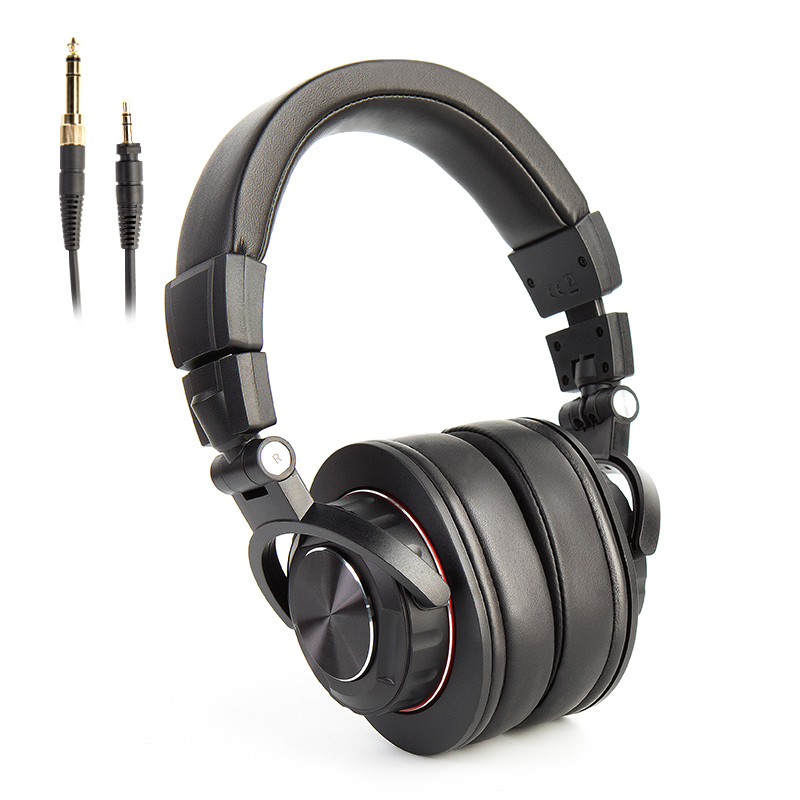
Data checked: November 2026. Source: Audfine headphone product sheet, positioning and core-metric columns. Driver diameter, impedance, rated power, sensitivity and frequency range were copied from the named model rows. No commercial figure, test result or tolerance outside those rows is claimed here.
What a headphone driver testing supplier China records before shipment
A batch record is a list of fields with a value beside each one. For a wired monitor order those fields start with the model name, then the driver diameter, the load in ohms, the rated power in milliwatts, the sensitivity band in decibels and the frequency range in hertz. A supplier who prints 400 mW on DH1772 and 350 mW on DH1771 has made two separate statements; a record that merges them into one figure has lost the model. The same discipline applies to the 45 mm driver on MR830X against the 50 mm driver on the studio and DJ rows.
Our published headphone inspection documentation note describes three checkpoints: incoming component control, in-process checks, and a final check on finished units. A driver record belongs at the first two checkpoints, before assembly hides the part and before packing hides the unit. The note is a description of our process, not a promise about a particular order; anything not printed in the sheet remains a question to answer in writing.
Which driver figures belong on a batch record?
Only figures the factory publishes for that row. The table below is copied from the core-metric column of the Audfine sheet. It keeps each model on its own line so a value cannot travel to a neighbouring model by assumption. Values below are published sheet entries; unlisted fields require RFQ confirmation.
| Model | Driver | Load | RMS power | Sensitivity | Frequency range |
|---|---|---|---|---|---|
| DH1772 | Ø50 mm | 32 Ω | 400 mW | 99±3 dB | 10 Hz–35 kHz |
| DH1771 | Ø50 mm | 32 Ω | 350 mW | 98±3 dB | 10 Hz–35 kHz |
| DH7300 | Ø50 mm | 32 Ω | 350 mW | 97±3 dB | 10 Hz–40 kHz |
| DH7100 | Ø50 mm | 32 Ω | 400 mW | 98±3 dB | 8 Hz–38 kHz |
| MR830X | Ø45 mm | 32 Ω | 450 mW | 99±3 dB | 12 Hz–28 kHz |
| DH4100 | Ø50 mm | 32 Ω | 400 mW | 100±3 dB | 18 Hz–28 kHz |
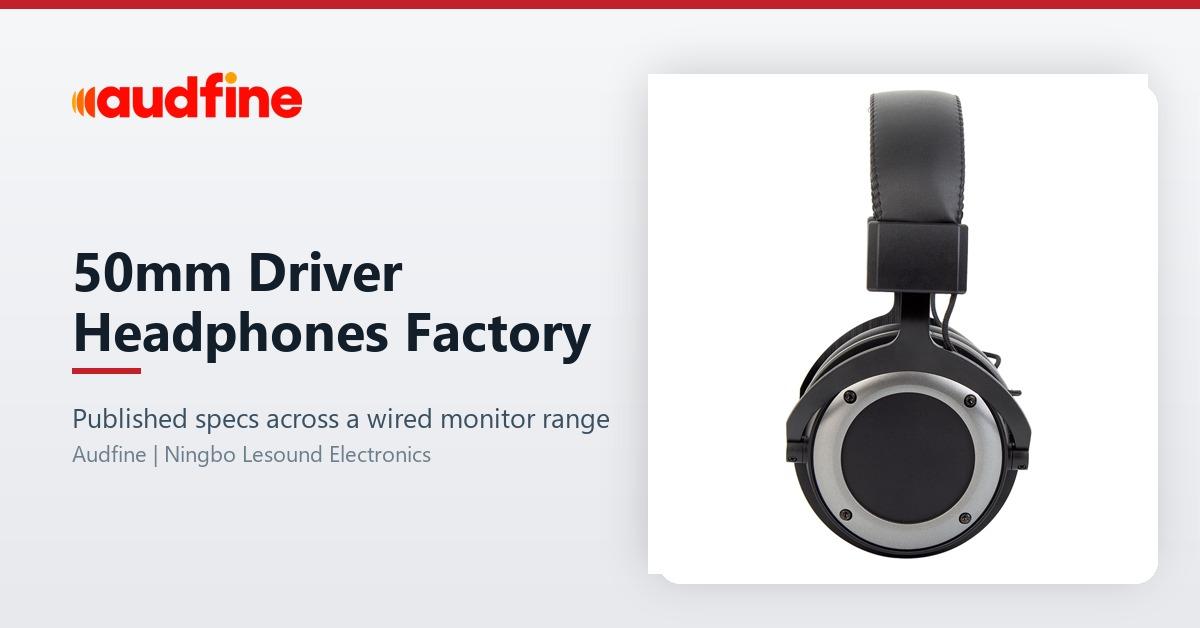
Read the column, not the group. Six rows share a 32 Ω load, yet rated power separates into 350 mW, 400 mW and 450 mW entries, and sensitivity spans 97±3 dB to 100±3 dB. Frequency ranges differ at both ends: DH7100 is printed from 8 Hz to 38 kHz, DH4100 from 18 Hz to 28 kHz. A record that quotes one of those lines for another model is not a record of the product being shipped. Our 50 mm driver range note explains which models share the larger driver without treating them as one specification.
How do I compare spec sheets from two headphone factories?
Put the rows side by side in the same field order and refuse any answer that changes a field without naming the version. Start with model, then driver diameter, then load, then rated power, then sensitivity and frequency range. If one factory answers in words and the other in numbers, ask the first to write the number into the same column. A supplier who declines to attach a unit to a figure has not answered the comparison.
The monitoring headphone specification field guide sets out the order used across our range, and the DH1772 factory note keeps that model on a single row. The Audfine studio monitoring headphone range is the product-side reference for the models named above. Comparing a supplier means comparing these rows, not comparing brand descriptions.
What does driver matching mean in a wired monitor order?
In a wired monitor pair, matching is the act of confirming that the two channels of a unit sit close enough to be treated as a pair and that units in one batch did not drift away from the printed row. Our inspection note names left and right channel tracking as the acoustic check most often at issue, followed by sensitivity against the published band, frequency coverage against the printed range, and load against the named configuration. On the sheet, 97±3 dB on DH7300 and 99±3 dB on DH1772 are two bands, not one target.
That distinction explains why a headphone driver testing supplier China answer has to name the model before the number. A batch of DH1772 units at 32 Ω is checked against the DH1772 row; a 80 Ω version of the same platform is a separate configuration with its own entry. The sheet prints the 80 Ω variant on its own line, and the record should follow that line rather than copy the 32 Ω figure across. Nothing in the sheet supports extending a published value to a variant that has no row.
What an acoustic check can and cannot establish
Acoustic checks confirm that a unit stays inside the figures published for its row. They do not establish that one monitor is better for a listening task, and no such conclusion is drawn here. As defined in the vocabulary work of the International Electrotechnical Commission, quantities such as frequency range and sensitivity are stated under given conditions; the Audio Engineering Society maintains measurement terminology for audio equipment. These bodies define how a quantity is described. They do not grade this product, and no conformity statement is made.
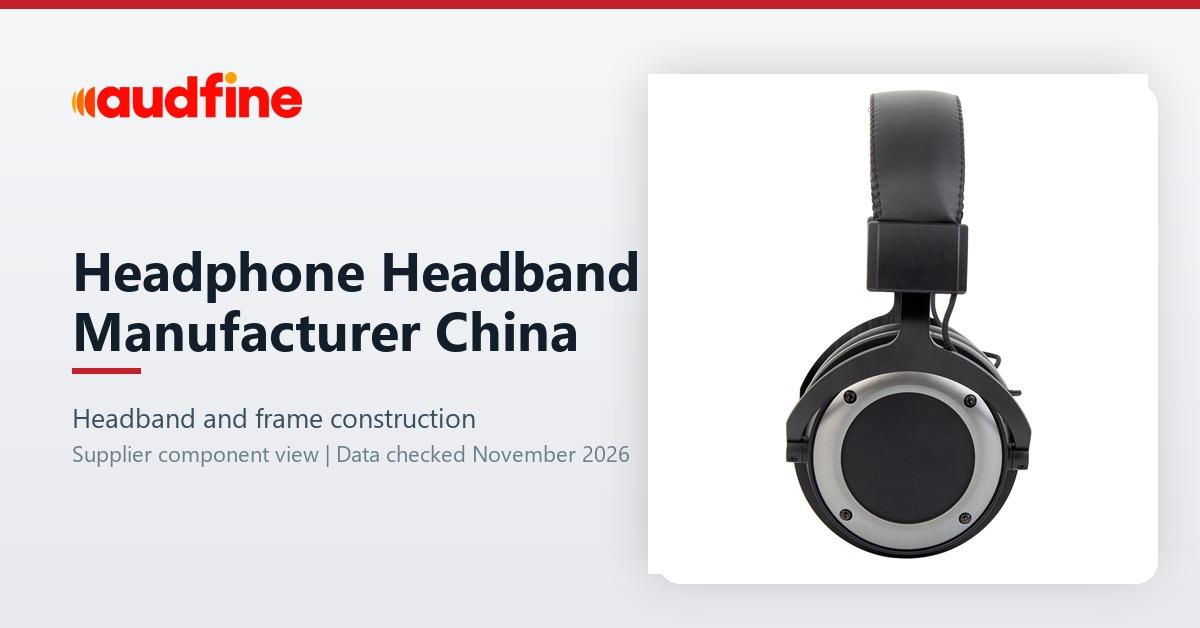
The limit matters for a buyer reading a table. A printed 10 Hz–35 kHz range on DH1772 and a 12 Hz–28 kHz range on MR830X are facts from our sheet. They are not a ranking of the two models for studio work, and a listening sample is still the way to judge a monitoring task. Our headphone cable assembly note and headband and frame construction note cover the other parts of the same unit, each on its own row.
Which fields should an RFQ name for a driver check?
Name the fields you want returned, in the order you want them returned. A request that says only "test the driver" gives the factory room to answer with a different figure for a different model. The list below maps each request to a field that exists on our sheet.
- Model first. Write DH1772, DH1771, DH7300, DH7100, MR830X or DH4100. A value from one row does not describe another.
- Driver diameter. Ask for Ø50 mm or Ø45 mm with the unit attached, as printed against the named model.
- Load and rated power. Quote 32 Ω with 350 mW, 400 mW or 450 mW as the row prints them; keep the two quantities separate.
- Sensitivity band. Ask for the full band, for example 98±3 dB on DH1771, rather than a single midpoint number.
- Frequency range. State both ends with units, such as 18 Hz–28 kHz on DH4100, and identify the model beside them.
- Configuration. If a variant matters, name its own row; do not extend the base model's figures to it.
- Unlisted fields. Put them in the enquiry as questions and wait for a written answer.
Can a batch record replace a listening sample?
No. A batch record tells a buyer what the factory printed and what it checked against that print. It does not replace a sample evaluation, and this page does not suggest that it should. The two documents do different jobs: one holds the numbers, the other lets a buyer judge whether the numbers suit the work. Ask for both, keep the model name identical across them, and treat any unlisted field as open until the supplier answers it in writing.
Frequently asked questions
Which driver sizes appear in the range named here?
The table lists a 45 mm driver on MR830X and 50 mm drivers on DH1772, DH1771, DH7300, DH7100 and DH4100. Each size is printed against a named model row. The figures are not interchangeable between rows, even where two models share the same diameter and load.
Do all the listed models use a 32 Ω load?
Yes, the six models in the table are each printed at 32 Ω. Rated power still differs: 350 mW on DH1771 and DH7300, 400 mW on DH1772, DH7100 and DH4100, and 450 mW on MR830X. A shared load does not make the power figures shared.
What is the sensitivity band for DH7300?
DH7300 is printed at 97±3 dB. DH1772 is printed at 99±3 dB and DH4100 at 100±3 dB. The tolerance belongs with the model it is printed beside; quoting one band for a different row changes the statement.
Why does a frequency range need both endpoints?
Because the sheet prints two endpoints for each model. DH7100 is listed from 8 Hz to 38 kHz, MR830X from 12 Hz to 28 kHz and DH1771 from 10 Hz to 35 kHz. A single number cannot describe those rows, so a record should carry both ends with units.
Are these headphones wireless or noise cancelling?
No. All 35 headphone variants in our product sheet are wired. Bluetooth, true wireless and active noise cancelling are not listed features of this range. The checks described here concern wired monitor models and the printed electrical and dimensional fields for each named row.
When you shortlist a headphone driver testing supplier China line, send the model name, the field order and the units you expect back, and keep every unlisted question open until it is answered in writing. Ningbo Lesound Electronics builds the range under the Audfine brand, and the figures above come from the same sheet used for our product rows. A supplier or importer comparing two offers gets a usable answer only when both sides quote the same row.