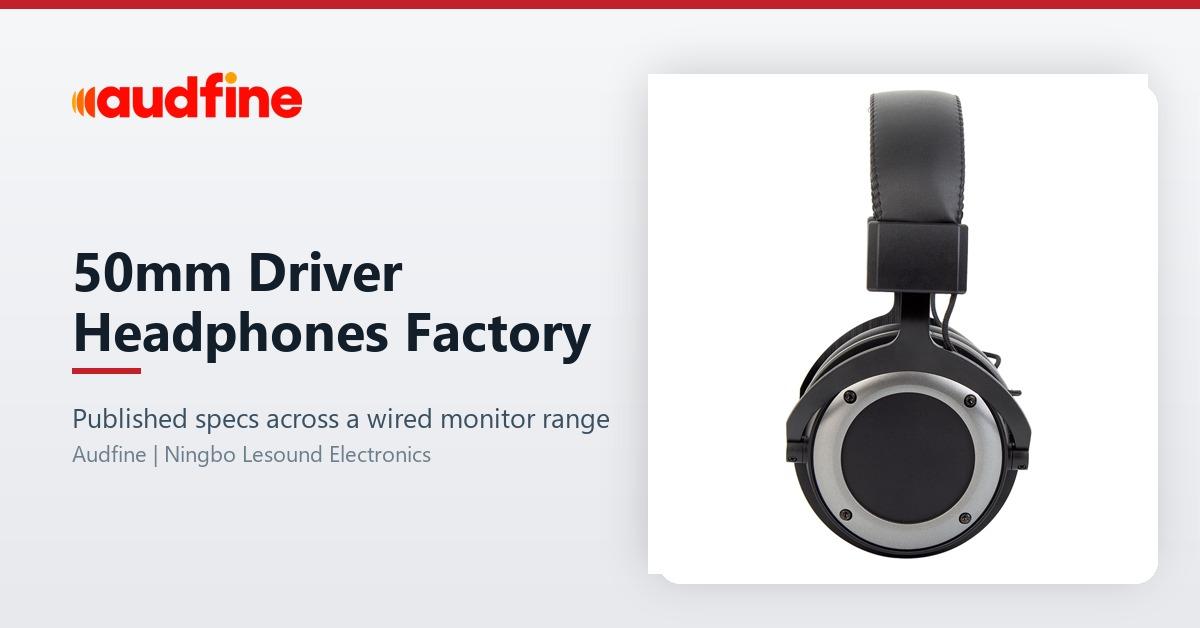
A 50mm driver headphones factory China line publishes a small, repeatable set of numbers for each model: driver diameter, frequency response, sensitivity, impedance, rated power and maximum power. Audfine, the headphone brand of Ningbo Lesound Electronics, builds roughly twenty wired monitor models on a 50 mm dynamic driver with a neodymium magnet, spanning closed-back studio monitors and open-back reference designs. This page reads those published lines across the range instead of promoting one model. Where two columns in our own sheet disagree — a model name printed as 250 and a specification column printed as 300 Ω — the discrepancy is shown rather than settled by guesswork. Every figure below is a factory spec line, not a listening result.
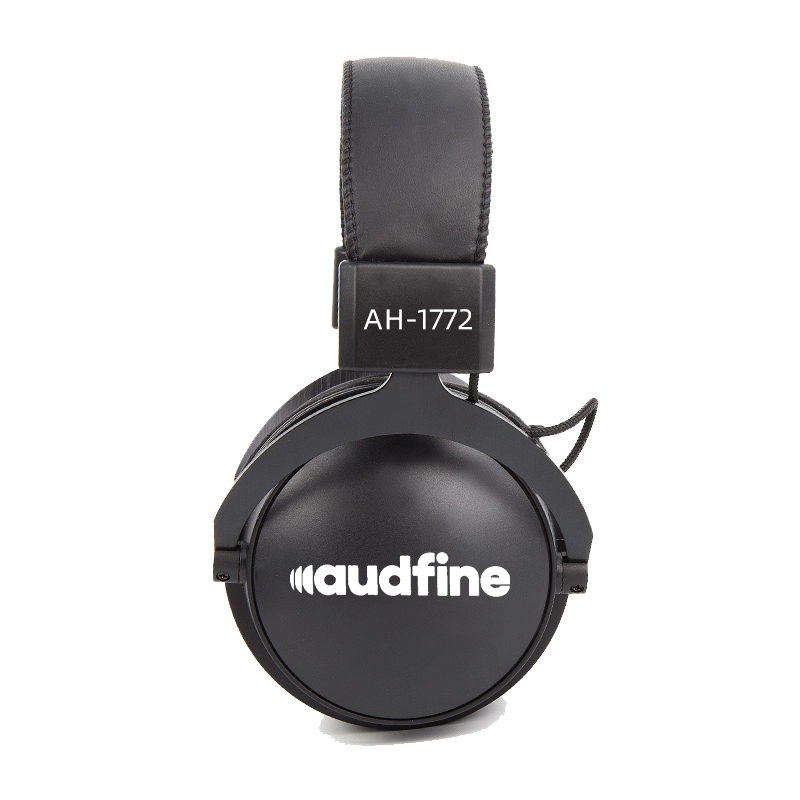
Data checked: November 2026. Source: Audfine headphone product sheet, 50 mm platform rows. Driver diameter, response endpoints, sensitivity, load and power figures were read from the parameter column; housing form and application wording came from the positioning and scenario columns. Models whose cable description conflicts between two columns are noted in text, not silently assigned one value.
What a 50mm driver headphones factory China prints on a spec line
A spec line is useful to a buyer only when the same six fields appear for every model. In our sheet those fields are driver diameter, frequency response, sensitivity, impedance, rated power and maximum power. The 50 mm dynamic driver is common to the whole group, so the figures that actually separate one row from another are response endpoints, sensitivity in dB with its tolerance band, the load in ohms, and the two power ratings. Audfine is the brand; Ningbo Lesound Electronics is the manufacturer and brand owner behind it. We publish the sheet as it stands, including the fields that are still open for confirmation.
Values below are published spec lines; unlisted fields require RFQ confirmation. Cable form, pad material and carton contents are handled in a separate section because several models carry conflicting entries in our own source. The table deliberately leaves those fields out so that the acoustic numbers stay comparable.
| Model | Driver / response | Sensitivity | Load | Rated / max power | Back design |
|---|---|---|---|---|---|
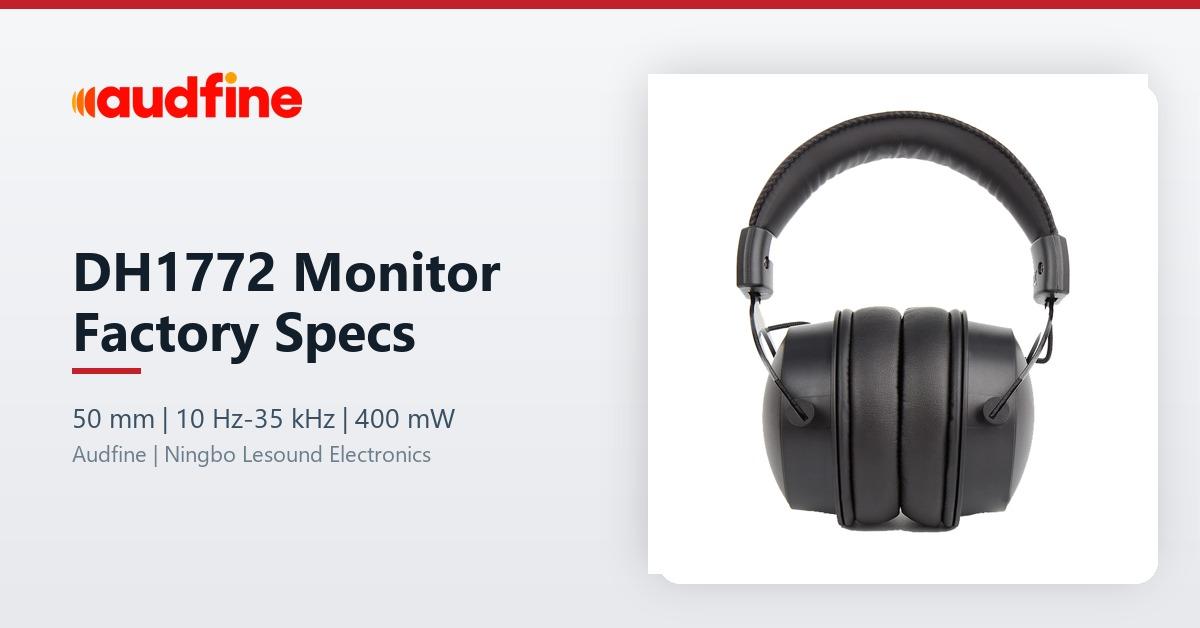
| DH1772 | Ø50 mm / 10 Hz–35 kHz | 99 ±3 dB | 32 Ω | 400 mW / 1,800 mW | Closed back |
| DH1771 | Ø50 mm / 10 Hz–35 kHz | 98 ±3 dB | 32 Ω | 350 mW / 1,500 mW | Closed back |
| DH1771K | Ø50 mm / 10 Hz–35 kHz | 98 ±3 dB | 32 Ω | 350 mW / 1,500 mW | Open back |
| DH1773 | Ø50 mm / 10 Hz–36 kHz | 98 ±3 dB | 32 Ω | 350 mW / 1,500 mW | Open back |
| DH7300 | Ø50 mm / 10 Hz–40 kHz | 97 ±3 dB | 32 Ω | 350 mW / 1,800 mW | Closed back |
| DH7400 | Ø50 mm / 10 Hz–40 kHz | 97 ±3 dB | 32 Ω | 350 mW / 1,800 mW | Closed back |
| DH4100 | Ø50 mm / 18 Hz–28 kHz | 100 ±3 dB | 32 Ω | 400 mW / 1,500 mW | Closed back |
| DH9400 | Ø50 mm / 12 Hz–28 kHz | 97 ±3 dB | 32 Ω | 350 mW / 1,800 mW | Closed back |
| DH7500 | Ø50 mm / 10 Hz–40 kHz | 97 ±3 dB | 32 Ω | 350 mW / 1,800 mW | Closed back |
| DH2300 | Ø50 mm / 10 Hz–32 kHz | 98 ±3 dB | 32 Ω | 350 mW / 1,500 mW | Closed back |
Read down the response column and a pattern appears. Ten models share one driver diameter yet print four different upper endpoints: 28 kHz on DH4100 and DH9400, 32 kHz on DH2300, 35 kHz on DH1772, DH1771 and DH1771K, 36 kHz on DH1773, and 40 kHz on DH7300, DH7400 and DH7500. That spread is not a contradiction; it is a range of published measurements taken under the same driver size. A buyer who needs the sheet to stay comparable quotes the endpoint alongside the model, never the driver size alone.
How do I compare two 50 mm driver rows from the same factory?
Compare in a fixed field order and refuse any answer that changes a field without naming the version. Start with driver diameter, then response endpoints, then sensitivity with its tolerance, then load, then rated and maximum power as two separate lines. DH1772 and DH1771 sit on the same 50 mm platform and share a 10 Hz to 35 kHz response, but sensitivity is printed at 99 ±3 dB on one and 98 ±3 dB on the other, and rated power is 400 mW against 350 mW. Those are real differences on a published sheet. Our monitoring headphone specification guide sets out the same field order for ten models, so a comparison can stay inside one vocabulary.
The second check is continuity across variants. DH1772, DH1772B, DH1772-80ohms and the 250-named version share one acoustic description; the 80 Ω row changes only the load. A supplier should be able to say which parts are shared and which are re-specified per version. The Audfine monitoring headphones model map groups the range by platform and makes that boundary explicit. For the single-model reading of the same platform, the DH1772 factory note keeps each variant on its own row.
Which 50 mm models in a factory range are closed back?
Most of the 50 mm group is closed back. In the table above, DH1771K and DH1773 are the two open-back rows; the other eight are closed-back over-ear monitors. DH990 is an additional open-back model in the sheet, but its cable entry conflicts between two columns and it is discussed separately below. Closed-back and open-back are housing forms, not sound-quality grades, and the sheet prints them as separate fields. A brand owner building a small range normally names one of each rather than asking a factory to reinterpret a single model.
Housing form interacts with how a model is used. The closed-back DH7300, DH7400 and DH7500 rows are printed with a metal ear-cup, a folding frame and swivel cups; the DH1772 and DH1771 rows are studio monitors without a swivel frame. Those structural fields come from the product description, not from the acoustic table. A buyer who needs a folding stage frame should name the model that carries it. The Audfine studio monitoring range is the product reference for the studio side, and the vocal and stage monitoring page covers the nearby applications.
Cable form and frame: where a factory range splits
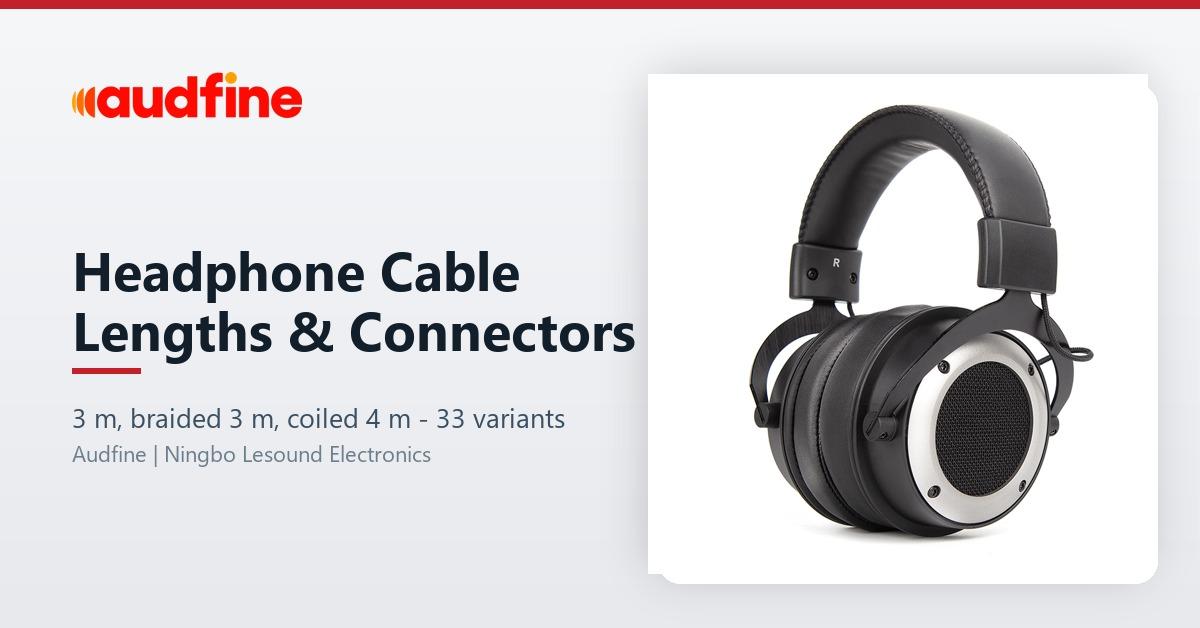
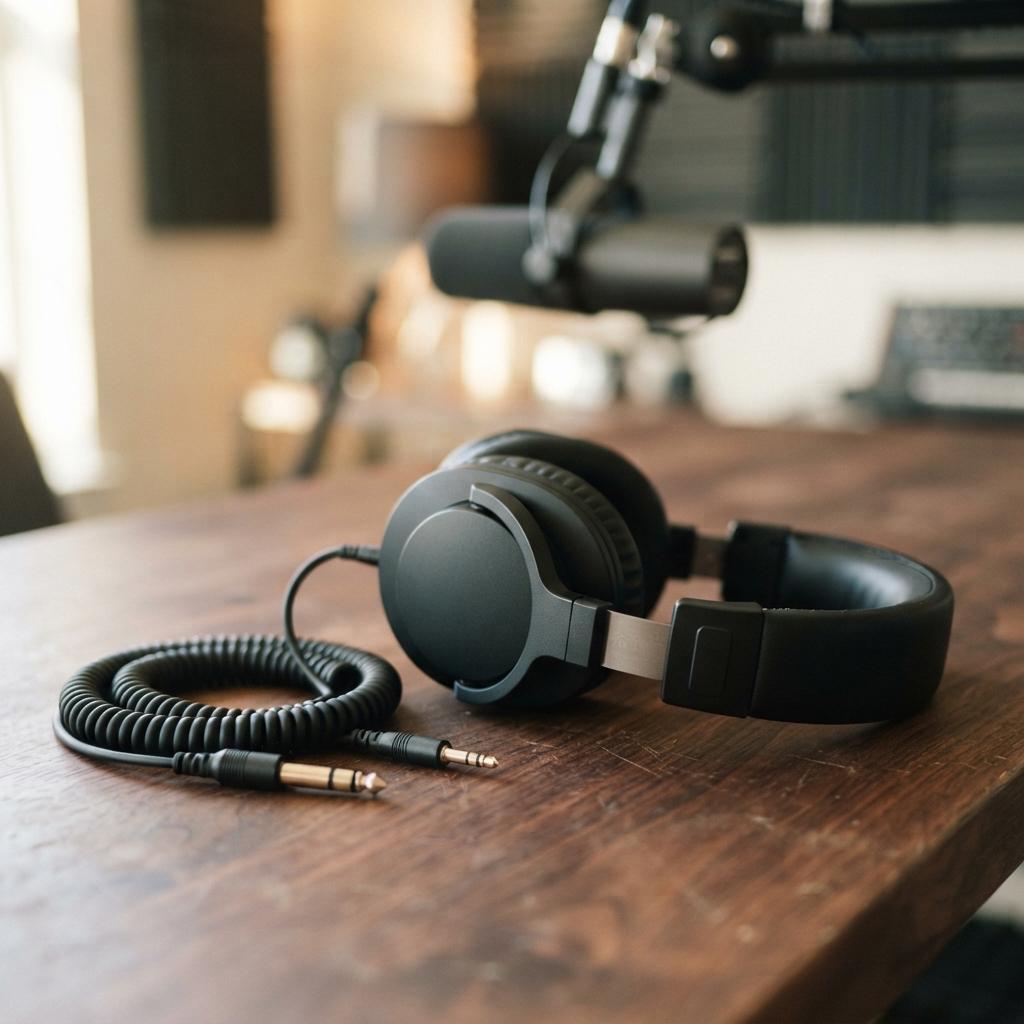
Cable form is the field most likely to be misquoted, because the acoustic figures stay identical while the lead changes. In our sheet DH1772, DH1771 and DH1771K list a detachable braided 3 m lead with a 3.5 to 6.35 mm adapter; DH1773 and DH2300 list a fixed 3 m lead with the same adapter; DH7300, DH7400 and DH7500 list a detachable coiled 4 m lead. Those entries are consistent across both columns for these models. The headphone cable configuration note lists which models leave with a detachable lead and which arrive with a fixed one.
Two models in the wider 50 mm group are excluded from any cable claim on this page. For DH7600 and DH990, the parameter column prints a fixed coil cable while the English keyword column prints a detachable cable. We do not select one column as the truth. Both figures are shown here as a documentation conflict and the point is written into an RFQ. A 50mm driver headphones factory China answer that quietly picks one of the two columns is not a reliable answer. The same discipline applies to pad material: the DH1772B row changes to velour earpads while keeping the 50 mm driver, 32 Ω load, 99 ±3 dB sensitivity and 400 mW rating of the base version.
Impedance variants inside a 50 mm platform
Load is the one acoustic field we publish in more than one value for a single platform. DH1772 is listed at 32 Ω, with a separate 80 Ω variant; DH1773 is listed at 32 Ω with its own 80 Ω variant. The driver diameter, response endpoints, sensitivity and power ratings stay the same across those variants in the sheet. A requirement that names only "the 50 mm model" leaves the load open, so write the load row into the enquiry.
The 250-named variants carry a documented conflict. DH1772-250ohms and DH1773-250ohms have 250 in the model name, while the parameter column and the English keyword column both print 300 Ω. This page states the discrepancy and asks for written confirmation against the named version; it does not publish a single impedance figure for either variant. Confirm in RFQ is the correct status for a field whose own sources disagree. Unlisted fields across the whole range carry the same status until a factory answer puts them in writing.
How standards define the quantities on a factory sheet
The numbers on a monitor spec line are electrical and electroacoustic quantities with defined measurement vocabulary. As described in the terminology work of the International Electrotechnical Commission, quantities such as impedance and power are measured under stated conditions; the Audio Engineering Society maintains the measurement vocabulary used for audio equipment. These bodies define how a quantity is to be measured — they do not grade a product, and no conformity statement is made here. We publish the figures our sheet carries and leave the measurement reference condition to a written question when a buyer needs it.
That boundary matters because a sheet is not a listening test. A 50mm driver headphones factory China sheet tells a buyer what the factory publishes for each row; it cannot tell them how a headphone sounds in a particular room. Our QC-facing note on headphone inspection in China describes the documentation side of the same process. Together the two pages separate what is printed from what is measured on a sample.
An eight-point requirement list for a wired 50 mm order
The following fields can be filled directly from the published rows. Each one keeps the answer tied to a named version rather than to a family nickname.
- Model first. Write DH1772, DH1771, DH1771K, DH1773 or another named row. One set of numbers does not cover the group.
- Driver and response. State Ø50 mm alongside the printed endpoint, for example 10 Hz to 35 kHz on DH1772 or 10 Hz to 40 kHz on DH7300.
- Sensitivity with tolerance. Quote the band as printed — 99 ±3 dB, 98 ±3 dB or 97 ±3 dB — not a rounded single number.
- Load row. Name 32 Ω or 80 Ω where the variant exists; raise the 250-versus-300 Ω point in writing if a 250-named variant is in scope.
- Two power figures. Keep rated power and maximum power as separate lines, such as 400 mW and 1,800 mW on the DH1772 rows.
- Cable form and length. Specify detachable braided 3 m, fixed 3 m or detachable coiled 4 m as the named model prints it.
- Adapter and carton. State whether the 3.5 to 6.35 mm adapter must be in the box.
- Brand form. Say whether the discussion concerns an Audfine stock model or a private-label programme; branding and packaging are confirmed in writing.
None of those fields requires a commercial number to be invented. Anything the sheet does not print stays a question for the factory to answer in writing. That is the discipline behind a wired headphones factory China enquiry that moves from a spec line to a sample without changing meaning on the way.
Frequently asked questions
Are all 50 mm models in this range closed back?
No. DH1771K and DH1773 are printed as open back, and DH990 is a further open-back model. DH1772, DH1771, DH7300, DH7400, DH7500, DH4100, DH9400 and DH2300 are printed as closed back. Housing form is a separate field in the sheet.
Do the 50 mm models share one sensitivity figure?
No. The sheet prints 99 ±3 dB on DH1772, 98 ±3 dB on DH1771, DH1771K, DH1773 and DH2300, 97 ±3 dB on DH7300, DH7400, DH9400 and DH7500, and 100 ±3 dB on DH4100. Quote the figure against the model.
Which 50 mm rows use a detachable cable?
DH1772, DH1771, DH1771K, DH7300, DH7400 and DH7500 list a detachable lead. DH1773 and DH2300 list a fixed 3 m lead. DH7600 and DH990 carry conflicting cable entries in our own source and are excluded from this answer.
What is the response of the 50 mm studio platform?
The base DH1772 rows print 10 Hz to 35 kHz. Other 50 mm rows print 10 Hz to 36 kHz on DH1773, 10 Hz to 40 kHz on DH7300, DH7400 and DH7500, 12 Hz to 28 kHz on DH9400, and 18 Hz to 28 kHz on DH4100. Each endpoint belongs to a named row.
Can a 50 mm model be supplied under a private label?
Audfine is our own headphone brand and Ningbo Lesound Electronics is the manufacturer and brand owner behind it. Private-label questions are handled as a separate programme against a named version, with branding and packaging confirmed in writing. Terms are not published on this page.
Are any of these 50 mm models wireless?
No. All 35 headphone variants in our product sheet are wired. Bluetooth, true wireless and active noise cancelling are not listed features of this range, and this page describes only the wired 50 mm monitor models.
When you shortlist a 50mm driver headphones factory China line, send the model name, the load row and the cable entry you want matched, and raise any column conflict in writing before a sample is quoted. Ningbo Lesound Electronics builds the range under the Audfine brand, and the answer comes from the same product sheet used for the table above. A NEO magnet headphones manufacturer comparison only becomes useful when both sides are quoting the same row of that sheet.