Ask anyone who has commissioned a civic hall. The project rarely starts with loudspeakers. It starts with a seating count. A stage width. A drawings package and a completion date that will not move. And here is what separates a smooth build from a stalled one: not the hardware list, but whether the auditorium sound system supplier China project teams invite to tender can document coverage, hand over rigging data and adapt hardware to the room. We sit on that side of the table. This guide is for the other side — integrators, consultants, institutional buyers — written so your first quotation is one you can actually build from.
Our factory in Ningbo builds powered line array modules, active point-source loudspeakers and subwoofers. A meaningful share of our enquiries come from exactly this kind of project. Civic halls. School auditoriums. Corporate assembly rooms and multipurpose performance spaces. The questions below come up in nearly every one of those conversations. So we wrote them down.
What an auditorium system actually contains
Strip away the brand names. Every auditorium sound design reduces to the same five building blocks:
Main arrays or clusters. The primary coverage over or beside the stage. Mid-size rooms usually take a short line array hang per side. Rectangular halls with a low ceiling? A pair of high-output point-source cabinets often does the job better.
Subwoofers. One or more low-frequency cabinets. Flown or ground-stacked, they carry programme content below the mains.
Fills. Front fills rescue the first rows the arrays overshoot. Under-balcony fills go where the overhang blocks direct sound. Deep rooms add delay zones.
Stage monitoring. Whatever performers or presenters need to hear themselves.
The invisible layer. DSP, amplification and the signal plan that ties zones together — plus the documentation that lets a local crew commission and maintain all of it.
A practical enquiry tells the factory how many of each block the design assumes, or asks the factory to propose the split. Both routes work. What fails is an enquiry that only says “auditorium, 800 seats” and stops there.
A reference hardware table for mid-size auditoriums
The table below pulls published figures from our own product pages. We have arranged it by the role each model usually plays in an auditorium build. All values are as printed. One habit before you compare: if a figure matters to your design, ask for the measurement condition behind it. We ask it in quotation replies as a matter of routine.
| Model | Typical role | Configuration | Sensitivity | Max SPL @ 1m | Power | Frequency response | Crossover |
|---|---|---|---|---|---|---|---|
| HDL210 | Main array, compact module | Active 2-way, 2×10" woofer, 2.5" v.c. | 99 dB | 131 dB | 700W RMS / 1400W peak | 75 Hz – 20 kHz | 2.0 kHz |
| HDL50-A | Main array, full-size reference | Three-way: 2×12" woofer (3" v.c., NEO) + 4×6.5" midrange (2" v.c., NEO) | 104 dB | 140 dB | 2200W RMS / 4400W peak | 45 Hz – 18 kHz | 200 Hz / 800 Hz |
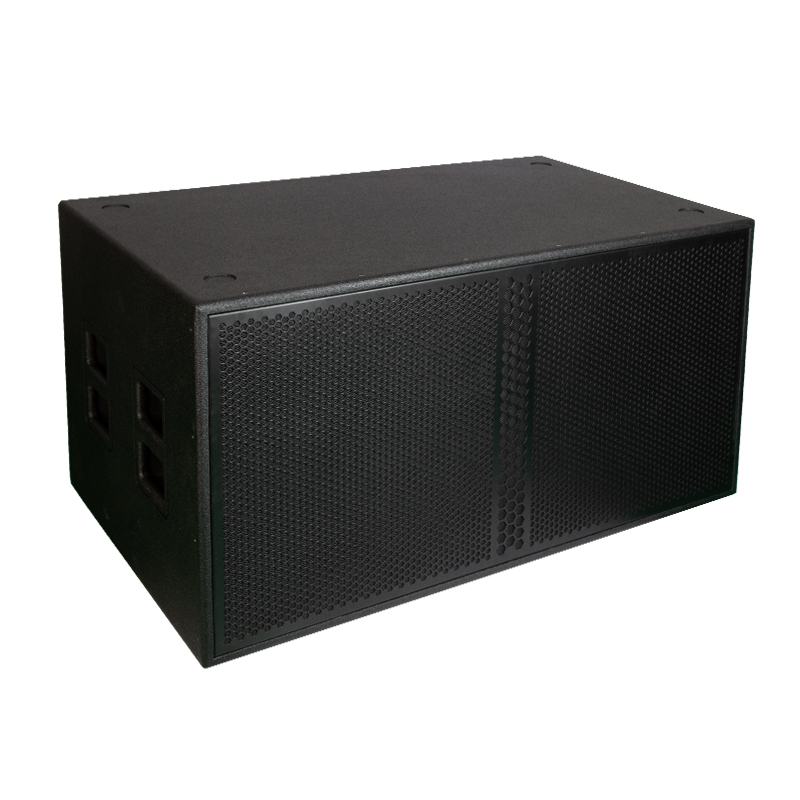
| DS218A | Subwoofer | Dual 18" powered subwoofer, 4" v.c. | 98 dB | 131 dB | 2000W RMS / 4000W peak | 35 Hz – 180 Hz | 90 Hz |
| NX-915 | Front fill / under-balcony fill | Active 2-way, 15" powered loudspeaker | 97 dB | 123 dB | 400W RMS / 800W peak | 45 Hz – 20 kHz | 1.8 kHz |
| LSA-12A | Fill / small zone | Active 2-way, 12" powered loudspeaker | 95 dB | 121 dB | 400W RMS / 800W peak | 50 Hz – 20 kHz | 2.0 kHz |
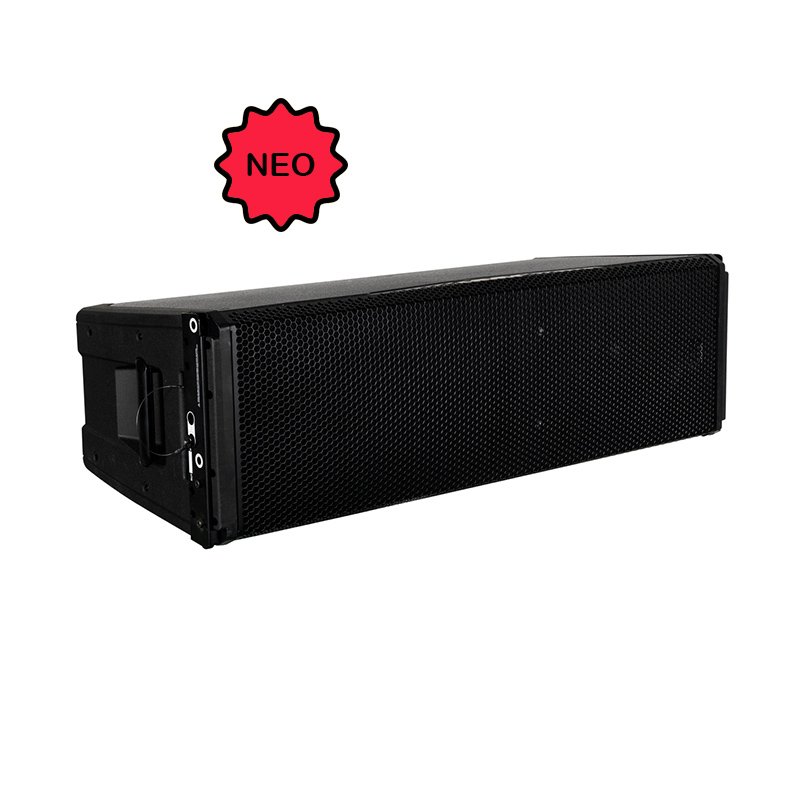
Start with the HDL210 dual 10-inch line array speaker where a compact hang suits the room. 700W RMS per module. A 75 Hz printed floor. Light enough that shorter frames or wall-mounted hardware remain an option. The HDL50-A active line array speaker sits a class above. It is the three-way format that deeper rooms and louder programme grow into. Browse the full active line arrays category to see the ladder side by side.
Coverage planning: start from speech, not music
Nearly every auditorium doubles as a speech room first. Lectures, assemblies, ceremonies and reports put one demand above all others: intelligibility at the last row. Music playback is usually the harder technical test. Speech is what the room gets judged on, week after week.
The planning arithmetic starts from two published numbers. Sensitivity tells you how loud a cabinet gets per watt. Maximum SPL tells you its ceiling. The free-field shortcut adds 10×log₁₀(power) to sensitivity, then subtracts 6 dB for every doubling of distance. Treat the result as a planning estimate. Real rooms add reverberation that no datasheet captures. Two examples where the arithmetic lines up with the print: the NX-915 prints 97 dB sensitivity and 400W RMS, and 97 + 10×log₁₀(400) = 123 dB. It matches its published maximum exactly. The HDL50-A prints 104 dB and 4400W peak, and 104 + 10×log₁₀(4400) = 140 dB. Again, a match. When a printed figure will not resolve from the datasheet, ask which drive signal and measurement window produced it. A factory that answers that question in writing is a factory worth shortlisting. That's the test.
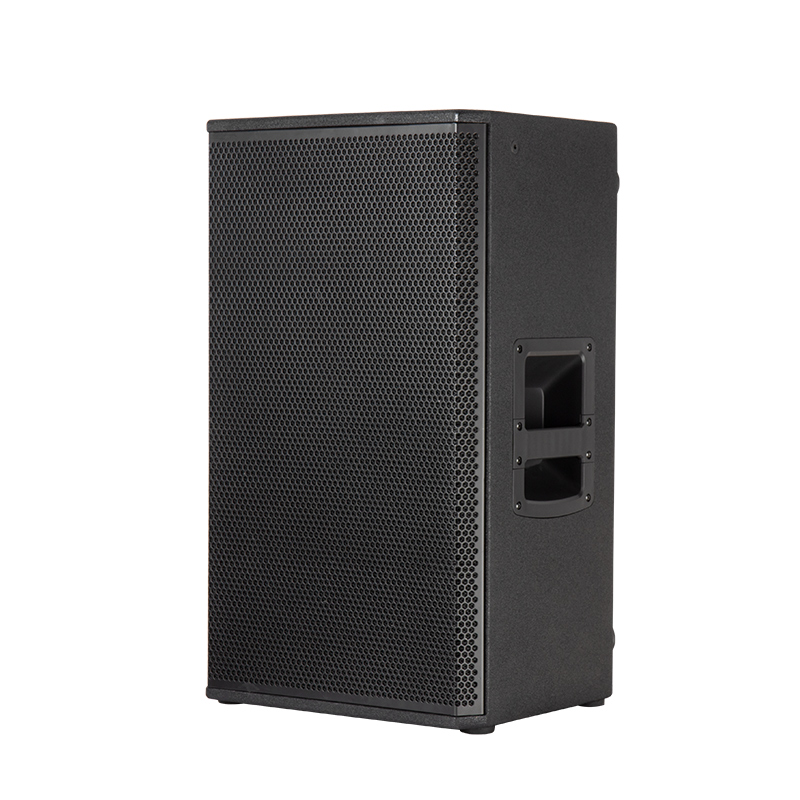
Fills exist to rescue the rows the mains cannot reach cleanly. A 15-inch point-source cabinet under a balcony or along a front edge usually settles the first and last rows in one move. The NX-915 active speaker is a common pick. Time-align it to the arrays. Smaller zones take the LSA-12A active loudspeaker. And the honest way to size fills? Say which rows they serve, then let the supplier propose delay settings against the room drawing.
Low-frequency planning for multipurpose programmes
Spoken programme sits comfortably above the subwoofer region. Ceremonies with recorded music? Video playback? Film screenings and live performance? None of those do. So a multipurpose auditorium plans its low end around the busiest content the room will host. Not the quietest.
The DS218A dual 18-inch powered subwoofer prints a 35 Hz – 180 Hz operating band with a 90 Hz crossover. That covers the low octaves of music and effects playback, and it leaves the mains untouched above 180 Hz. Its printed 131 dB maximum SPL stands as published. Before you line it up against another cabinet's print, ask which drive signal and measurement window produced each number. This is how specification tables mislead people. Same number, different test.
What changes when the system stays put
Touring gear and installed gear share transducers and amplifiers, but an auditorium order carries four obligations a rental quote never will.
Rigging handover. Flown arrays in an auditorium hang from the building. Not from a ground stack. The factory supplies the array hardware and its documentation. The attachment points and the load path into the structure belong to the project, and verification must be completed by qualified rigging personnel. Put that division of responsibility in the RFQ. In writing. Before fabrication starts.
Amplifier placement and heat. Powered cabinets move amplification onto the enclosure. In a venue that's a benefit: no amplifier room, shorter cable runs. But a cabinet sealed above a ceiling or behind a grille cloth needs airflow and service access planned into the architecture. Don't discover it during commissioning.
Zoning and delay. Lobby feeds. Recording outputs. Assistive listening sends. Under-balcony delay zones. They all tap the same signal plan, so mark the zones on the room drawing. It's a five-minute task that prevents a week of rework.
Aesthetics. Cabinet finish, grille color and logo discipline become part of the interior design conversation. This is where an OEM arrangement earns its keep.
Ordering from an auditorium sound equipment manufacturer: what OEM adds
An auditorium sound system OEM arrangement goes beyond putting a different label on a cabinet. Much further. Once drawings exist, these are the items project teams negotiate with us:
Finish and branding. Cabinet and grille finishes matched to the interior palette. Logos placed where the design wants them, or nowhere at all. Packaging adapted for site delivery, not warehouse stacking.
Configuration changes. Rigging hardware positions adapted to the room's attachment points. Connector panels arranged for the local signal plan. DSP presets prepared against the zone layout.
Batch consistency. Auditorium projects often install in phases. Main system first. Fills and lobby a year later. Cabinets built months apart should still match in finish and performance. A factory that records its settings can make that true.
Spares strategy. Order spare drivers, grilles and rigging pins with the main batch. It spares the project an emergency single-unit shipment years later, with all the disruption that carries. As an auditorium sound equipment supplier working with institutional buyers, we treat the spares list as part of the quotation. Not an afterthought.
None of this changes the acoustics. All of it changes whether the installation closes out smoothly — and whether the same consultant specifies the same factory on the next project.
The RFQ checklist for auditorium sound systems
A capable auditorium sound system supplier China buyers work with will answer each of these in writing. Send them in the enquiry and the first reply becomes a usable specification instead of a guess:
1. Room data: seating count, room dimensions, ceiling height at the array positions, and the speech/music split the design assumes.
2. Coverage deliverable: which zones the mains, fills and subs serve, so the factory can propose a system split rather than a cabinet list.
3. Rigging drawings: attachment point positions, and confirmation that qualified rigging personnel will verify loads on the project side.
4. Signal plan: powered cabinets versus rack amplification, zone outputs, DSP preset expectations.
5. Finish and branding: color references, logo placement, packaging format for site delivery.
6. Documentation: which test reports and paperwork accompany each model, per model and per shipment.
7. Spares: which drivers, grilles and hardware to hold locally, quoted with the main order.
8. Phasing: installation phases and the batch consistency expectations between them, including sample units where finish matching matters.
From quotation to shipment
Auditorium buyers rarely order blind. They shouldn't have to. Sample units let an installer verify finish, connectors and sound against the quotation before the full batch ships. A pre-shipment inspection catches what photographs cannot. The sample order and pre-shipment inspection guide describes how that sequence runs from the factory side, and why it protects both parties more than any clause in a purchase order. Rooms with tighter budgets and shorter hangs? Same logic, smaller scale. The compact end of the same catalogue serves houses of worship, ballrooms and training rooms.
Frequently asked questions
How many line array modules does an auditorium need?
There is no universal count. Room geometry decides it. So do seating depth, ceiling height and the printed sensitivity of the module. A short hang of six to eight compact modules covers many mid-size rooms. Deeper or louder rooms move to the full-size class. Ask for a coverage proposal against your drawing, not a module count against a budget line.
Can cabinets be color-matched to the interior design?
Yes. Finish, grille color and logo placement are handled as part of an OEM arrangement, agreed per project against color references. Confirm the finish specification in the RFQ. It should be tested before the batch is painted, not after.
Who is responsible for rigging safety in an auditorium installation?
The division is fixed. The factory supplies flying hardware and its documentation. The project side verifies attachment points and load paths through qualified rigging personnel. No responsible factory will sign off on a building's structure from another country. No installer should ask it to.
What documentation should accompany an auditorium order?
Per-model test reports. Packing lists mapped to zones. Installation documentation for the rigging hardware. Specify all three in the RFQ, because documentation is easiest to get right at quotation stage.
Send the drawing first
The most useful auditorium enquiry we receive is not a product code list. It is a room drawing, a seating plan and the eight RFQ items above. As an auditorium sound system supplier China consultants and contractors invite to project tenders, we treat every enquiry as an engineering conversation first. Commercial terms come second. Send us your auditorium drawings and we will return a coverage proposal worth building from.