A closed back monitor headphones supplier can name one wired over-ear model and print its numbers beside it. Audfine lists DH1771 as a 50 mm dynamic-driver closed-back monitor at 32 Ω, 350 mW RMS, 98±3 dB and 10 Hz–35 kHz, with a braided 3 m detachable cable and a 3.5 to 6.35 adapter. Audfine is the headphone brand of Ningbo Lesound Electronics, the manufacturer and brand owner in Ningbo, China. This page keeps those published values on the DH1771 row and shows where they sit in the closed-back range.

Data checked: November 2026. Source: Audfine headphone product sheet, named model rows and the positioning, core-metric and application columns. Driver diameter, load, rated and maximum power, sensitivity, frequency range and cable notes were copied from those rows. Any field not printed on a row is left as confirm in RFQ.
What does a closed back monitor headphones supplier publish for DH1771?
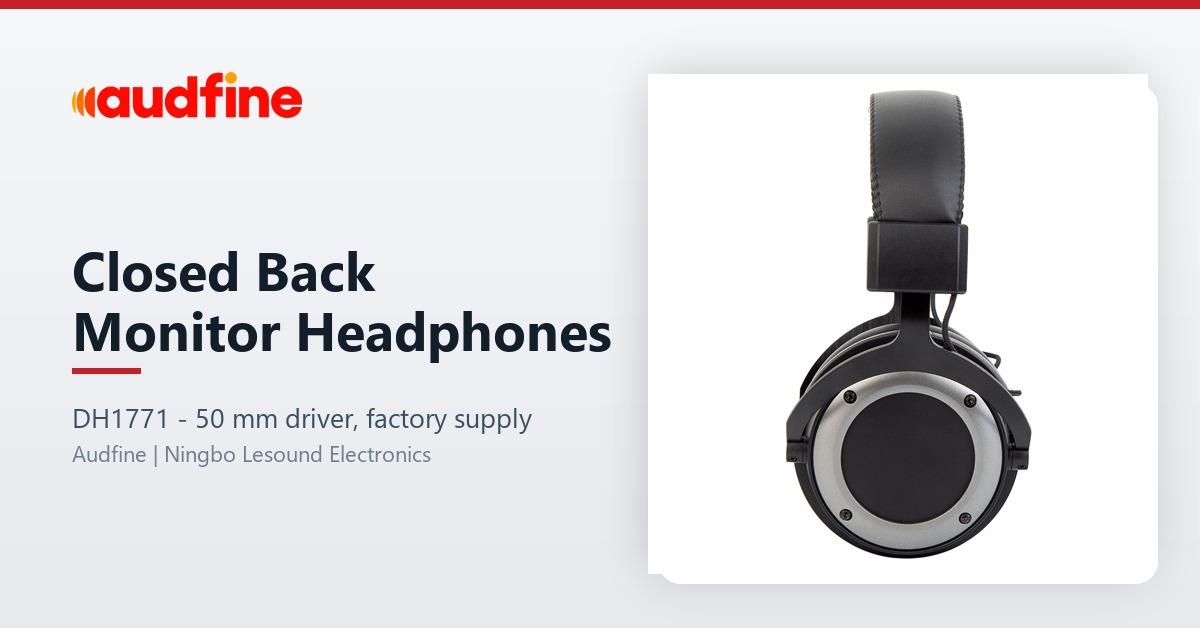
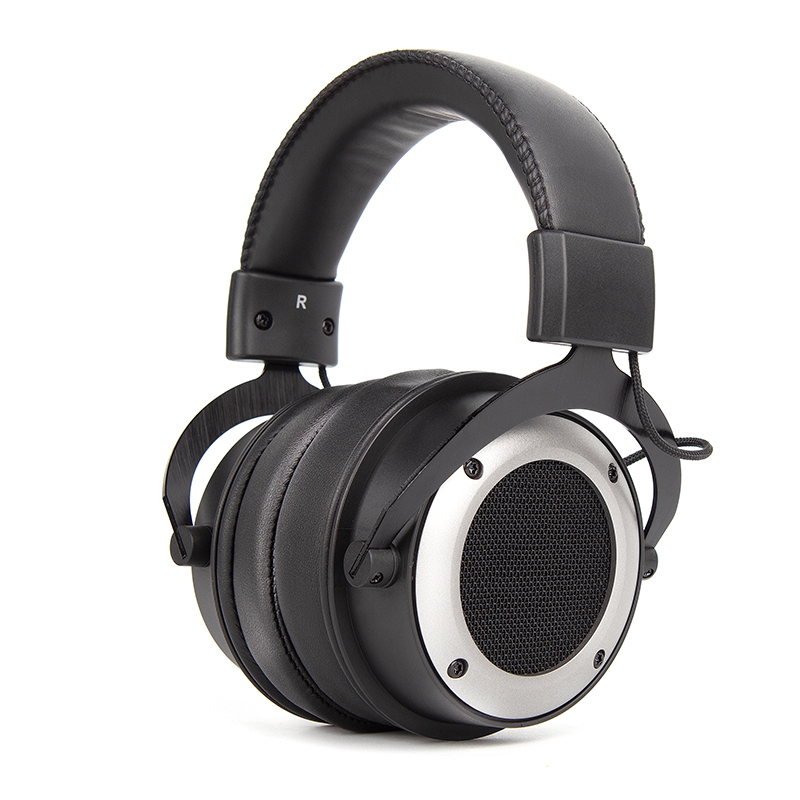
DH1771 is printed as a wired over-ear monitor with a 50 mm dynamic driver, a NEO magnet, a closed-back cup and a 32 Ω load. Rated power reads 350 mW RMS and maximum input reads 1500 mW; sensitivity reads 98±3 dB; frequency range reads 10 Hz–35 kHz. The cable line reads braided 3 m with a 3.5 to 6.35 adapter, detachable. Each of those values is attached to the model name, so a buyer can ask for the same line back from any supplier.
The positioning column describes DH1771 as a professional-grade monitor for instrument and professional listening, with clean sound and clear detail, recommended for studio work. It notes soft skin-friendly large earcups that fully cover the ear, a shape comparable to a Beyer dynamic housing, and a cable that can be detached. The same note records a limit: the earcup does not swivel, so the model is not intended for single-ear monitoring or for wearing around the neck. Our monitoring headphone field guide sets out the field order used to read such rows.
Values printed on the closed-back rows
The table below is copied from the named model rows of the Audfine sheet. Values below are published sheet entries; unlisted fields require RFQ confirmation. Each row keeps its own power figure and its own cable description.
| Model | Driver | Load | RMS power | Max power | Sensitivity | Frequency range | Cable / cup |
|---|---|---|---|---|---|---|---|
| DH1771 | Ø50 mm | 32 Ω | 350 mW | 1500 mW | 98±3 dB | 10 Hz–35 kHz | Braided 3 m / closed back |
| DH1772 | Ø50 mm | 32 Ω | 400 mW | 1800 mW | 99±3 dB | 10 Hz–35 kHz | Braided 3 m / closed back |
| DH4100 | Ø50 mm | 32 Ω | 400 mW | 1500 mW | 100±3 dB | 18 Hz–28 kHz | 3 m / closed back, folds up |
| DH7300 | Ø50 mm | 32 Ω | 350 mW | 1800 mW | 97±3 dB | 10 Hz–40 kHz | Coiled 4 m / closed back, metal cup |
| MR830X | Ø45 mm | 32 Ω | 450 mW | 1500 mW | 99±3 dB | 12 Hz–28 kHz | 3 m / closed back, metal cup |
| DH1771K | Ø50 mm | 32 Ω | 350 mW | 1500 mW | 98±3 dB | 10 Hz–35 kHz | Braided 3 m / open-back reference |
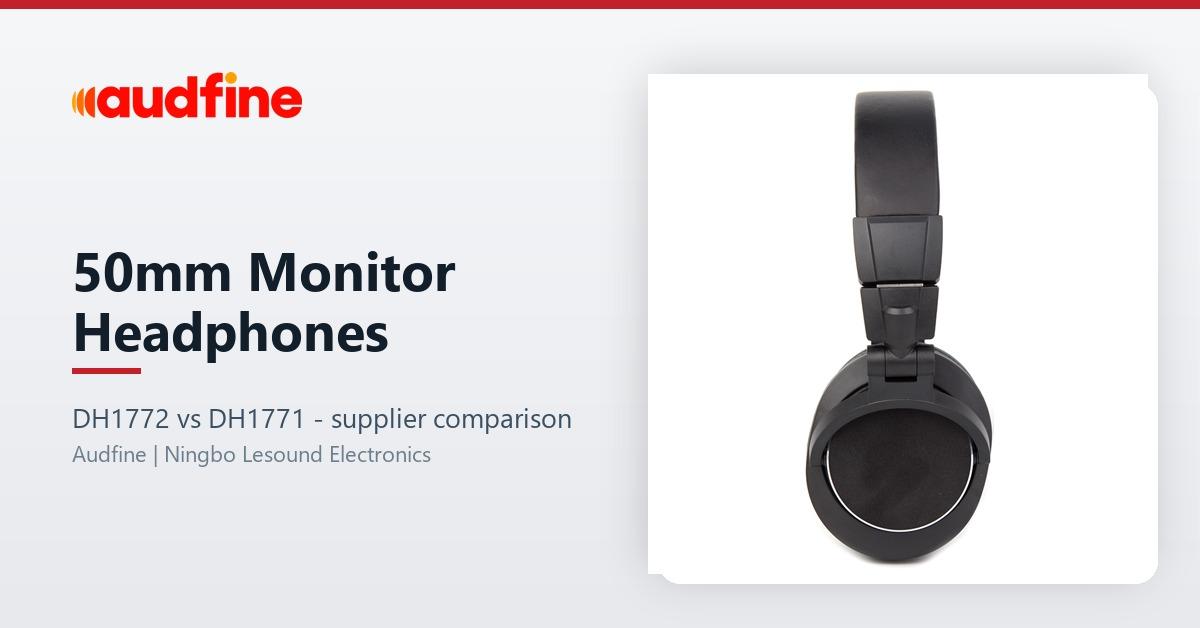
Five of the six rows are closed back; DH1771K is the open-back version of the DH1771 platform and is included only so its structure is not carried over to the closed-back row. DH1771 and DH1772 share a 50 mm driver, a 32 Ω load and a 10 Hz–35 kHz range, but not a power figure: 350 mW RMS on DH1771 and 400 mW RMS on DH1772. Sensitivity also stays with its own row, 98±3 dB against 99±3 dB. The 50 mm platform comparison reads those two rows side by side.
Where does DH1771 sit for studio and broadcast listening?
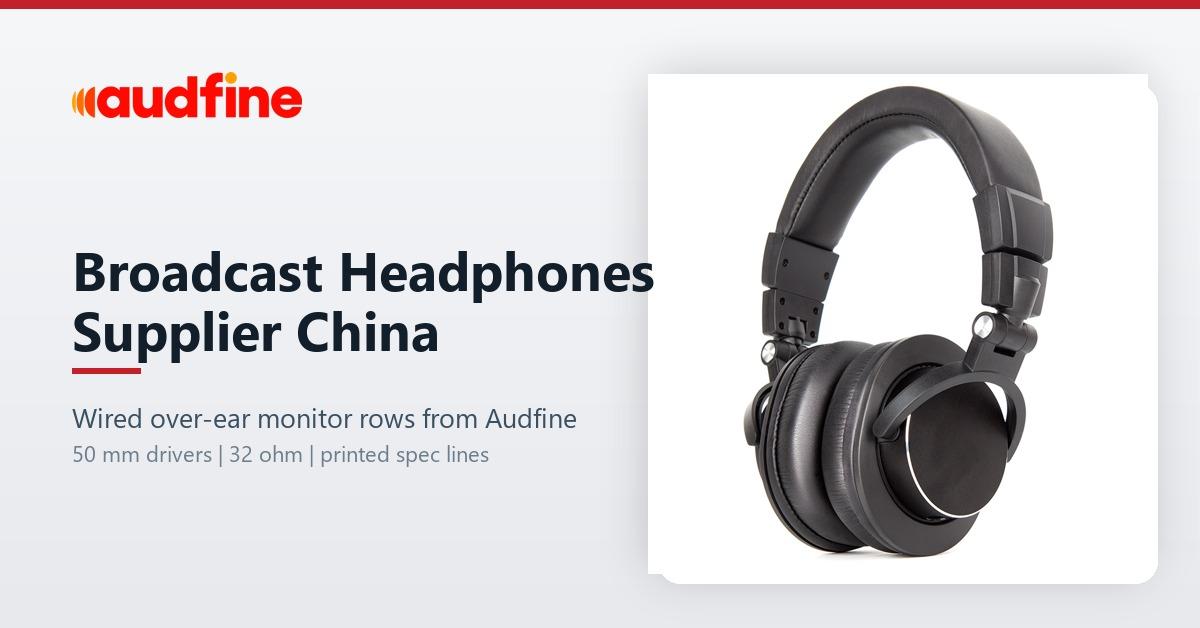
The application column for DH1771 lists Professional studio, Musician, Monitoring, Recording, Broadcast, Mixing, Tracking, Music Production and Mastering. Those are the scenarios printed on the sheet, not a ranking of one model against another. A closed-back cup is the structural feature named on the row, and the positioning note connects it to clean, clear sound for professional listening.
Broadcast and recording work appears again on the broadcast monitoring note, where the same rule applies: name the row, then the impedance. The Audfine studio monitoring headphone range is the product-side reference for DH1771 and its siblings. A buyer who needs a different cup structure can read the closed-back rows here and the open-back row separately.
Which cable and adapter does DH1771 carry?
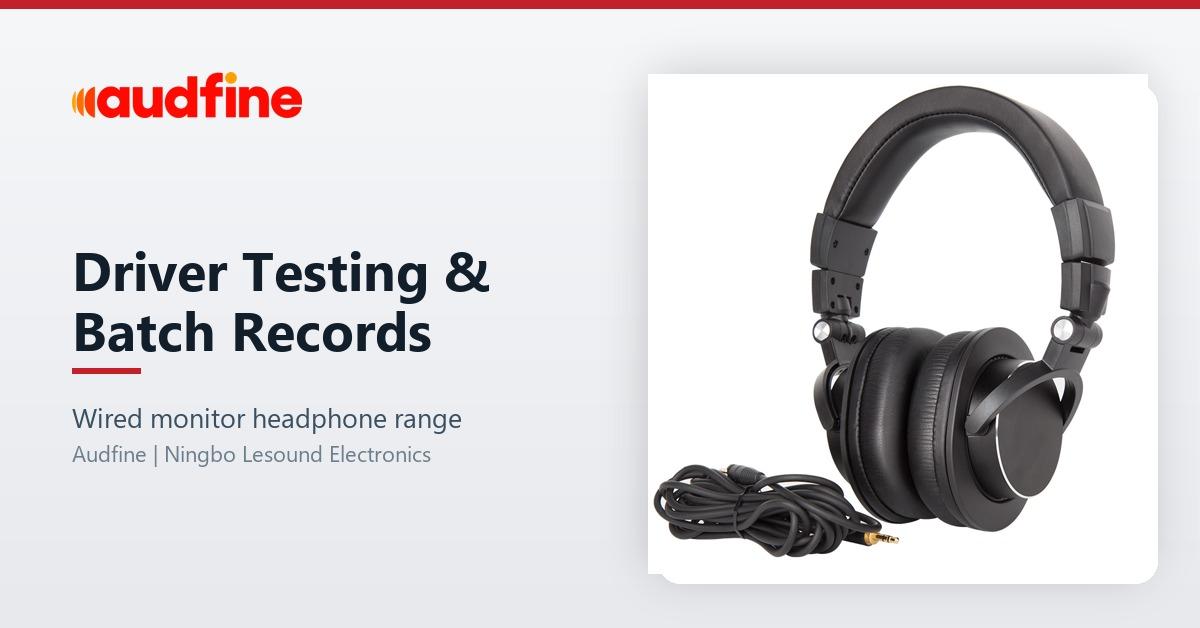
DH1771 ships with a braided 3 m detachable cable and a 3.5 to 6.35 adapter, both printed on the same line as the model. DH1772 carries the same braided 3 m description. DH7300 is printed with a coiled 4 m detachable cable, and DH4100 and MR830X with a 3 m detachable cable. Length and form are row-specific: a 4 m coiled lead on one model does not describe a 3 m braided lead on another. Our cable assembly note covers the connector and length options as components.
How should a buyer compare DH1771 against the other closed-back rows?
Start with the driver diameter and the load, then read rated power, maximum input, sensitivity and frequency range in that order. DH1771 prints 50 mm, 32 Ω, 350 mW, 1500 mW, 98±3 dB and 10 Hz–35 kHz. MR830X prints 45 mm, 32 Ω, 450 mW, 1500 mW, 99±3 dB and 12 Hz–28 kHz. DH4100 prints 100±3 dB and 18 Hz–28 kHz on the same 32 Ω load. The figures are printed values; they are not a measurement made by this page.
Two rows also describe a folding frame. DH4100 is printed with Folds up, and DH7300 with Folds up and Swivel. DH1771 is printed without those terms, and the positioning note states the cup does not rotate. A supplier comparison that drops this distinction reduces three different frames to one family name. The DH1772 factory note keeps the sibling platform on its own page.
What does a closed back monitor headphones supplier need in an RFQ?
Ask for the model, the field and the unit on the same line. That is the only way to attach a printed figure to a row that can be checked later. As defined in the terminology work of the International Electrotechnical Commission, quantities such as frequency range and sensitivity are stated under defined conditions; the Audio Engineering Society maintains measurement vocabulary for audio equipment. Those bodies define how a quantity is described. They do not assess this product, and no conformity statement is made here.
- Model first. Write DH1771. A value printed on DH1772 or DH1771K does not describe this row.
- Driver and load. Ask for Ø50 mm and 32 Ω with units attached, as printed beside DH1771.
- Power fields. Request 350 mW RMS and 1500 mW maximum separately; do not merge rated and maximum into one figure.
- Sensitivity band. Ask for 98±3 dB as printed, with the tolerance, rather than a midpoint value.
- Frequency range. State both endpoints, 10 Hz–35 kHz, next to the model name.
- Cable and adapter. Confirm braided 3 m and the 3.5 to 6.35 adapter for this specific row.
- Unlisted fields. Put them in the enquiry as questions and wait for a written answer — confirm in RFQ.
Frequently asked questions
Is DH1771 a closed-back monitor?
Yes. The Audfine sheet prints DH1771 as a wired over-ear monitor with a closed-back cup, a 50 mm dynamic driver and a 32 Ω load. DH1771K is listed separately as the open-back version of the platform. The two share a driver diameter, a 350 mW RMS rating and a 98±3 dB sensitivity, but the cup structure belongs to its own row and should not be exchanged.
What power figures belong to DH1771?
DH1771 is printed at 350 mW RMS with a stated maximum of 1500 mW. These are two separate fields on the same row. DH1772, by comparison, is printed at 400 mW RMS and 1800 mW maximum. Rated and maximum values should stay in their own columns when a buyer asks for a written comparison from any supplier.
Does DH1771 have a detachable cable?
Yes. The cable line for DH1771 reads braided 3 m, detachable, with a 3.5 to 6.35 adapter. DH1772 carries the same braided 3 m description. DH7300 is printed with a coiled 4 m detachable cable instead. Length and cable form are row-specific values, so a written answer should name the model before stating either figure.
Can the DH1771 earcup swivel for single-ear monitoring?
No. The positioning note for DH1771 states that the earcup does not swivel and that the model is not suitable for single-ear monitoring or wearing around the neck. DH4100 and DH7300 carry Folds up on their rows, and DH7300 also carries Swivel. Those terms are absent from the DH1771 row and should not be assumed from the driver size.
Which sensitivity figure should I quote for DH1771?
Quote 98±3 dB as printed on the DH1771 row, keeping the tolerance with the model. DH1772 is printed at 99±3 dB and DH4100 at 100±3 dB. Each band belongs to its own row. A midpoint taken from one model and attached to another changes what the sheet states, so the written comparison should keep the model and the band together.
When you shortlist a closed back monitor headphones supplier line, send the model name, the field order and the units you expect back, and leave every unlisted question open until it is answered in writing. Ningbo Lesound Electronics builds the Audfine range under the Audfine brand, and the figures above come from the same sheet used for our product rows. Send an RFQ with DH1771 named on the first line.