The Heart of Modern Audio: Inside an Active Speaker Factory
The modern audio industry demands more than just loudness—it requires consistency, clarity, and reliability at scale. Whether for touring events, studio setups, or commercial installations, active speaker systems have become the gold standard for efficiency and precision.
Behind this evolution stands the active speaker factory, where acoustic engineering and industrial production merge. Every cabinet, amplifier, and DSP module is not simply assembled but carefully calibrated to achieve identical performance across hundreds or thousands of units.
The Core Principle: Engineering Integration over Assembly
Unlike traditional passive speaker plants focused mainly on mechanical assembly, an active speaker factory operates as a hybrid between acoustic research and electronic engineering.
Each speaker design begins with a digital simulation of acoustic behavior. Engineers model frequency dispersion, phase alignment, and driver resonance using finite element analysis (FEA). Once optimized, the cabinet design moves to Class D amplifier integration—the foundation of modern powered systems.
These amplifiers, operating at over 90% efficiency, are paired with DSP (Digital Signal Processing) boards that control crossover, equalization, and protection in real time. The integration of electronics and enclosure happens under the same roof, ensuring exact component matching and acoustic uniformity.
According to the Audio Engineering Society (AES), speaker factories adopting full DSP integration achieve up to 25% lower distortion rates and 15% better frequency linearity than modular systems assembled from multiple suppliers.
Manufacturing Process: From Prototype to Precision
Every step in an active speaker factory is built around repeatability—ensuring that the hundredth unit sounds identical to the first.
-
Prototype Development
Engineers build initial enclosures to validate acoustic design, perform anechoic chamber testing, and fine-tune DSP algorithms. -
Component Sourcing and Matching
Transducers, amplifiers, and electronic components are batch-tested for impedance, frequency response, and sensitivity to maintain consistency. -
Cabinet Production
CNC machining ensures precision cuts and structural integrity. Internal bracing and damping materials are applied to minimize resonance. -
Electronics Integration
Class D amplifier modules and DSP boards are installed, then firmware-calibrated for each model. -
Acoustic Calibration
Each finished speaker undergoes real-time frequency response analysis. Systems outside ±1.5dB tolerance are recalibrated or rejected. -
Final Testing and Burn-in
Continuous stress tests simulate 100+ hours of operation to detect potential component failure before shipment.
Traditional vs. Integrated Active Speaker Production
| Stage | Traditional Passive Factory | Active Speaker Factory |
|---|---|---|
| Amplifier Design | Outsourced | In-house integration |
| DSP Calibration | Not applicable | Digital alignment within ±1.5dB |
| Quality Control | Manual check | Automated acoustic measurement |
| Assembly | Sequential | Parallel, multi-department integration |
| Performance Consistency | Varies by batch | Uniform across all units |
| Production Efficiency | Moderate | 25–40% faster turnaround |
This integrated model not only increases quality but also accelerates development. The result is a shorter time-to-market for professional-grade sound systems with built-in intelligence and efficiency.
Key Advantages and Engineering Value
1. Unified Acoustic & Electronic Design
By housing both acoustic and electronic divisions under one roof, factories ensure precise matching between drivers, amplifiers, and DSP configurations.
2. Precision Quality Control
Automated measurement systems evaluate frequency response, distortion, and phase alignment for every unit. Any deviation is corrected digitally before shipment.
3. Efficiency Through Modular Design
Standardized amplifier and DSP modules allow quick adaptation to various cabinet designs—reducing development cycles and production waste.
4. Thermal & Electrical Safety Assurance
Each Class D amplifier module undergoes load testing for heat stability and power management, ensuring safe operation under long performance hours.
5. Sustainability and Energy Efficiency
Modern facilities employ recyclable cabinet materials and low-consumption testing rigs, reducing carbon footprint while maintaining output volume.
Applications and Real-World Impact
Touring & Event Audio Systems
Factories produce rugged, transport-ready enclosures capable of withstanding humidity, vibration, and high SPL output. Built-in limiters safeguard performance during live shows.
Commercial Audio Integration
Products are optimized for distributed audio systems—retail, education, and hospitality sectors benefit from plug-and-play installation.
Broadcast and Studio Production
Precision-calibrated monitors offer transparent sound for mixing and post-production, ensuring reference-grade performance.
Case Example:
Audfine’s active speaker facility recently completed production for a European concert system provider. Over 600 powered PA speakers were manufactured using automated DSP tuning. The customer reported a 40% reduction in setup time and a measurable improvement in SPL uniformity across all venues.
Product Recommendation: Selecting the Right System for Your Application
For Outdoor Events and Touring
-
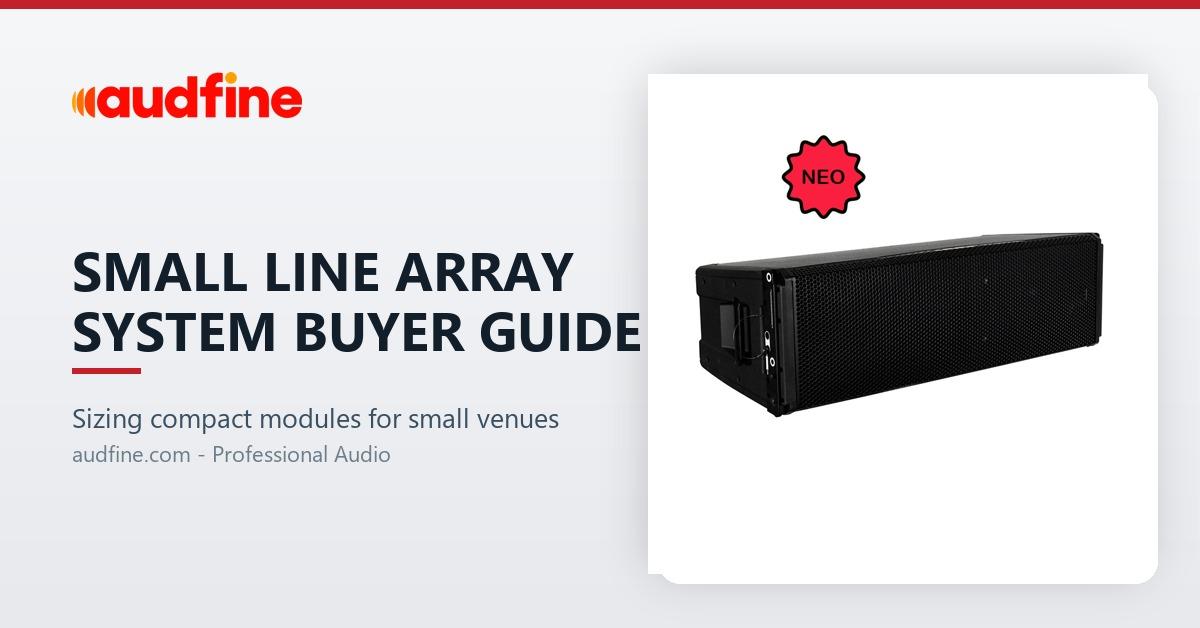
Recommended Type: Active Line Array Systems
-
Highlights: High power output, consistent throw, DSP network control
-
Ideal For: Festivals, large-scale concerts, touring productions
For Medium Indoor Venues
-
Recommended Type: Powered PA Speakers and Stage Monitors
-
Highlights: Quick deployment, compact enclosures, limiter protection
-
Ideal For: Auditoriums, theaters, conference centers
For Recording Studios and Broadcast Rooms
-
Recommended Type: Active Studio Monitors
-
Highlights: Flat frequency response, adjustable EQ presets
-
Ideal For: Music production, sound mixing, film scoring
For Corporate and Commercial Spaces
-
Recommended Type: Column Active Speakers
-
Highlights: Elegant design, wide dispersion, minimal footprint
-
Ideal For: Hotels, restaurants, shopping malls, corporate halls
For Low-End Enhancement
-
Recommended Type: Active Subwoofers
-
Highlights: Extended bass, thermal protection, deep response
-
Ideal For: Clubs, cinemas, stage bass reinforcement
Advancing Manufacturing Excellence in Professional Audio
The evolution of active speaker factories represents a major leap in sound manufacturing—where design precision, automation, and quality control converge to deliver measurable acoustic integrity. These facilities don’t just produce speakers; they engineer reliability into every detail of the process.
Audfine, as a specialized active speaker factory, integrates Class D amplification, advanced DSP calibration, and rigorous testing protocols to ensure consistency and performance across every model line.
To explore Audfine’s production capabilities or request customized OEM/ODM solutions, visit the official homepage or contact our engineering team for tailored technical consultation.